How to use dinotefuran-containing household insecticide spray against flatheaded borers?
How to use dinotefuran-containing household insecticide spray against flatheaded borers?
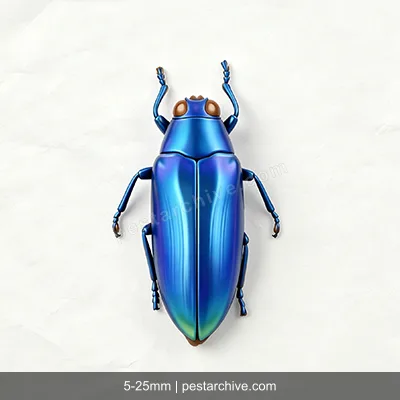
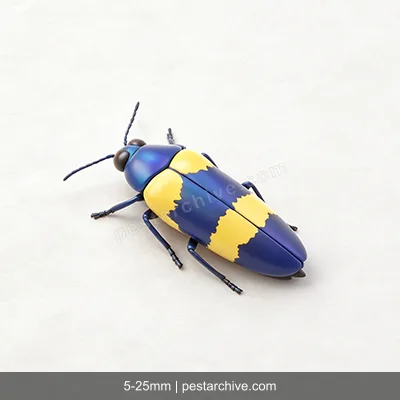
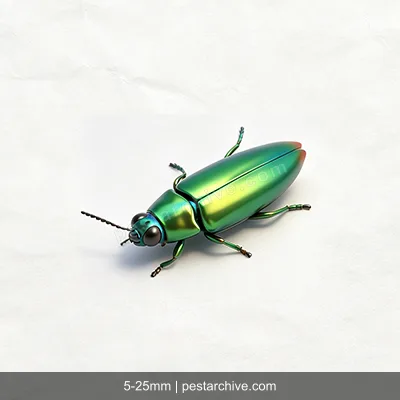
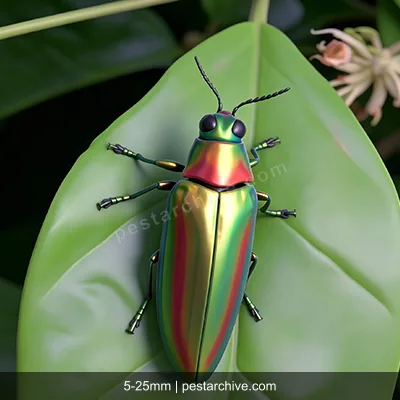
Using dinotefuran spray against flatheaded borers requires different methods based on their life stage. Here is a staged control plan for adults and larvae:
Adult stage control (prevent egg laying)
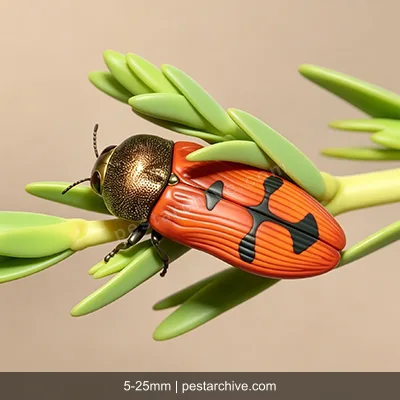
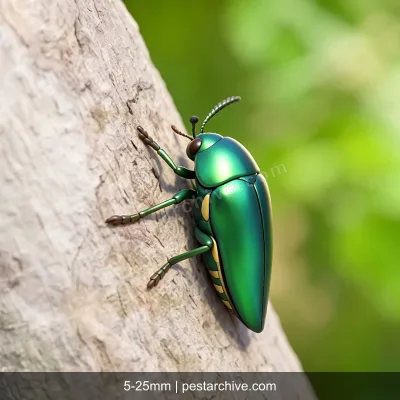
Adults emerge in late spring and early summer, crawling, mating, and laying eggs on trunks. This stage is the best control window:
- Timing: April-July, depending on local climate; start when adult flatheaded borers begin to appear.
- Method: Spray dinotefuran-containing household insecticide evenly on trunks, main branches, and branch crotches until the bark surface is slightly damp.
- Key areas: 1-2 meters above ground on the trunk, branch crotches, and rough cracked bark, these are where adults prefer to move and lay eggs.
- Frequency: spray every 10-14 days, 2-3 times consecutively, covering the entire adult activity period.
- Adults that contact the residue die within 24-48 hours, unable to lay eggs.
Larval stage control (kill larvae already inside)
If larvae have already burrowed under the bark, surface spraying is insufficient; more thorough treatment is needed:
- Use a knife to scrape off dead bark, exposing the larval feeding site (brown powdery frass visible).
- Locate fresh boreholes, fresh holes have brown, moist excrement around them.
- Inject dinotefuran solution directly into boreholes using a syringe; a few drops per hole.
- Alternatively, dip a cotton ball in the solution and insert it into the hole, then seal with mud or tape.
- Larvae that contact the high-concentration solution die quickly.
Best control timing
- Spring (March-April): larvae become active; overwintering larvae begin feeding, good time for injection.
- Summer (May-July): adult emergence period; focus on surface spraying to prevent egg laying.
- Late summer (August-September): new-generation larvae burrow into bark; reapply injection to kill them.
Integrated control recommendations
Dinotefuran spray alone is not enough; combine with:
- Strengthen water and fertilizer management, healthy trees produce more resin and have some resistance to flatheaded borers.
- Prompt removal, prune and burn dead branches promptly to reduce pest sources.
- Whitewashing, apply limewash to trunks in autumn and winter to reduce sunscald and frost cracks, discouraging egg laying.