Citrus Longhorn Beetle: Tree Damage Signs
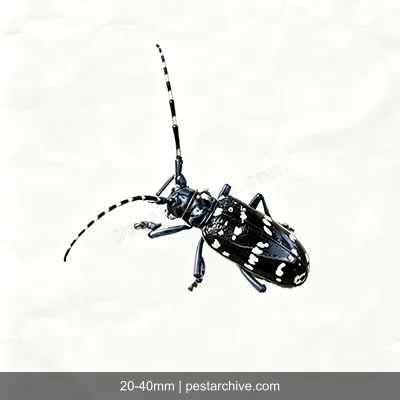
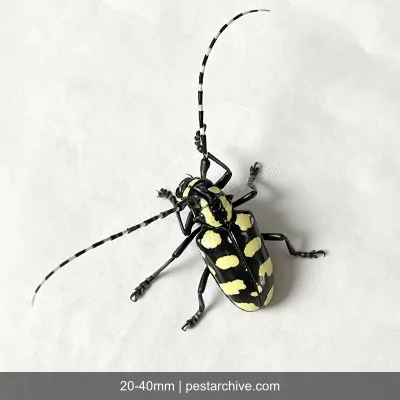
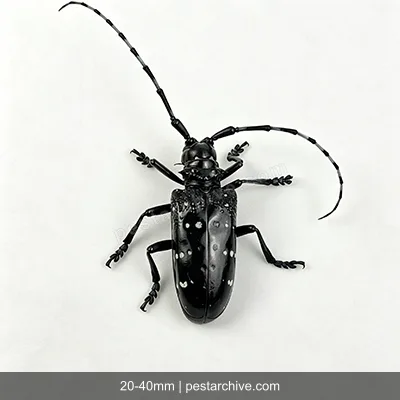
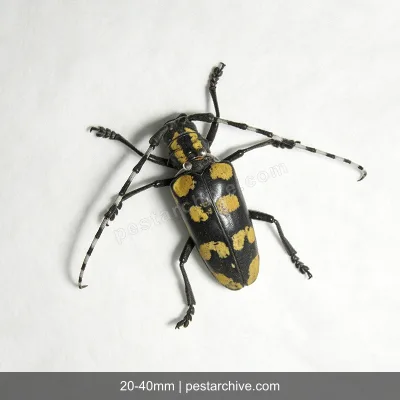
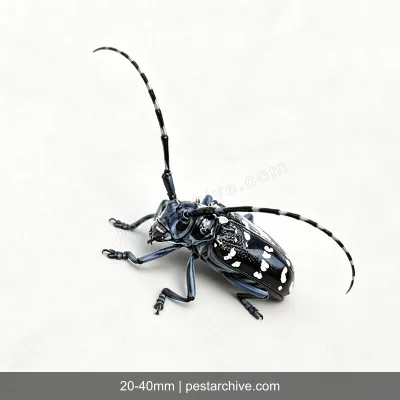
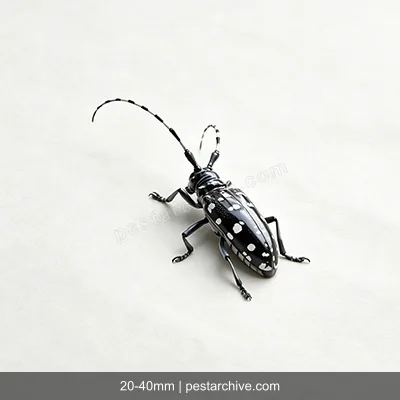
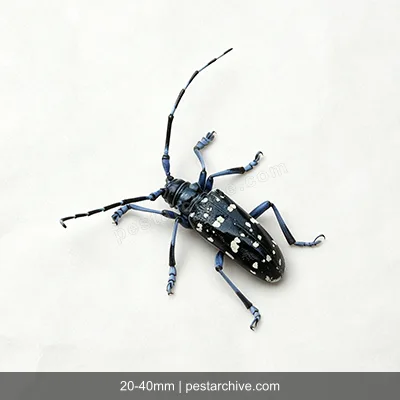
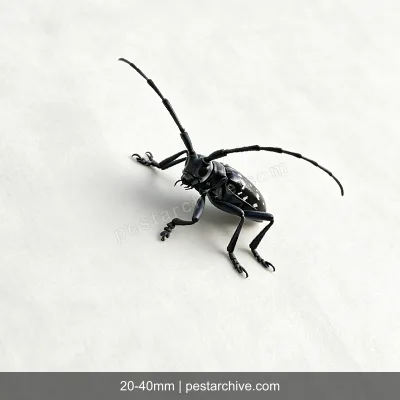
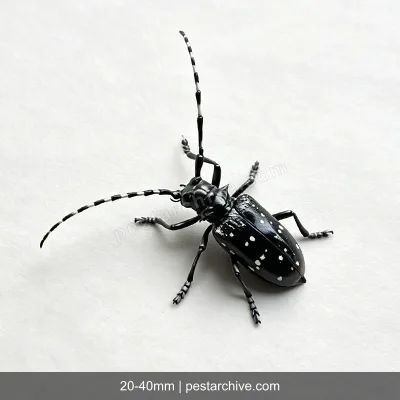
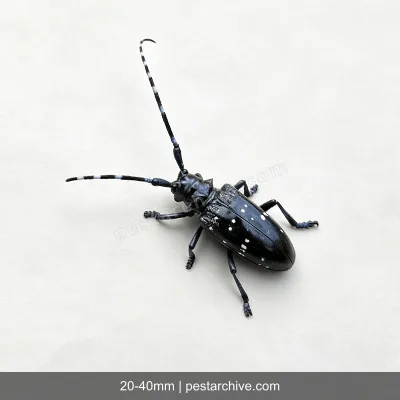
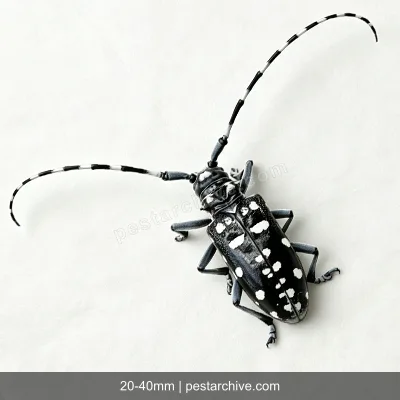
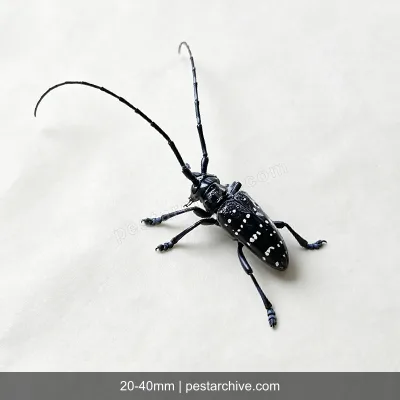
What Damage Do Citrus Longhorned Beetles Cause?
Citrus longhorned beetles are major pests of fruit and landscape trees. The larvae bore into trunks, causing very serious damage.
Larval Damage (Most Severe)
- Trunk boring — Larvae tunnel through the wood beneath the bark, chewing winding galleries
- Cutting off vascular tissue — The tunnels destroy the tree's xylem and phloem, blocking water and nutrient transport
- Bark cracking and gumming — Bark at affected sites cracks open and oozes sap or gum
- Branch dieback — Infested branches gradually die
- Tree death — In severe cases, the entire trunk is hollowed out. The tree snaps in strong winds
Adult Damage
- Adults chew on the bark of tender branches and on leaves
- Females chew grooves into the trunk base or thick branches to lay eggs
- Adult activity period is typically May-August
Impact on Fruit Trees
- Infested fruit trees suffer reduced yield and poor fruit quality
- Trees become weakened and their lifespan is shortened
- In severe cases, trees must be cut down and replanted
Characteristics of Citrus Longhorned Beetle Damage
- Highly concealed — From the outside, you may only see a few small holes. The inside may already be hollow
- Hard to detect early — Early-stage damage is very difficult to notice. By the time you see dead branches, it's often too late
- Difficult to treat — Larvae are inside the trunk where ordinary spraying can't reach them
- Inspection clues: Fresh sawdust and frass at the base of the trunk, or gumming holes in the bark, are signs of larval activity inside
Which Trees Are Vulnerable?
Citrus, willow, poplar, sycamore, cherry blossom, crabapple, and many others are common hosts for citrus longhorned beetles