What Are Bethylid Wasps in My House?
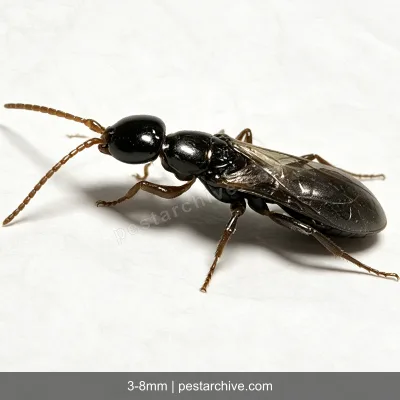
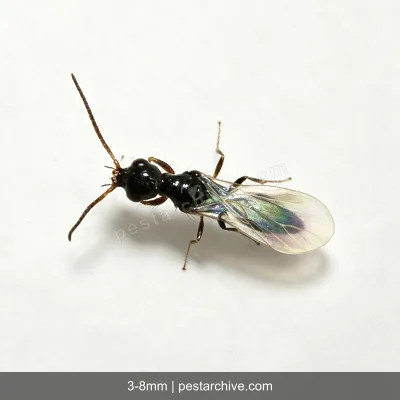
What Do Bethylid Wasps Look Like?
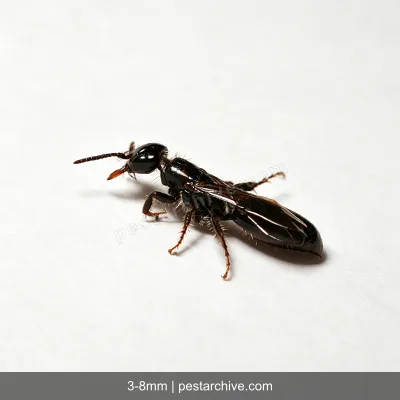
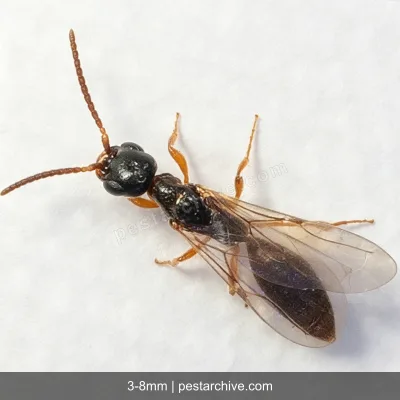
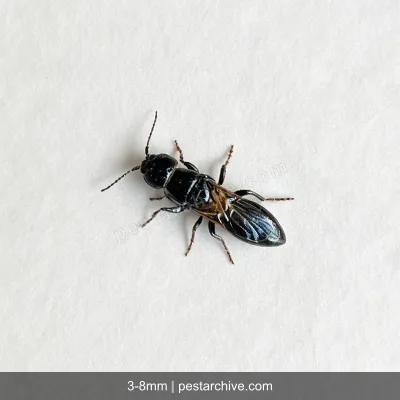
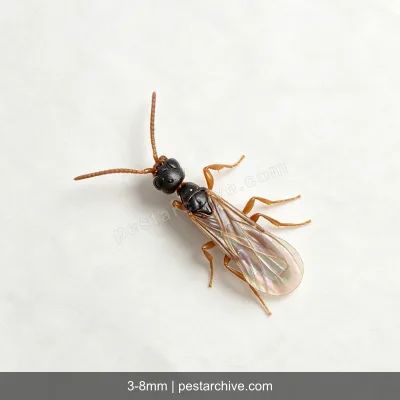
Bethylid wasps are small parasitic wasps with a distinctive appearance. Recognizing them helps you tell them apart from ants and rove beetles to avoid misidentification.
Size
Bethylid wasps are small, only 3-8 mm long, slightly smaller than most ants and much smaller than a house fly. Their appearance is quite distinctive and easy to identify upon close inspection.
Key Features
- Swollen hind legs, The femurs of the hind legs are noticeably enlarged and thick, like they're wearing puffy pants. This is the origin of their Chinese name ("swollen-leg wasp") and the most distinctive feature separating them from other insects
- Body color, Entirely black or dark brown; some species have a metallic sheen
- Antennae, Elbowed (geniculate) antennae that bend like a bent elbow joint, a typical characteristic of wasps
- Wings, Two pairs of transparent membranous wings, with the front and hind wings of different sizes; at rest, the wings are folded over the back
- Waist, A distinct narrow waist (petiole), a feature common to all wasps
Vs. Ants
Bethylid wasps are often mistaken for ants. Here's how they differ:
- Bethylid wasps have wings (though some individuals have reduced wings); worker ants are wingless
- Bethylid wasps' antennae are elbowed (bent); ant antennae are also elbowed but differently shaped
- Bethylid wasps' hind legs are noticeably swollen; ants' legs are uniformly slender
- Bethylid wasps have a narrow waist between thorax and abdomen; ants have a more pronounced narrow waist
Vs. Rove Beetles
Rove beetles have extremely short elytra exposing a colorful abdomen; bethylid wasps are entirely black with full wings, the two are very different.
Why Recognizing Them Matters
Bethylid wasps are natural enemies of wood-boring pests (longhorned beetle larvae, jewel beetle larvae, etc.), in nature, they're beneficial insects. But if they appear indoors in large numbers, it may indicate a wood-boring pest infestation in your home that needs investigation. Female bethylid wasps enter borer tunnels, paralyze the host larva with their stinger, and lay eggs on it, the wasp larvae then feed on the host to complete development.