How to kill wood borers in timber?
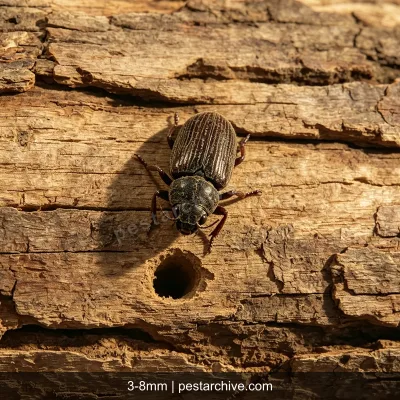
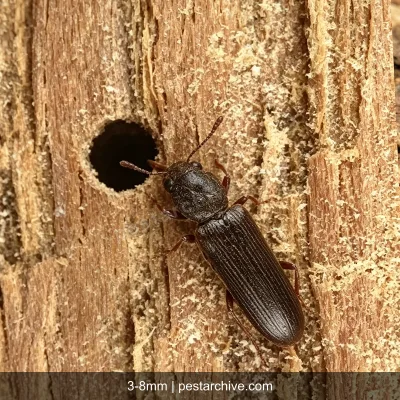
How to kill wood borers in timber?
The most effective method to kill wood borers is injection. Because borers hide deep inside the wood (tunnels can reach 2-5 cm deep), surface spray cannot penetrate.
Why is surface spraying ineffective?
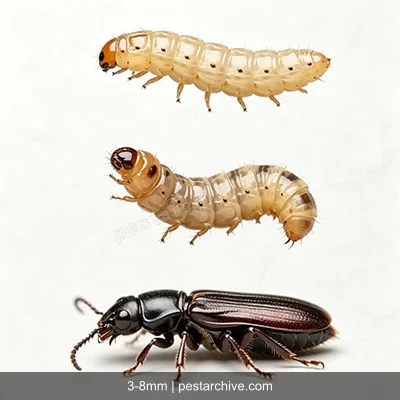
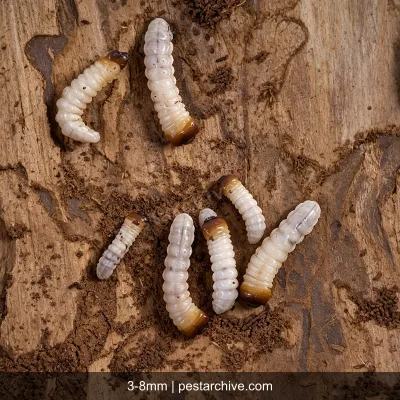
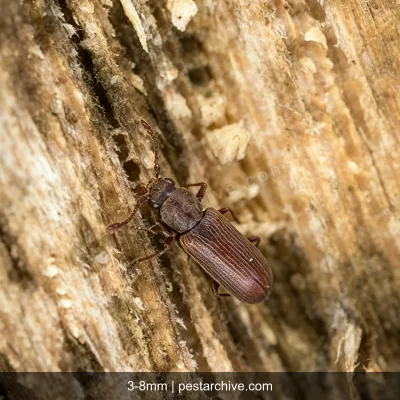
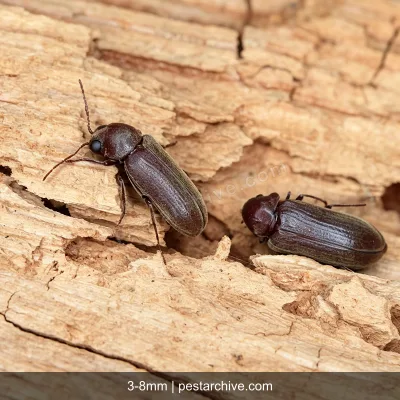
Wood borers (larvae of powderpost beetles, false powderpost beetles, etc.) feed inside the wood, creating winding tunnels. They stay deep inside; surface spraying at best kills newly emerged adults on the surface, but is largely ineffective against larvae inside. The larval stage can last 1-2 years, meaning they can continue damaging the wood for a long time.
Detailed injection method
Tools needed
- Dinotefuran-containing household insecticide (ready-to-use liquid)
- Syringe (without needle) or dropper bottle
- Flashlight
- Screwdriver or thin wire
Procedure
- Find all holes — carefully inspect the wood surface with a flashlight. Fresh holes usually have fine powder around them.
- Clear the holes — vacuum powder from the holes or gently poke with thin wire to clear the tunnels.
- Inject insecticide — use a syringe to draw dinotefuran solution and slowly inject into each hole. Add a few drops per hole, allowing the liquid to flow into the tunnel.
- Repeat treatment — treat again after 1-2 weeks to ensure deep larvae are also killed. Some tunnels may be deep or have larvae hiding in branches, so one application may not be enough.
Auxiliary method: sealed fumigation
If the infested furniture is small, wrap the entire piece in plastic sheeting, place a cloth soaked in dinotefuran solution inside, and seal for a few days. The vapors penetrate the wood in the sealed space, providing more thorough insect control.
Post-treatment verification
1-2 weeks after injection, check the holes: if new fine powder is coming out, live larvae remain and require re-treatment; if no more powder appears, the borers are dead. Note: do not confuse this with sealing material — after sealing, no powder is normal.
Environmental cooperation
While treating borers, also reduce indoor humidity (use a dehumidifier or improve ventilation), as borers cannot survive or breed in dry wood. Humidity below 50% gives the best results.