Grain Mites
(Mold mites, Cheese mites, Copra mite)*Tyrophagus putrescentiae* / Acaridae
Identification & Appearance
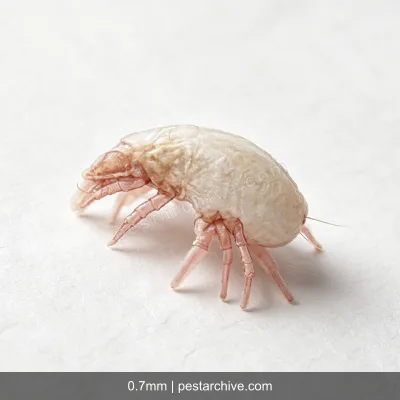
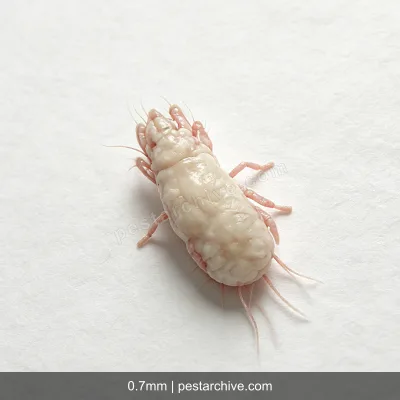
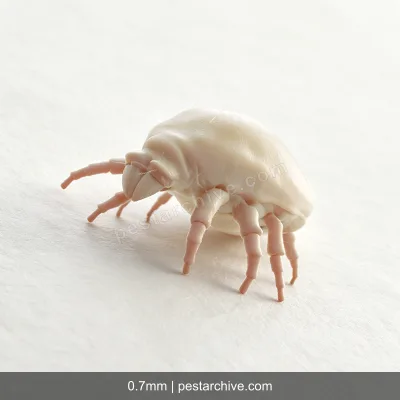
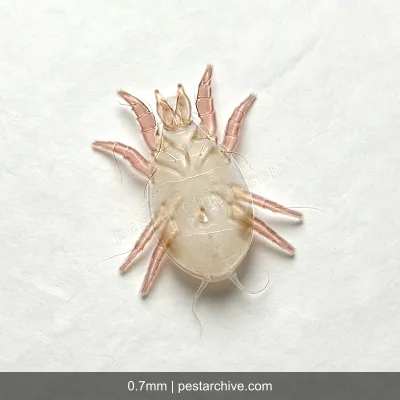
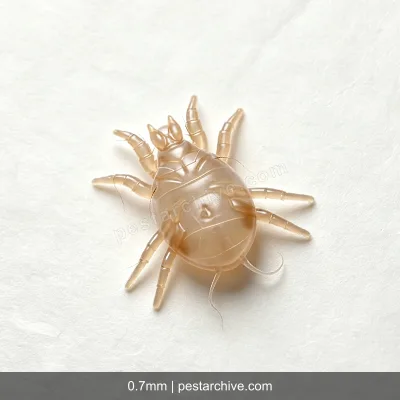
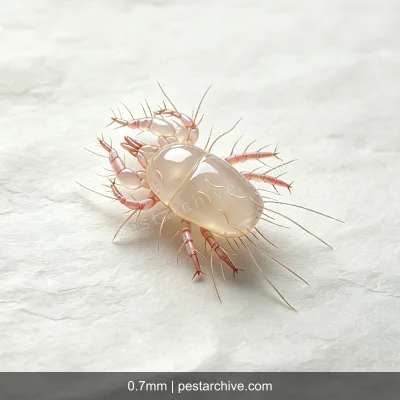
Grain mites (also called flour mites or storage mites) are tiny stored-product pest mites. Adults measure about 0.3-0.7mm, nearly invisible to the naked eye, semi-transparent to milky white, with 4 pairs of legs. Under magnification, they appear as moving white specks. They require high humidity (above 65% RH) and warm temperatures (20-25 C) to survive and reproduce. They cannot survive or breed in dry conditions below 55% RH.
Habits & Hiding Places
Grain mites aggregate en masse in damp stored grain, flour, animal feed, dried fruits, and pet food. In high humidity, they reproduce explosively — a single female can lay over 500 eggs, completing a generation in 3-4 weeks under optimal conditions. They spread primarily through contaminated food and feed. High humidity is essential; keeping the storage environment DRY is the key to prevention.
Health Risks & Damage
- Potent allergens — live mites, dead mites, and their excrement are powerful allergens. Contact or inhalation triggers allergic rhinitis, asthma, and allergic dermatitis.;
- Contaminate flour, grain, dried fruits, and pet food, causing discoloration, caking, and musty odors.;
- Heavy infestations produce gray-white powdery material (a mixture of mites and excrement) on stored food — the food is inedible and must be discarded.;
- Bakers, flour mill workers, and grain elevator operators are high-risk occupational groups.;
- Along with dust mites, grain mites are important indoor allergen sources but are more concentrated in food storage and kitchen areas.
Season & Region
Global distribution. Year-round reproduction under warm, humid conditions (RH >65 %, 20–25 °C); summer is the peak season. Cannot survive under dry conditions (RH <55 %).
| Region | Active Period | Peak Season | Notes |
|---|---|---|---|
| N. Hemisphere Temperate | Apr–Oct | Jun–Sep | Highest density during hot-humid season |
| N. Hemisphere Subtropical to Tropical | Year-round | May–Sep | Year-round reproduction possible |