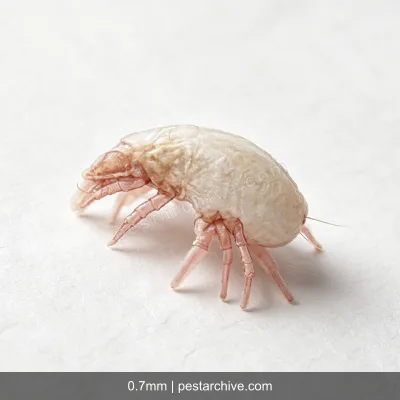
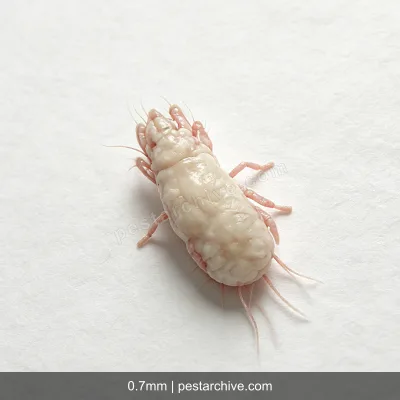
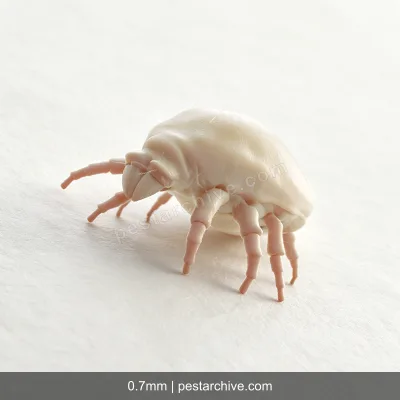
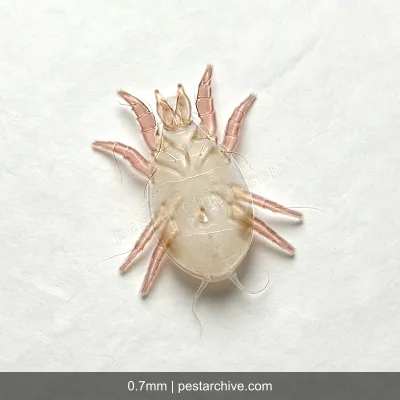
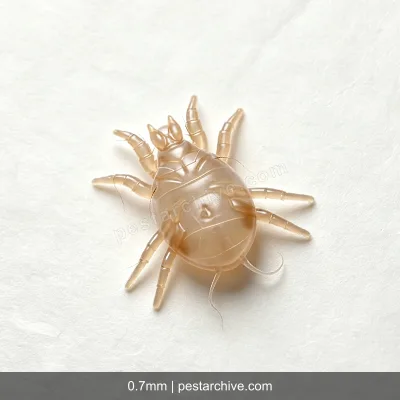
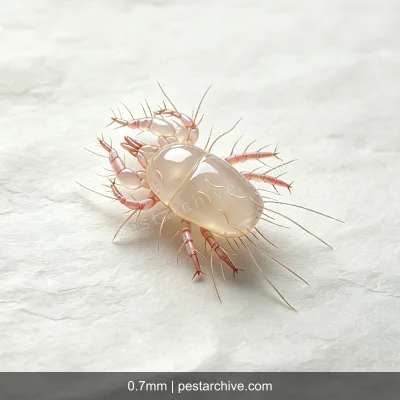
Grain Mites Control & Removal Guide
(Mold mites, Cheese mites, Copra mite)*Tyrophagus putrescentiae* / Acaridae
How They Get In
- Contaminated food import: purchasing flour, grain, dried fruits, or pet food already infested with grain mites.
- Storage and transport: high-temperature, high-humidity conditions during storage and transport allow massive mite proliferation and spread.
- Spilled food residues in damp conditions: long-standing scattered debris in cabinet corners and food storage crevices becomes a breeding source when damp.
How to Get Rid of Them
- Find and Remove Contaminated Food: Inspect all flour, grain, dried fruits, pet food, and feed for gray-white powder, caking, or musty odors. Immediately seal and discard contaminated food, do NOT open the package indoors, which would release mites. Thoroughly vacuum all dust and debris from food cabinets and pantry interiors; immediately seal and discard the vacuum bag.;
- Deep Clean Food Storage Areas: Remove all stored dry goods. Wipe all cabinet interiors, shelves, and corner crevices with a damp cloth and household cleaner to remove all food residues. Dry thoroughly with a cloth (dampness favors mite survival). Empty, wipe, and dry drawers and storage boxes.;
- Environmental Dehumidification: Grain mites are extremely sensitive to low humidity, they cannot survive below 55% RH. Use a dehumidifier in the kitchen and pantry to maintain humidity below 50%. Place food-grade silica gel desiccants in food cabinets. Upon purchase, repackage flour and grain into dry, sealed glass jars or thick plastic containers.;
- Cold Treatment: Before placing in cabinets, freeze newly purchased dry goods (flour, grain, dried fruits) at -18 C for 48+ hours to kill any potential mites and eggs. Suspected but uncertain items can also be frozen as a precaution.;
- Prevention: Repackage newly purchased flour and grain into sealed containers, do not store in original packaging directly in cabinets. Avoid bulk-buying dry goods (first-in-first-out: use older stock before opening new). Regularly inspect cabinet corners and shelf crevices; maintain ventilation and dryness. For severe, recurrent infestations, contact a professional PCO for food-safe residual insecticide treatment of crevices.
Prevention & Follow-Up
Use a dehumidifier to keep kitchen and pantry humidity below 50%. Freeze newly purchased dry goods for 48 hours to kill any mites before storing. Transfer flour and grains into airtight containers and follow a first-in, first-out rule. Check cabinet corners and shelf gaps regularly.