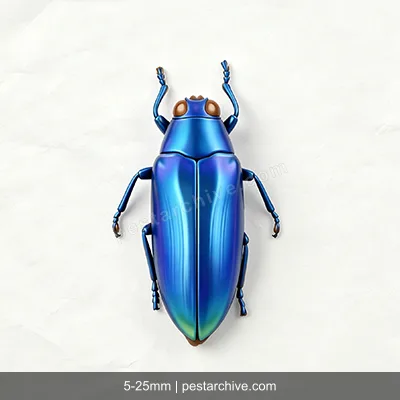
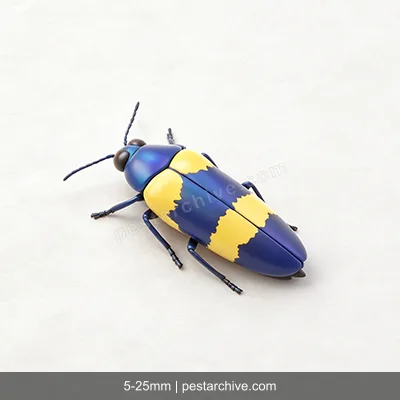
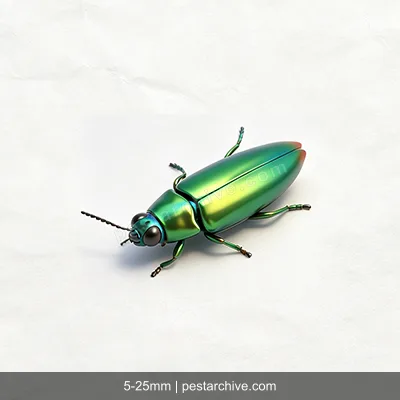
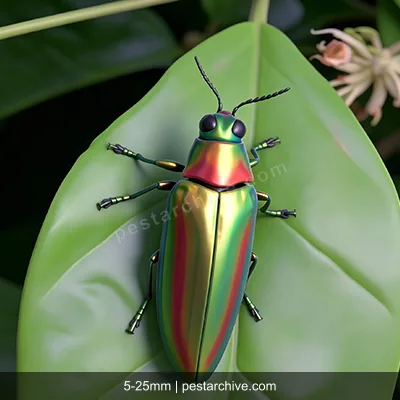
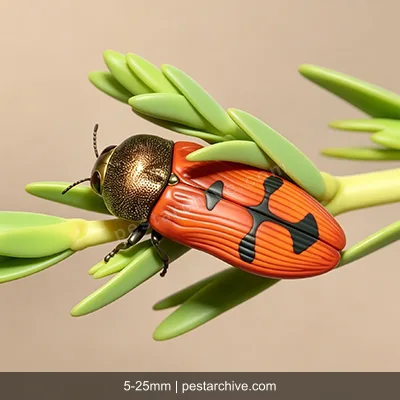
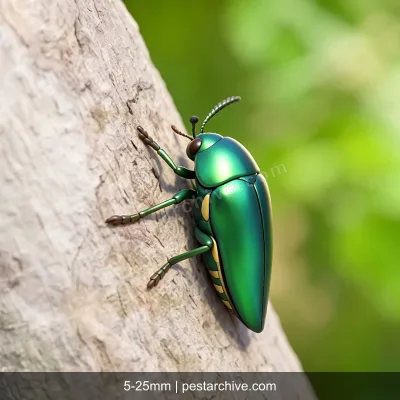
Jewel Beetles Control & Removal Guide
(Metallic wood-boring beetles, Flatheaded borers, Emerald ash borer)Buprestidae
How They Get In
- Adult beetles fly onto balconies in summer and lay eggs on potted tree bark.
- Solid-wood furniture and log bonsai carry eggs or larvae from processing.
- Ground-floor units near woods and parks face highest adult entry.
- Untreated wood plant stands and log ornaments harbor hidden beetles.
How to Get Rid of Them
- Pre-Treatment: Locate all bore holes on infested branches. Check for bark swelling and cracking with expelled frass. Prune severely dead branches. Mark holes.;
- Key Zones: Bore hole openings (spot-spray into each), branch bark cracks and scars, solid-wood furniture joints, wood plant stand corners and joints.;
- Application: Hold sprayer 10-15cm from holes. Spot-spray 1-2 seconds per hole. Spray bark cracks and scars lightly. Avoid heavy spraying on delicate bonsai bark. Only spray wood furniture joints, not lacquered surfaces.;
- Post-Treatment: Monitor 1-2 weeks for fresh frass. Re-treat if active. Prune and destroy dead branches.;
- Prevention: Install insect netting on balconies of ground-floor units near landscaping. Inspect potted tree branches for bark swelling and dieback. Maintain plant health — healthy trees resist some jewel beetle attacks.
Prevention & Follow-Up
Check the branches of potted plants on your balcony regularly. If a branch starts yellowing for no clear reason and the bark looks swollen or cracked, inspect it for boreholes and sawdust-like frass. Prune and destroy dead branches immediately to stop the beetles from developing further inside them. Install insect screens on your balcony to keep adult beetles from flying in and laying eggs. If you live on lower floors near wooded areas, inspect your plants' branches in summer. When you find boreholes, inject insecticide into them with a syringe to kill the larvae.