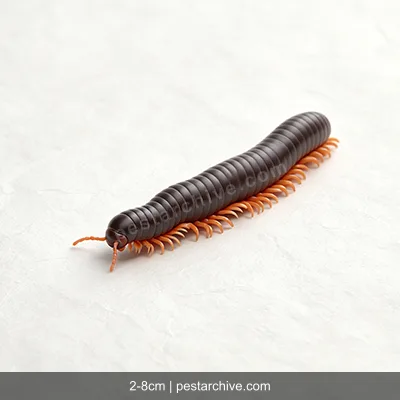
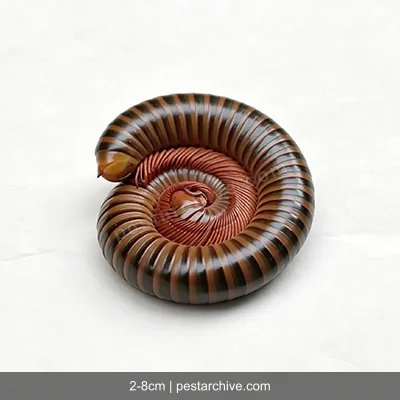
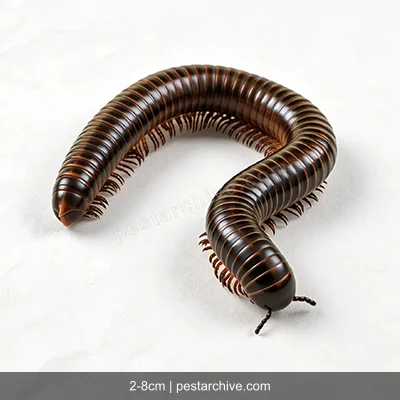
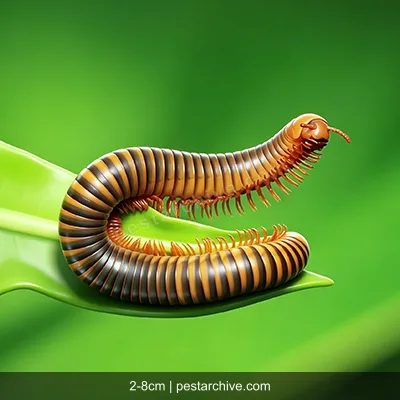
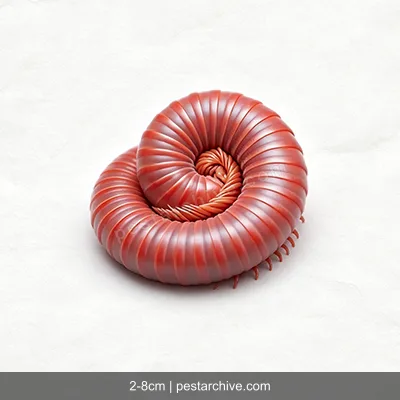
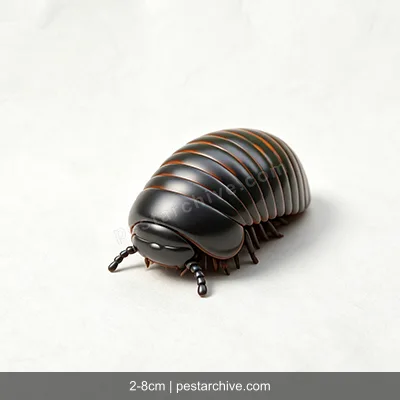
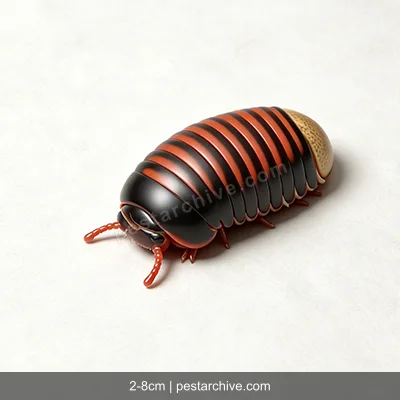
Millipedes Control & Removal Guide
(Thousand-leggers, Flat-backed millipedes)Diplopoda
How They Get In
- Ground-floor units near landscaping — after rain, millipedes enter through door/window gaps, wall cracks, and drain openings.
- Potted plants brought indoors with soil containing millipede eggs and juveniles.
- Hallway and landscaping damp accumulated debris provides breeding sites; millipedes follow hallways indoors.
- Long-damp corners with stacked cardboard boxes and clutter attract millipedes to settle and breed.
How to Get Rid of Them
- Outdoor Cleanup and Physical Barriers: Millipedes primarily enter from outdoors. For ground-floor units and post-rain peak periods, strengthen outdoor protection. Clear accumulated leaf litter, debris, and cardboard boxes from balconies and hallway entrances to reduce outdoor millipede habitat. Seal door/window gaps, exterior wall cracks, and pipe entry holes (with sealant or cement mortar) to physically block entry. After rain, promptly inspect ground-floor doors, windows, and balcony areas; remove any millipedes found.;
- Pre-Treatment Preparation: Clear indoor corners, balconies, and hallway entry clutter and damp accumulations. Remove pets, children, food, and dishes. Shake the spray bottle well.;
- Key Treatment Zones: Door/window frame gaps and thresholds — primary entry routes; spray along frames and bottoms to form a continuous barrier band. Balcony floors, walls, and corners — first indoor station after outdoor entry; spray along corner lines. Wall cracks and pipe entries — potential entry pathways; spray directly into cracks. Bathroom corners and floors — damp indoor areas where millipedes may shelter. Hallway entry doors and common corridors — for multi-unit buildings, form a protective band outdoors.;
- Application Method: Hold sprayer 20-30cm from surfaces and spray evenly. Spray door/window frames and thresholds along the bottom to form a continuous chemical barrier without gaps. Cover balcony areas along corner lines evenly. Spray wall cracks directly. Flat surfaces need only a light pass — no heavy saturation needed.;
- Post-Treatment and Preventive Management: Keep the area closed for 1-2 hours, ventilate for 30+ minutes before re-entry. Avoid spraying on plant leaves, dishes, and food. During post-rain peak seasons (spring-summer rainy periods), apply preventive spraying at doorways and windowsills to block millipede entry paths. Maintain indoor ventilation and dryness — millipedes cannot survive in dry environments.
Prevention & Follow-Up
Keep your home well-ventilated and dry to make it less inviting to millipedes. Seal gaps around doors and windows, cracks in exterior walls, and openings where pipes enter the house. Clear away fallen leaves, weeds, and debris from your balcony and entryway on a regular basis. After rain, inspect ground-floor doors, windows, and balcony areas for millipedes. Remove any you find and apply a preventive barrier spray at entry points.