Carpet Beetles
(Varied carpet beetle, Black carpet beetle, Buffalo beetle)*Anthrenus verbasci* / Dermestidae
Identification & Appearance
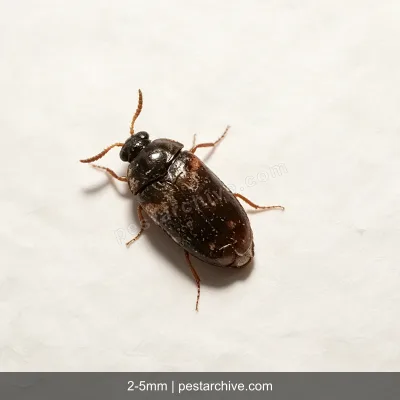
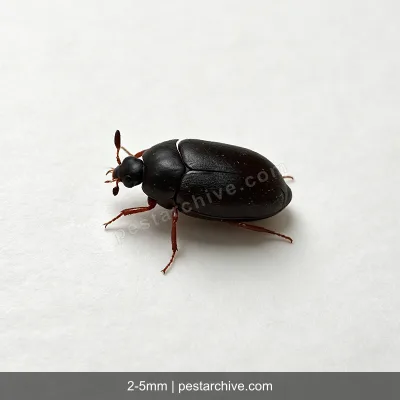
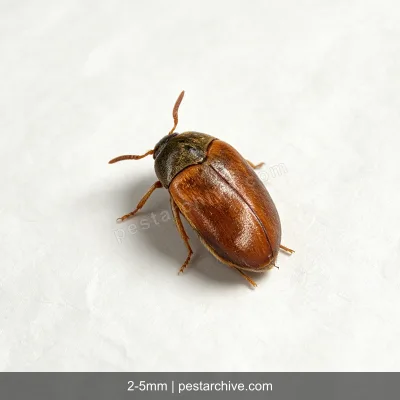
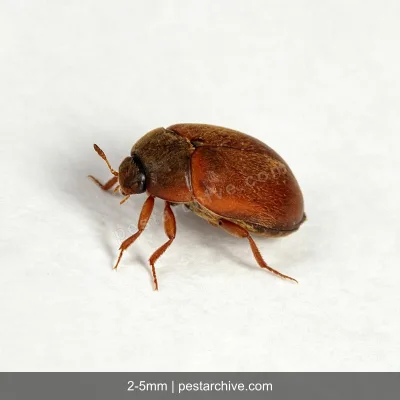
Carpet beetles (family Dermestidae) are common household fabric and stored-product pests. Common household species include the black carpet beetle (Attagenus unicolor) and the varied carpet beetle (Trogoderma variabile). Adults measure 2-5mm, oval to elongate-oval, dark brown to deep brown, with bodies covered in fine hairs or scale-like patterns. Larvae measure 5-10mm, spindle-shaped, densely covered in yellowish-brown to dark brown hairs, with a distinctive tuft of long hairs at the tail end — a key identification feature. Carpet beetles undergo complete metamorphosis. The larval stage is the only damaging stage, lasting months to over a year depending on food and temperature. Under warm indoor conditions, the egg-to-adult cycle takes about 3-6 months. Adults live only 2-4 weeks and feed on pollen and nectar, causing no direct damage. Carpet beetle larvae can digest keratin — enabling them to consume hair, feathers, fur, wool, and other animal-protein materials. They are among the most important stored-product and collectible pests worldwide, and are the most destructive pests in museums and specimen collections.
Habits & Hiding Places
Carpet beetle larvae feed on animal-derived materials — wool, leather, silk, feathers, hair, horn products, and taxidermy specimens are all within their dietary range. Larvae also consume grains, dry goods, and spices. Indoors, they are most common in: wardrobes and clothing storage (larvae hide in wardrobe crevices, drawer corners, and folds of stored clothing, chewing on wool sweaters, fur coats, down jackets, and silk scarves. Long-undisturbed seasonal clothing suffers the most damage); carpet edges and under-sofa fiber lint accumulations (these areas collect hair, dander, and fabric fibers, providing ample larval food); dry goods cabinets and food storage (rice, flour, Chinese herbs, dried fruits, and other stored products can also be consumed. In rich food environments, carpet beetles can co-occur with rice weevils and grain beetles). Carpet beetle larvae are photophobic, hiding deep in crevices and folds during the day and emerging to feed at night. They exhibit negative phototaxis and curl up to play dead when disturbed. Adults are most active in spring and early summer, commonly found near windows — they are attracted to light and fly in from outdoors to lay eggs.
Health Risks & Damage
- Carpet beetle larvae chew irregular holes in wool, cashmere, leather, silk, and down products. Larvae avoid fabric folds and creases while feeding, so holes are often only discovered after clothing has been stored for some time — by which point the larvae may have already pupated and emerged as adults, leaving the damaged garment beyond salvage. Losses on high-value items like cashmere sweaters, silk scarves, and fur coats can reach thousands of yuan.;
- In museums and specimen collections, carpet beetles are among the most destructive pests — larvae can consume insect specimens, taxidermy mounts, and horn products, causing irreversible damage to precious collections. Larvae can also bore into cork stoppers and picture frame backing boards to pupate, causing additional damage.;
- Larval body hairs (hastisetae) and shed skins can cause contact dermatitis — skin contact results in red papules and intense itching, similar to urticaria. Sensitive individuals cleaning long-stored clothing or carpets may inhale hair dust, triggering rhinitis and asthma symptoms.;
- Carpet beetle larvae contaminate dry goods and stored grains, spoiling rice, flour, Chinese herbs, and spices. Larval frass and silken secretions during feeding further degrade food quality.;
- Prevention centers on regularly airing and cleaning stored clothing and dry goods — larvae can only complete development in long-undisturbed environments. Vacuum-sealed storage of woolens and periodic sun exposure are effective protective measures.
Common Species
There are 3 common carpet beetle species in homes, each preferring different food sources and habitats.
Varied Carpet Beetle
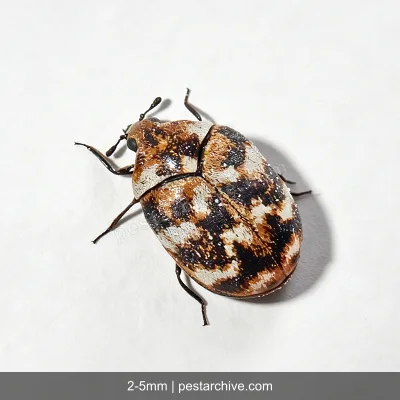
Anthrenus verbasciAdults about 2–3mm, body covered in yellowish-brown, white, and black scales forming a mottled pattern — the most common household carpet beetle. Larvae about 4–5mm, reddish-brown, densely covered in long hairs (commonly called ‘woolly bears’). Feeds on wool, silk, fur, feathers, and dried animal products; can also digest keratin. Adults fly indoors to lay eggs in spring and summer.
Red-Legged Ham Beetle
Necrobia rufipesAdults about 4–6mm, metallic blue-green body with reddish-brown legs and antennal bases. Prefers high-protein, high-fat dried animal products such as ham, cured meat, dried fish, cheese, and pet food. Can also feed on animal carcasses and residual tissue on bones. Significant pest in food processing and storage facilities.
Hide Beetle
Dermestes maculatusAdults about 5–10mm — the largest household carpet beetle species. Dark brown to black, ventral abdomen covered in dense white hairs. Feeds on rawhide, leather goods, dried animal products, and animal feed. Mature larvae bore into wood, books, or soft materials to pupate, causing secondary damage. A major museum and specimen collection pest.
Season & Region
Cosmopolitan. Overwintered-generation adults emerge late Apr to early Aug, representing peak adult activity. Diurnal with positive phototaxis. Larval damage period extends year-round; feed on fur, dried meat, taxidermy specimens, textiles, etc.
| Region | Active Period | Peak Season | Notes |
|---|---|---|---|
| N. Hemisphere Temperate | Apr–Sep | May–Jul | Adult emergence peak late Apr–Aug |
| N. Hemisphere Subtropical | Mar–Oct | May–Aug | Longer active season; year-round damage in warm indoor environments |
| Tropical | Year-round | Summer | Year-round reproduction |