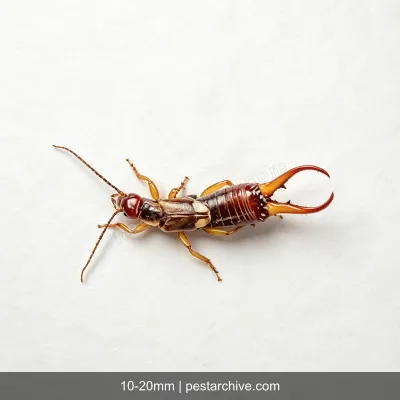
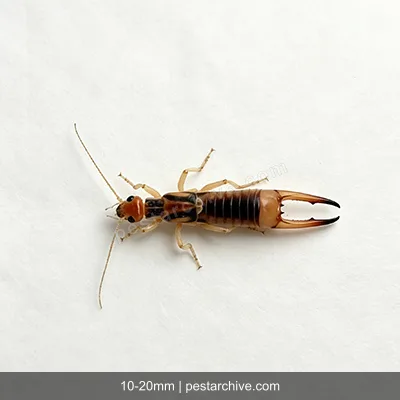
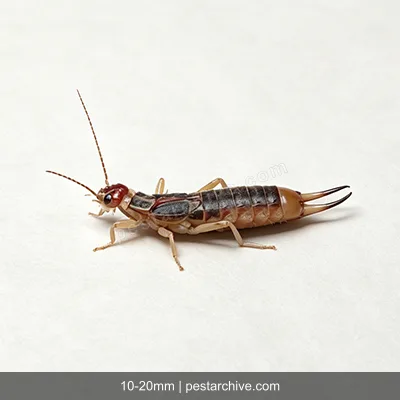
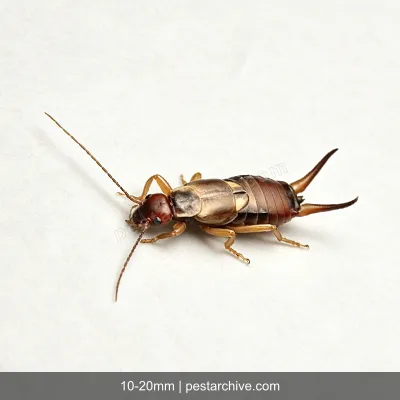
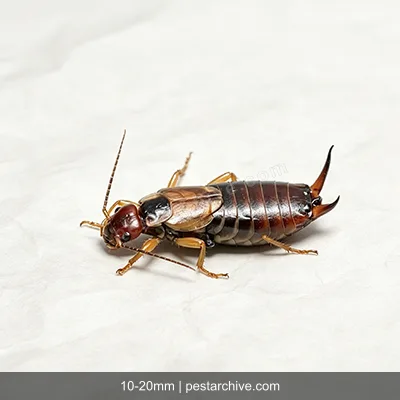
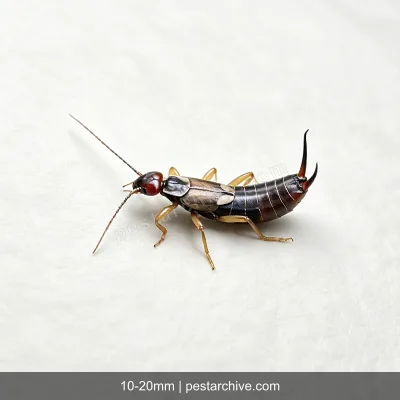
Earwigs Control & Removal Guide
(Pincher bug, European earwig)*Forficula auricularia* / Dermaptera
How They Get In
- Flat bodies allow entry through wall cracks, tile gaps, door/window gaps, and drains.
- Cardboard boxes, outdoor clutter, and flower pots carry earwigs indoors with items.
- Damp hallway environments breed earwigs that migrate upward floor by floor.
- Stacked cardboard boxes and damp corners provide ideal harborage.
How to Get Rid of Them
- Pre-Treatment: Clear stacked boxes and clutter from under beds, behind cabinets, and in corners. Vacuum baseboard crevices and corner dust. Keep indoor areas dry and ventilated. Seal visible wall and door/window cracks.;
- Key Zones: Baseboard crevices (daytime hiding spots), wall cracks, bathroom dark corners, balcony wall crevices, door/window bottom edges.;
- Application: Spray in long lines along crevices. Spray baseboards continuously. Spray door/window frame bottom edges.;
- Post-Treatment: Close 1-2 hours, ventilate. Earwig control centers on environmental management: dryness, decluttering, sealing gaps.;
- Prevention: Keep indoor areas dry and ventilated. Clear balcony leaf litter and clutter. Seal door, window, and wall gaps. Occasional earwigs can simply be swept outdoors.
Prevention & Follow-Up
Keep your home ventilated and dry to lower humidity. Clear away damp clutter, cardboard boxes, and dead leaves from balconies and indoors — earwigs love hiding in these. Seal gaps around doors, windows, wall cracks, and baseboards to block their entry. Earwigs tend to move indoors when temperatures drop in fall, looking for a place to overwinter. A preventive spray along doorways and windowsills at that time stops them before they get in.