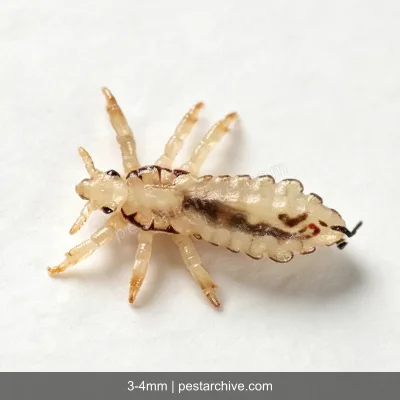
Human Lice
(Head lice, Body lice, Nits)*Pediculus humanus capitis* / *P. humanus humanus* / *Pthirus pubis*
Identification & Appearance
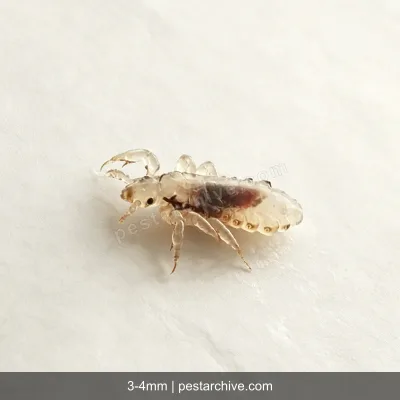
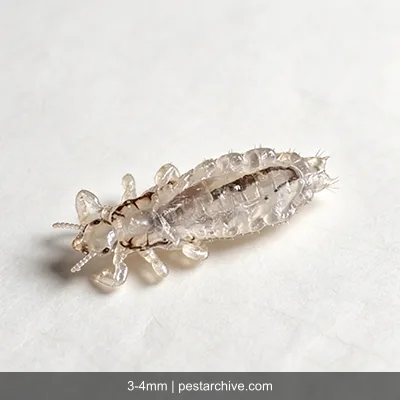
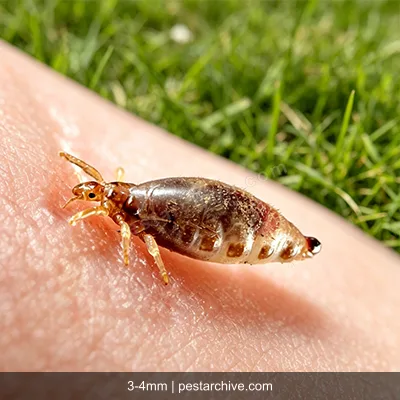
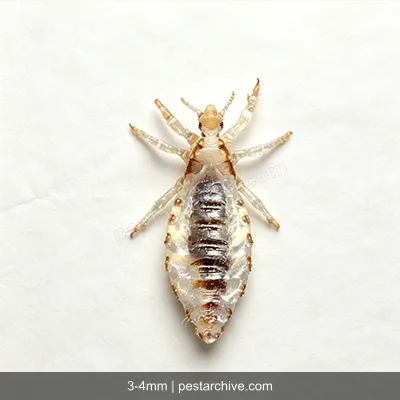
Human lice are obligate blood-feeding parasites specific to humans, including head lice (Pediculus humanus capitis, living on the scalp and hair) and body lice (Pediculus humanus humanus, living on clothing fibers). Adults measure about 3-4mm, about the size of a sesame seed, typically tan-brown to gray-white, with 6 legs each ending in a claw adapted for gripping hair shafts or clothing fibers. Lice require multiple blood meals daily and die within 1-2 days if separated from the host.
Habits & Hiding Places
Head lice live their entire lives on the scalp and hair, especially behind the ears and at the nape of the neck (warmth and humidity are optimal for egg development). Body lice live on clothing fibers, especially seams of underwear and shirts, moving to the body only to feed. Lice spread through head-to-head contact, sharing combs, hats, towels, bedding, and personal items. Body lice are more common in conditions of poor hygiene and crowding (post-disaster shelters, homeless shelters).
Health Risks & Damage
- Bites cause intense itching from allergic reaction to louse saliva, concentrated on the scalp, behind ears, and at the nape.;
- Excessive scratching leads to secondary bacterial infection.;
- Body lice can transmit serious diseases: epidemic typhus (Rickettsia prowazekii), trench fever (Bartonella quintana), and louse-borne relapsing fever (Borrelia recurrentis).;
- Infestation causes social stigma and severe psychological distress, especially in school-age children.;
- Lost school and work days — over 12-24 million school days are missed annually in the US due to head lice.
Season & Region
Global distribution; year-round transmission possible. Head lice transmission elevated among schoolchildren during school opening season. Summer is the peak transmission period.
| Region | Active Period | Peak Season | Notes |
|---|---|---|---|
| N. Hemisphere Temperate | Year-round | Summer–Autumn(Jun–Oct) | Transmission intensifies around Sep school opening |
| N. Hemisphere Subtropical to Tropical | Year-round | No distinct seasonal peak | Year-round transmission possible |