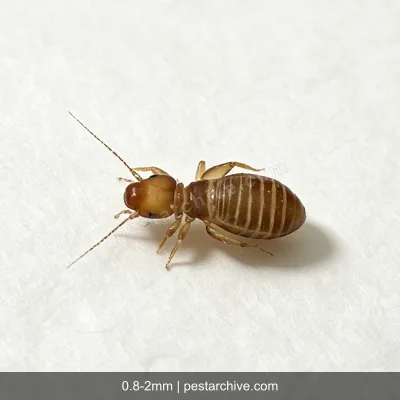
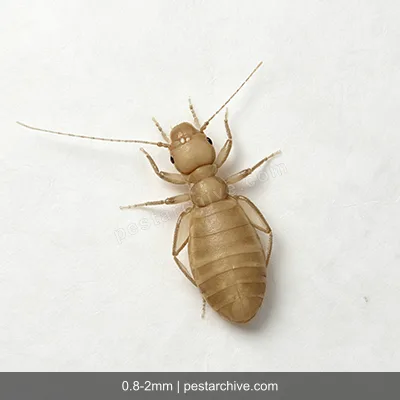
Booklice Control & Removal Guide
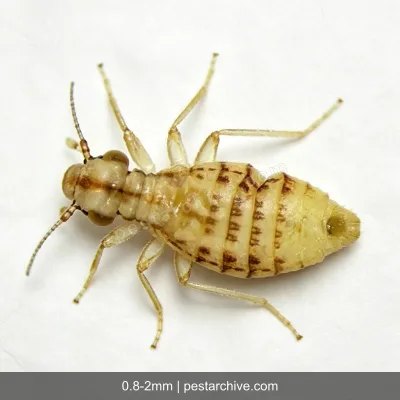
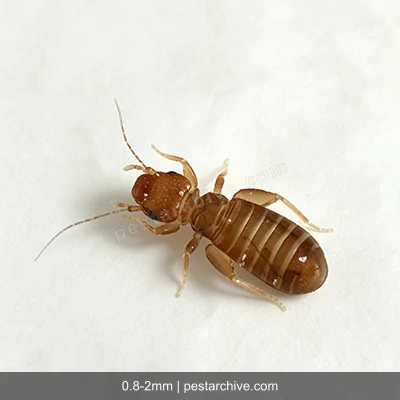
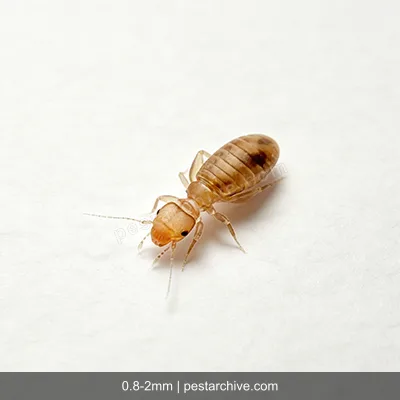
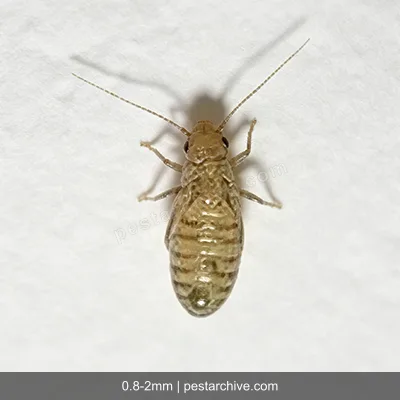
(Psocids, Barklice, Paper lice)*Liposcelis bostrychophila* / Liposcelididae
How They Get In
- Books and Paper Import: Booklice feed on bookbinding glue, paper fibers, and mold between pages. Purchasing used books, old documents, collected prints, and papers readily brings booklice and their eggs into the home. Old bookstores, recycling centers, and library-discarded books carry the highest density.;
- Grain and Dry Goods Import: Booklice and flour mites often co-occur in grain storage. Bulk rice, flour, mixed grains, and pet food may carry booklice. At 0.8-2mm, they're difficult to spot mixed in with grain.;
- Damp Environment Natural Breeding: Booklice are highly humidity-dependent (cannot reproduce below 50% RH). During rainy seasons or in poorly ventilated homes, they can naturally breed in dust and organic debris accumulated in corners, bookshelves, and behind wardrobes. Parthenogenetic reproduction means a single female can establish a population — one can become hundreds within 30 days.;
- Air Current and Dust Dispersal: Their tiny, lightweight bodies allow booklice to become airborne with dust when handling books or cleaning, dispersing via air currents throughout the home. They can travel from a study bookshelf to a bedroom wardrobe through airborne spread.
How to Get Rid of Them
- Humidity Control (Critical): Booklice are extremely sensitive to humidity. Below 50% relative humidity, eggs cannot hatch and nymphs cannot survive. Maintain indoor RH below 45% for 2-3 weeks and booklouse populations will naturally crash. Use dehumidifiers, especially near bookshelves and corners. During rainy seasons and summer high-humidity weather, close windows and run AC in dehumidification mode. Place moisture-absorbing boxes or silica gel desiccants in bookshelf and book-dense areas as supplemental dehumidification.;
- Pre-Treatment Preparation: Organize all books, papers, and folders. Set aside obviously infested books and papers. Infested books can be sun-dried for 4-6 hours or sealed in bags and frozen at -18°C for 48 hours to kill booklice and eggs. Vacuum (with HEPA filter) bookshelf crevices, book edges, and baseboard dust and booklouse debris. Clean grain storage areas — transfer bulk grain into sealed containers. Close doors and windows. Remove pets, children, food, and dishes. Shake the spray bottle well.;
- Key Treatment Zones: Bookshelves and book storage areas — highest booklouse concentration. Spray shelf surfaces, side panel joints, book edges, and spines (avoid direct spraying on page surfaces). Baseboards and floor cracks — indoor crawling and hiding routes. Wardrobe and storage cabinet interiors — where booklice spread from bookshelves to clothing areas. Mattress seams and nightstands — bedroom activity zones. Grain storage cabinet interiors — treat concurrently if co-occurring with flour mites. Curtain folds — booklice may hide in dust accumulated in heavy curtains.;
- Application Method: Hold sprayer 20-30cm from surfaces and spray evenly. Focus on shelf panel joints and seams to ensure penetration into crevices. Spray along baseboards continuously. Lightly spray wardrobe interiors; let dry before returning clothes. Lightly spray mattress edge seams. For grain storage cabinet interiors, ventilate thoroughly after spraying before placing sealed grain back. Avoid direct spraying on book pages and paper surfaces.;
- Post-Treatment and Sustained Control: Keep the area closed for 1-2 hours after spraying, ventilate for 30+ minutes before re-entry. Maintain indoor humidity below 45% (sustained 2+ weeks) — booklice will gradually disappear as they cannot complete their life cycle. Regularly flip through and ventilate books; long-undisturbed books become stable booklouse habitat. Periodically vacuum bookshelves and corners to reduce dust accumulation. If booklouse problems recur, check for indoor leaks or moisture sources.
Prevention & Follow-Up
Reduce indoor humidity below 50% with a dehumidifier. Don't store books or papers in damp basements or attics. Use airtight plastic bins instead of cardboard boxes for storage. Regularly air out closets and drawers. Vacuum bookshelves and corners regularly.