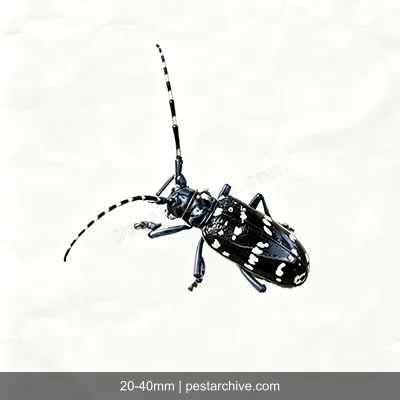
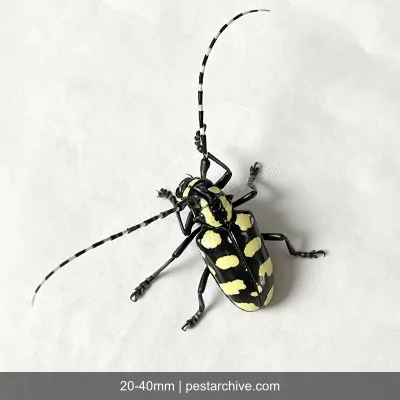
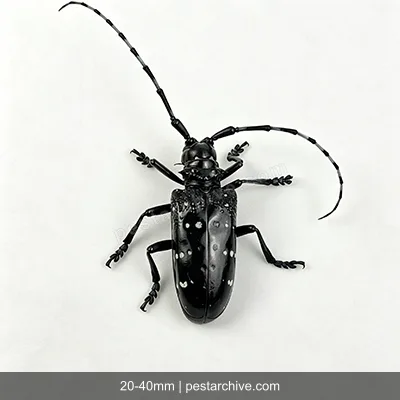
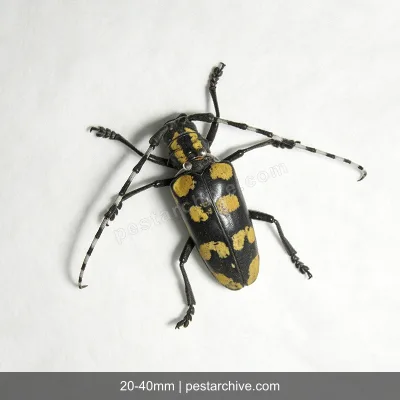
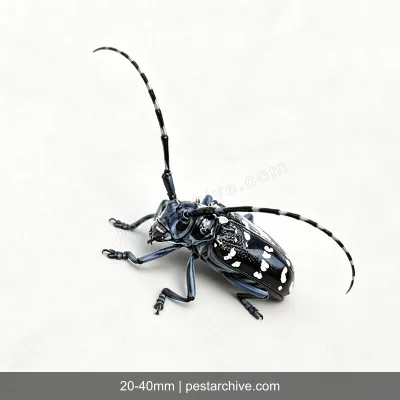
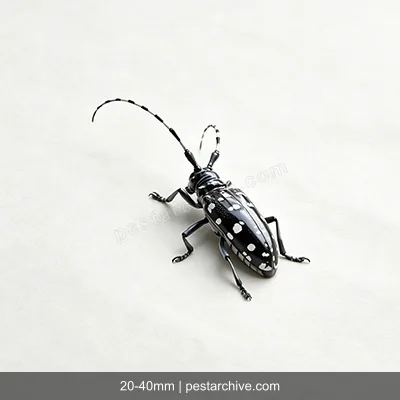
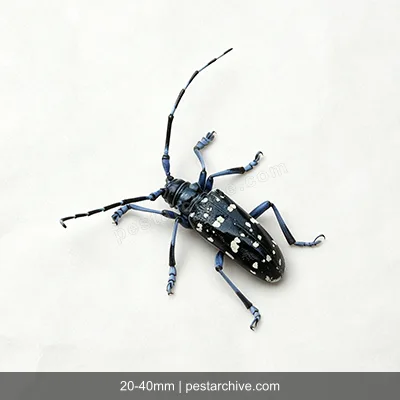
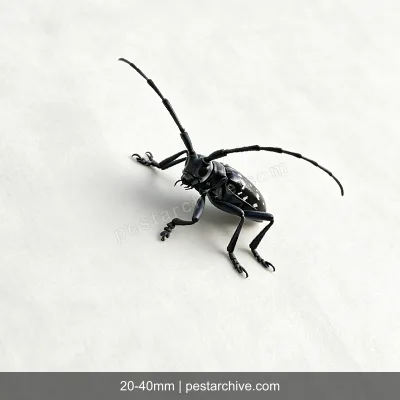
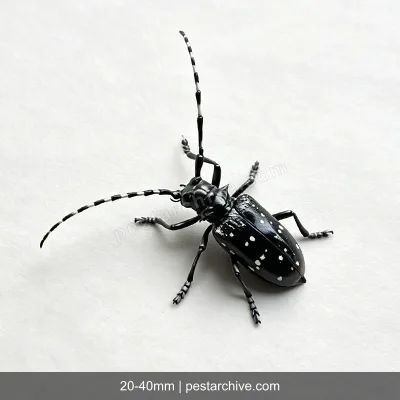
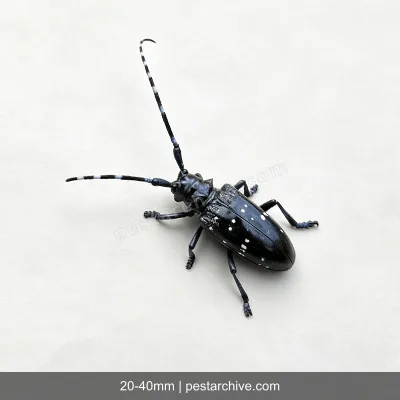
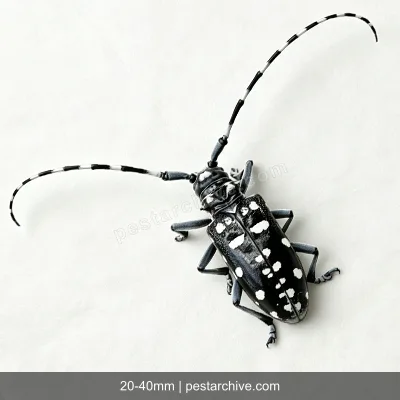
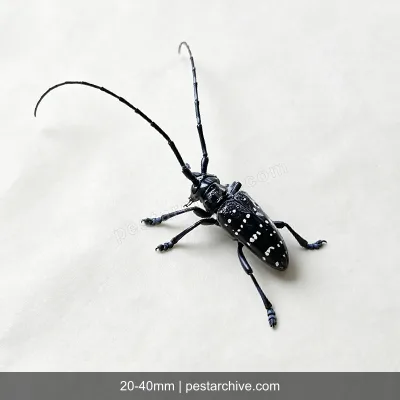
Citrus Longhorn Beetles Control & Removal Guide
(Asian longhorned beetle, ALB, Starry sky beetle)*Anoplophora chinensis* / *A. glabripennis*
How They Get In
- Adult beetles fly onto balconies in summer and lay eggs on potted tree trunks and branches.
- Bonsai and large potted trees carry eggs or larvae from nurseries.
- Ground-floor units near woods and landscaping face highest risk.
- Wood ornaments, log plant stands, and outdoor wood furniture harbor beetle sources.
How to Get Rid of Them
- Pre-Treatment: Locate all bore holes on trunks and branches. Probe holes with stiff wire to kill larvae. Clean expelled frass from hole openings. Mark all holes.;
- Key Zones: Bore hole openings (spot-spray into each), branch bark cracks (egg-laying sites), trunk base (primary egg-laying zone), wood plant stands and railing joints.;
- Application: Hold sprayer 10-15cm from holes. Short bursts of 1-2 seconds to inject into galleries. Repeat 2-3 times per hole. Spray bark cracks and trunk base. Avoid heavy spraying on valuable bonsai.;
- Post-Treatment: Monitor for fresh frass discharge. Prune and destroy dead branches. Hand-capture adults May-August.;
- Prevention: Install insect netting on balconies. Inspect trunks for new egg-laying scars and holes during summer. Minimize balcony lighting at night. Inspect large potted trees for unexplained branch dieback.
Prevention & Follow-Up
Check your potted plants regularly, especially around the base of trunks and branches. If you spot boreholes or sawdust-like frass, insert a thin wire into the hole to kill the larva inside. During winter, prune and discard dead or dying branches to eliminate overwintering larvae. Adult beetles are most active from May through August—hand-pick any adults you see resting on leaves to prevent egg-laying. Install insect screens on balcony doors and windows to keep beetles from flying in. If you live on a lower floor near landscaped areas, keep balcony lights off during summer evenings.