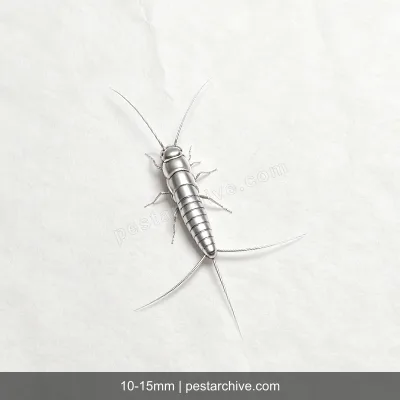
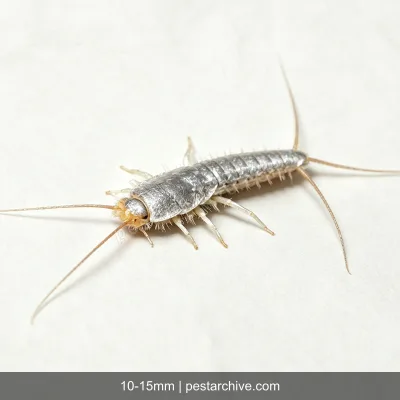
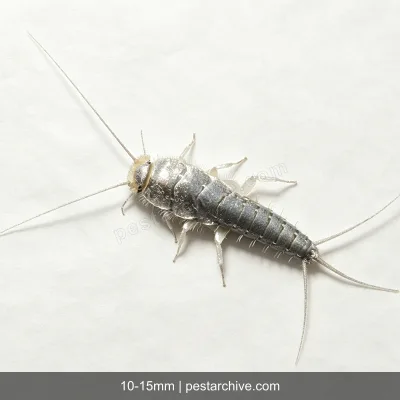
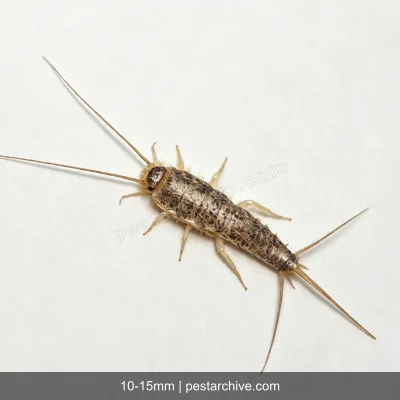
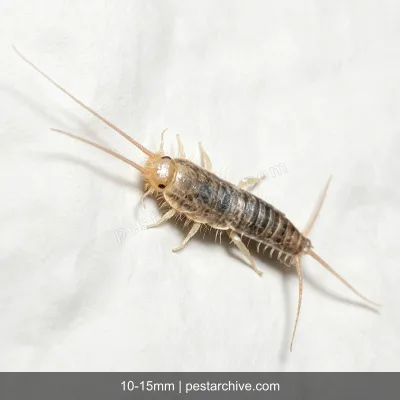
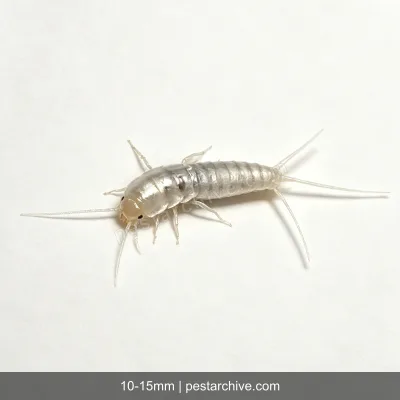
Silverfish Control & Removal Guide
(Fish moth, Bristletail, Carpet shark)*Lepisma saccharina*
How They Get In
- Second-hand Items: Silverfish are most common in used clothing, old books, second-hand furniture, and antique wooden items. Purchasing used wardrobes, old bookcases, and vintage wooden furniture can bring silverfish and eggs hidden in panel joints, drawer bottoms, and back panels into the home. Used clothing folds and pockets may also harbor silverfish.;
- Damp Environment Natural Breeding: Silverfish require high humidity (above 60% RH). In bathrooms, kitchens, and poorly ventilated bedrooms, long-term damp wardrobe interiors and dusty corners with organic debris accumulation provide conditions for natural breeding. Activity and reproduction peak during the southern rainy season.;
- Building Gap Dispersal: Silverfish have extremely flat bodies that allow passage through the narrowest cracks. They enter through hallways, exterior wall cracks, door/window gaps, pipe entries, and floor expansion joints. Ground-floor units and damp environments see more silverfish entry through building gaps.;
- Item Transport: Silverfish cling to contaminated items (cardboard boxes, old newspapers, clothing) and spread between rooms and residences during moves or reorganization. Being nocturnal, they are hard to notice during the day, and by the time they are discovered, they have often spread extensively.
How to Get Rid of Them
- Environmental Cleanup and Clothing Treatment: Organize wardrobes. Remove and inspect long-unworn natural-fiber garments (cotton, linen, silk, wool). Heavily infested clothing should be washed in water above 60°C for 30 minutes or dry-cleaned. Move books, cardboard boxes, and old newspapers from the floor to elevated positions to reduce silverfish harborage and food sources. Vacuum wardrobe crevices, shelf panels, and baseboard dust and debris.;
- Pre-Treatment Preparation: Empty wardrobes and storage cabinets for thorough spray access. Sun-dry or freeze infested books. Close doors and windows. Remove pets, children, food, and dishes. Shake the spray bottle well.;
- Key Treatment Zones: Wardrobe interiors and shelf panel joints — core daytime silverfish hiding areas; spray all joints and behind back panels thoroughly. Wooden furniture backs and bottoms — silverfish favor spaces behind and under wardrobes and bookcases. Bookshelf panels and the junction between books and walls — where silverfish feed and hide. Baseboards and floor cracks — primary indoor crawling and dispersal routes. Bathroom and kitchen damp corners — silverfish need moisture to survive. Door/window frame gaps — entry pathways from outside.;
- Application Method: Hold sprayer 20-30cm from surfaces and spray evenly. Spray along wardrobe shelf panel joints and back panel edges, ensuring penetration into crevice depths. Directly spray the bottoms and backs of wooden furniture. Spray baseboards in continuous lines. Lightly spray bookshelf panel surfaces. Spray bathroom and kitchen corners along wall lines and cracks. Avoid spraying directly on clothing surfaces and book pages.;
- Post-Treatment and Humidity Control: Keep the area closed for 2 hours, then ventilate for 1+ hour before re-entry. Avoid spraying on dishes and food. Store cleaned and dried clothing in sealed bags or insect-proof storage boxes. Place mothballs (repellent to silverfish) or lavender sachets in wardrobes as supplementary protection. Keep indoor areas ventilated and dry; control humidity below 50% — silverfish activity decreases and they gradually die in dry environments. In southern humid regions, place dehumidifying boxes in wardrobes.
Prevention & Follow-Up
Store off-season clothing in sealed garment bags or airtight bins. Use cedar blocks or lavender sachets in closets. Regularly vacuum closet floors and baseboards. Keep indoor humidity below 50%. Inspect second-hand clothing and fabrics before bringing them home.