How to use dinotefuran-containing household insecticide spray against house longhorn beetles?
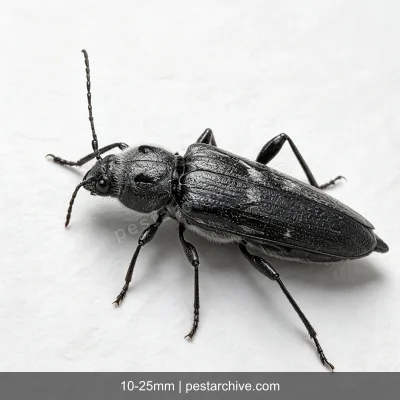
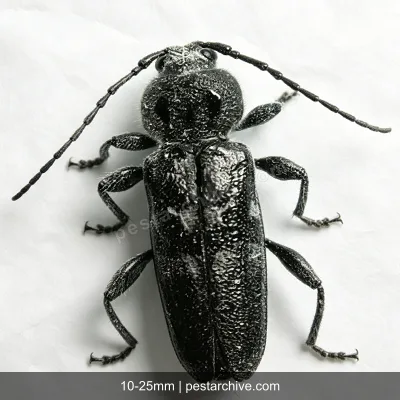
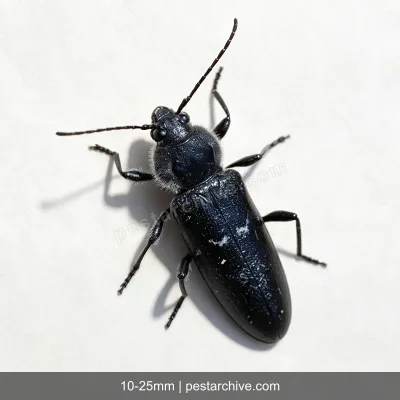
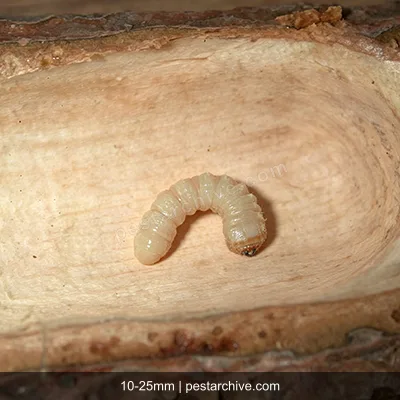
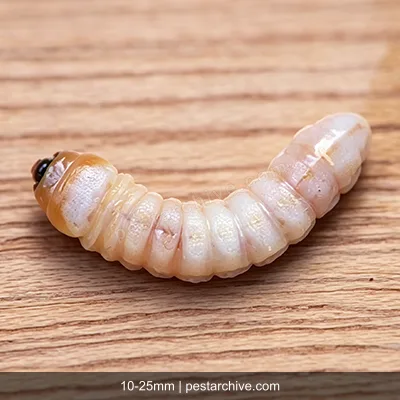
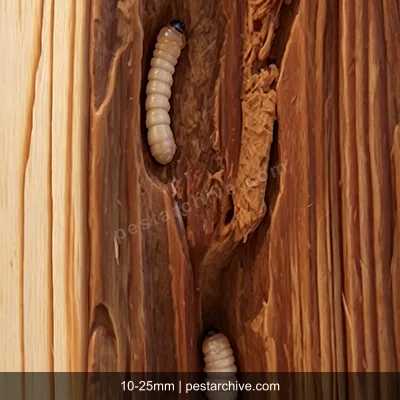
How to use dinotefuran-containing household insecticide spray against house longhorn beetles? Using dinotefuran spray against house longhorn beetles requires precise injection, as the larvae are deep inside the wood (tunnels can reach 10-20 cm deep); surface spraying is largely ineffective.
Step 1: Locate fresh holes
Not all holes need treatment; look for ones with fresh activity:
- Fresh holes have clean edges, with new wood shavings around them.
- After cleaning the shavings from the hole, fresh wood texture is visible.
- Old holes (no longer inhabited) have darkened edges and no shavings.
Step 2: Clear the tunnel
Use a thin wire or screwdriver to gently clean wood shavings and frass from the hole, clearing the tunnel for liquid penetration. Use a vacuum to remove the debris.
Step 3: Inject insecticide
Spray dinotefuran-containing household insecticide directly into the holes repeatedly to allow the liquid to penetrate deep into the tunnels:
- Spray each hole for 5-10 seconds to allow sufficient liquid flow.
- For deeper tunnels, inject in stages, waiting for the liquid to seep down before continuing.
- Treat multiple holes individually; do not miss any.
- For shallower tunnels, chisel open a short section along the tunnel, clean it, spray directly, then seal.
Step 4: Seal the holes
After injection, plug the holes with wooden dowels or putty to prevent rapid evaporation of the insecticide and to prevent new adults from emerging.
Step 5: Observe effectiveness
Check after 1-2 weeks:
- Are there still new wood shavings?
- If yes, there are still active larvae; re-treat.
- If no, treatment was effective.
How many treatments are needed?
House longhorn beetle larvae have a long development period; one treatment may not kill all stages. It is recommended to recheck and re-treat after 2-4 weeks. Spring and summer (April-September) are the best periods for treatment, as larvae are active and the insecticide penetrates tunnels more effectively.
Post-treatment assessment
Mild damage (only 1-2 holes): local injection is sufficient.
Moderate damage (multiple holes, but beam structure intact): treat every hole; may require 2-3 treatments.
Severe damage (beam extensively hollowed): after injecting to kill larvae, a professional builder should assess whether the beam needs replacement. A damaged load-bearing beam may already be unsafe.