Old House Borers
(European house borer, Longhorn house borer)*Hylotrupes bajulus*
Identification & Appearance
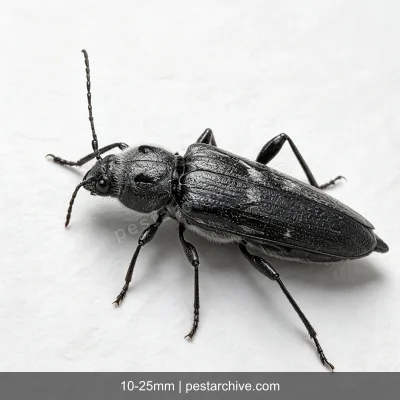
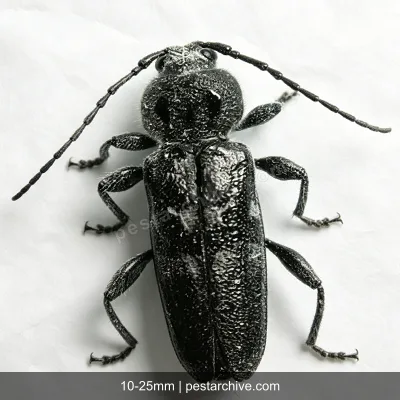
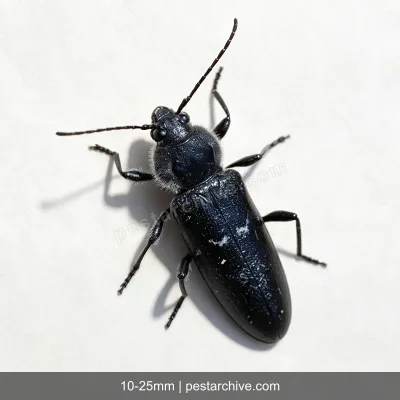
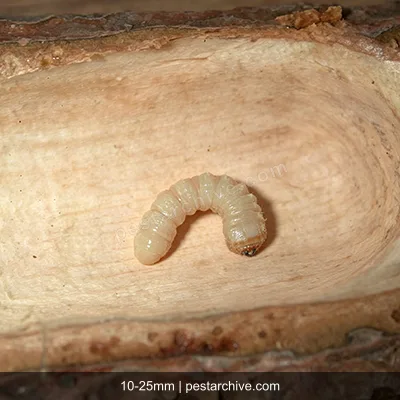
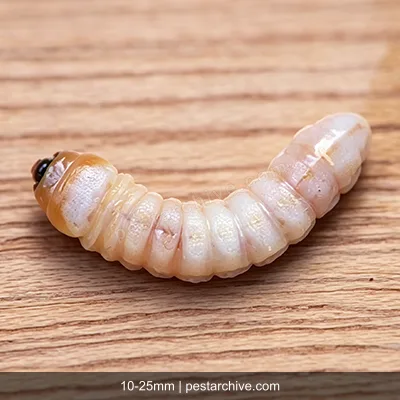
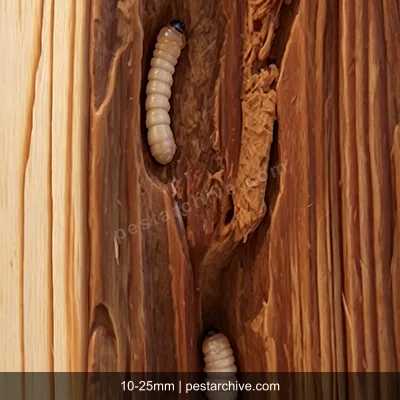
Old house borers (family Cerambycidae) are wood-boring beetles specializing in dry, seasoned wood. Common species include Trichoferus campestris and Semanotus bifasciatus. Adults measure 10-25mm, cylindrical, dark brown to deep brown, with dense short hairs. Antennae are extremely long, often exceeding body length. Larvae measure 15-30mm, white to pale yellow, cylindrical. They tunnel inside wood for 1-3 years, forming irregular galleries packed with fine wood dust and frass. They prefer wood with 10-20% moisture content, making dry indoor lumber equally vulnerable. This is a globally important quarantine pest spread through wood packaging and timber trade.
Habits & Hiding Places
Old house borer larvae bore inside dry wood. Indoors, they infest door and window frame joints (primary egg-laying and larval entry sites), wood furniture back panels and joints, floor edges and under baseboards, and balcony wood members and landscape trees. Larvae tunnel for 1-3 years before pupating. Adults emerge in spring-summer, chewing 5-10mm oval exit holes. Adults are attracted to light and are capable fliers. Ground-floor units near landscaping face higher pressure.
Health Risks & Damage
- Larvae create large galleries, severely compromising wood structural integrity. Furniture frames, legs, and panels can collapse. Door/window frames warp and fail.;
- Exit holes (5-10mm) and expelled brown wood powder ruin surface appearance. Damage to fine furniture and interior woodwork can exceed the structural damage in value.;
- Large adults (10-25mm) with long antennae flying indoors cause alarm.;
- A globally important quarantine pest. Prevention: choose kiln-dried, treated lumber; inspect wood annually in spring; treat holes promptly.
Season & Region
Cosmopolitan. Adults active in spring–summer; phototactic.
| Region | Active Period | Peak Season | Notes |
|---|---|---|---|
| N. Hemisphere Temperate | May–Sep | Jun–Aug | Adult emergence in spring–summer |