How to find the source of clothes moths?
How to find the source of clothes moths?
Clothes moths do not build centralized nests but are dispersed among clothing and fabrics. Finding the source requires systematic inspection, not just focusing on clothes with holes.
Key inspection areas
- Wardrobe — corners, drawer bottoms, and the bottom layer of folded clothes — these long-undisturbed areas are where clothes moths prefer to nest.
- Carpet edges — especially wool carpets near walls, where larvae are most likely to hide.
- Under beds and sofas — rarely moved blankets, felt pads, and cushions.
- Storage boxes — boxes and vacuum bags storing seasonal clothes; inspect carefully when taking them out.
- Shoe cabinets — wool boots and slippers stored for winter are also breeding grounds.
- Curtain folds — thick curtains, especially those containing wool, can harbor insects in their folds.
What to look for
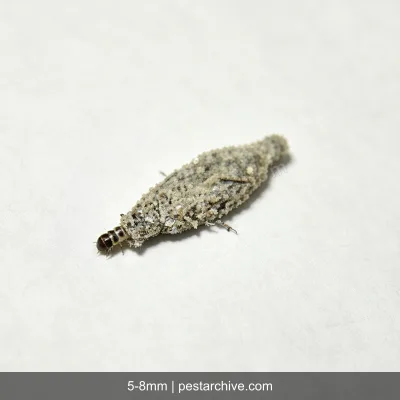
- Rice grain-like silk tubes — these are the mobile cases of clothes moth larvae.
- Irregular small holes on clothes, with silk-like material at the edges.
- Fine webbing adhering to clothing surfaces.
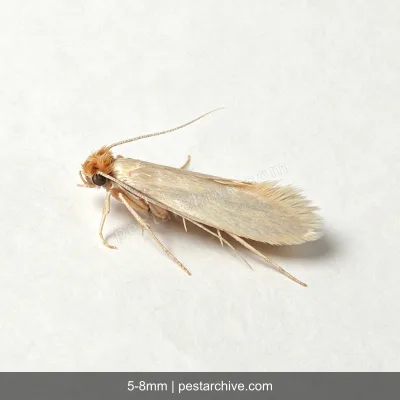
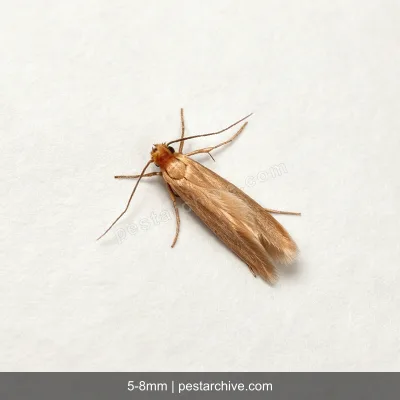
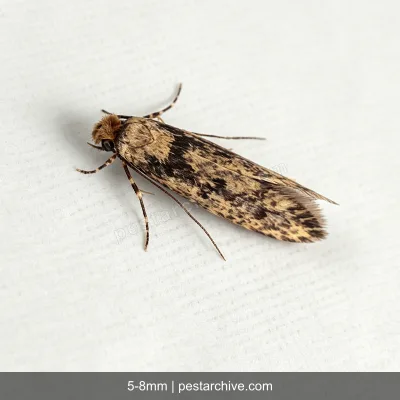
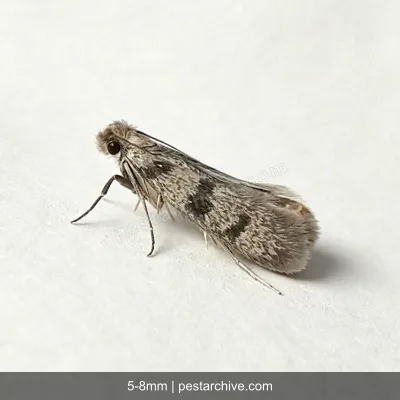
- Pale yellow small moths crawling or flying near wardrobes.
- Small frass particles on the floor (like ground black sesame seeds).
Treatment principle
If clothes moths are found in one place, inspect the entire room. There may be more than one source. Removing only the visible insects without treating the surrounding environment will allow remaining eggs to hatch and return. After cleaning, spray dinotefuran-containing household insecticide in treated areas to prevent secondary infestation. Recheck after 2 weeks; if no new holes or silk tube traces appear, the source has been eliminated.