Sand Flies
(Sand gnat, Leishmaniasis vector, Owl midge)*Phlebotomus chinensis* / *Phlebotomus* spp.
Identification & Appearance
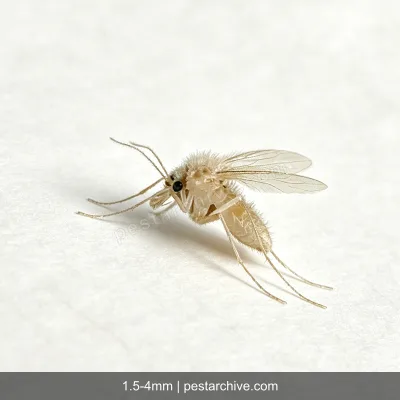
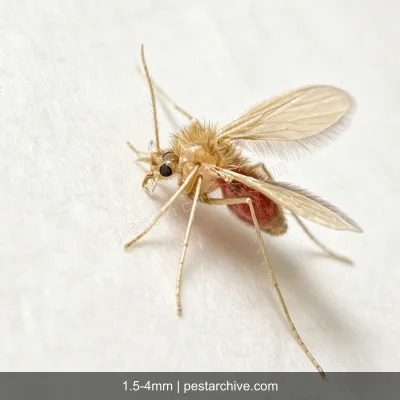
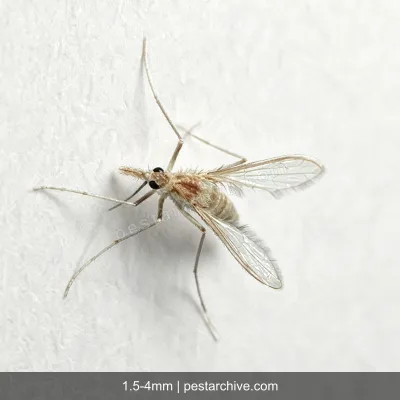
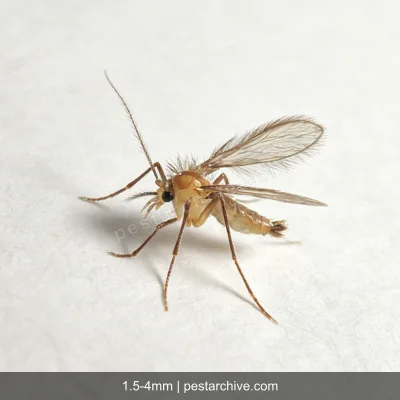
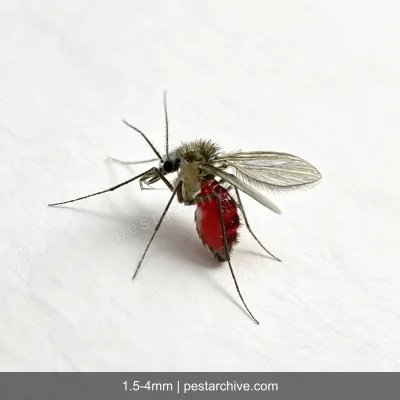
Sand flies are tiny blood-feeding flies in the subfamily Phlebotominae (family Psychodidae). Adults measure 1.5-4mm, with gray-white to pale yellow bodies densely covered in fine hairs, resembling tiny moths but more elongated in shape. Their wings are held upright in a V-shape when at rest — a key feature for distinguishing them from similar-sized insects. Sand flies have a distinctive hopping flight pattern — they fly short distances, frequently landing on walls or surfaces before taking off again. They are nocturnal, resting in dark places during the day and becoming active after dusk. About 600 species are known worldwide. Medically important species in China include Phlebotomus chinensis and P. longiductus. Sand flies undergo complete metamorphosis: eggs are laid in moist soil, rock crevices, or wall cracks; larvae feed on organic debris. The egg-to-adult cycle takes about 6-10 weeks.
Habits & Hiding Places
Sand flies are small-bodied with weaker flight than mosquitoes, and their activity range is typically limited to tens to hundreds of meters from their breeding sites. Their hopping, slow flight means they frequently land on walls and surfaces. Inside the home, sand flies are found around: door/window gaps and screen edges (primary entry points — their small size lets them pass through standard screen mesh); baseboards, behind wardrobes, and under furniture (daytime hiding spots); bathrooms and balcony damp corners (suitable for breeding and resting); and potted plant soil surfaces and tray water (potential breeding conditions). Sand fly larvae develop in moist, organic-rich soil. In older homes, damp wall cracks, garden soil, and around pet bedding can all harbor larvae. Keeping indoor areas dry and well-ventilated and sealing wall cracks are effective measures to reduce sand fly breeding and entry.
Health Risks & Damage
- Sand fly bites manifest as red papules or raised wheals with intense itching that lasts longer than mosquito bites (3-5 days or more), due to stronger allergenic components in their saliva. Scratching can break the skin, leading to bacterial infection and suppuration, potentially leaving hyperpigmentation.;
- Sand flies are important disease vectors, capable of transmitting Leishmania parasites (causing leishmaniasis/kala-azar) and sand fly fever virus in certain regions. Although leishmaniasis is well-controlled in China, sporadic cases still occur in northwestern and northern regions and warrant attention.;
- Sand flies are active at night, often biting exposed areas — face, arms, and legs — while people sleep. Their small size and silent flight mean bites often go unnoticed until later. Infestations significantly impact sleep quality and living comfort. Sand fly control centers on environmental management — clearing moist debris and standing water around the home and installing fine-mesh screens effectively reduce breeding and entry.
Season & Region
Cosmopolitan in warm, arid regions. Common in desert and hilly terrain. Crepuscular to nocturnal. Vector of *Leishmania* spp.