Termites
(Subterranean termite, Drywood termite, Swarmers)*Coptotermes formosanus* / *Reticulitermes flaviceps*
Identification & Appearance
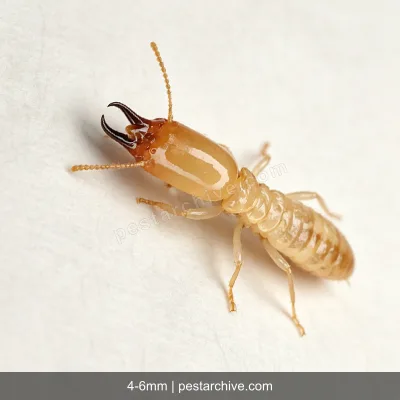
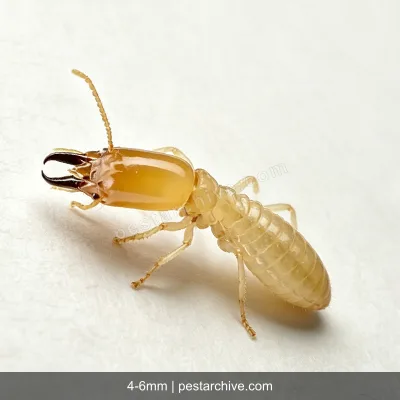
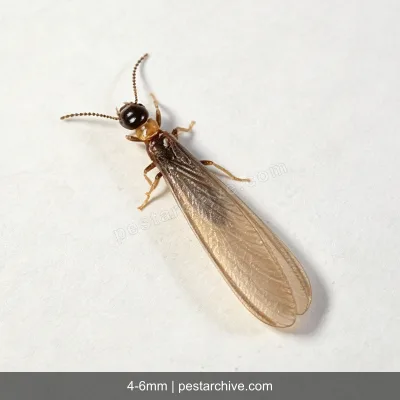
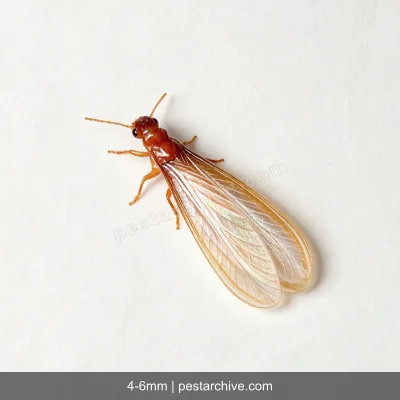
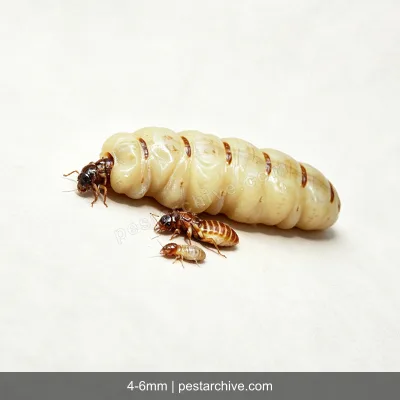
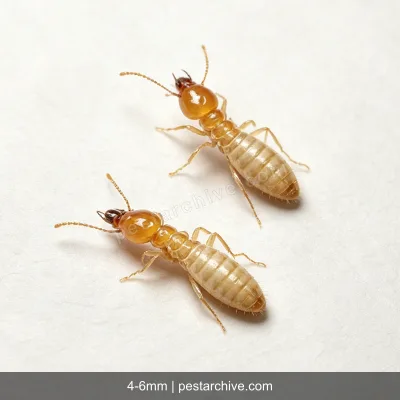
Termites are among the most destructive household pests, causing billions in structural damage worldwide annually. The most common types are subterranean termites (Reticulitermes spp.), drywood termites (Cryptotermes and Incisitermes spp.), and the particularly aggressive Formosan subterranean termite (Coptotermes formosanus). Termites are social insects with a caste system: workers (creamy white, soft-bodied, 4-6mm), soldiers (larger heads with powerful mandibles), and reproductives (dark-bodied, winged alates). Workers are the wood-destroying caste, tunneling 24/7. Termites are more closely related to cockroaches than to ants.
Habits & Hiding Places
Subterranean termites require soil moisture and build distinctive mud tubes along foundation walls to travel between the nest and wood sources while protected from predators. They feed on cellulose — wood, paper, cardboard. Drywood termites infest dry, sound wood without soil contact and eject characteristic six-sided fecal pellets through tiny kick-out holes. Formosan termites build carton nests inside wall voids and can consume wood at an alarming rate — a mature colony can destroy over 30cm of 2x4 lumber monthly. Colonies can contain millions of termites and forage up to 100 meters from the nest.
Health Risks & Damage
- Structural Damage: Termites consume wood from the inside out, causing severe compromise before visible signs appear. Floor joists, wall studs, and support beams are all at risk.;
- Hidden Infestation: Termites avoid light and open air, so damage progresses for years without detection. By the time swarmers appear or floors feel soft, extensive damage has occurred.;
- Financial Impact: Termite damage exceeds $5 billion annually in the US alone. Most homeowners insurance does NOT cover termite damage.;
- Formosan termites can chew through plastic, asphalt, thin copper, and mortar to reach wood.
Common Species
There are 6 common termite species affecting homes, divided into subterranean, drywood, and dampwood categories, each with different invasion methods and control strategies.
Subterranean Termite
Reticulitermes spp.The most common and destructive termite type. Workers 4–6mm, creamy white; soldiers have larger heads with well-developed mandibles. Must obtain moisture from soil; enters building wood structures from underground through mud tubes. The number-one cause of termite damage, responsible for billions of dollars in losses annually in the US alone.
Formosan Termite
Coptotermes formosanusWorkers 4–5mm; soldiers have pear-shaped heads with large mandibles and secrete a white milky defensive fluid when disturbed. The most aggressive termite species; colonies can contain millions of individuals. Capable of damaging plastic, asphalt, thin copper sheeting, and other non-wood materials. Known as the ‘super termite.’
Drywood Termite
Cryptotermes spp.Infects dry, sound wood directly without soil contact. Produces characteristic hexagonal fecal pellets (frass). Classic infestation sign: small holes on furniture or door frame surfaces periodically ejecting piles of frass.
Western Drywood Termite
Incisitermes minorCommon drywood termite in western regions; body length up to 12mm. Swarms during daytime in late summer and autumn. Infests dry, sound wood; commonly found in attics, door frames, and furniture.
Dampwood Termite
Zootermopsis spp.Only infests wood with high moisture content — rotting or water-damaged wood. Larger body size; soldier body length can exceed 20mm. Their presence typically indicates a building leak or moisture problem.
Conehead Termite
Nasutitermes cornigerSoldiers have distinctive cone-shaped heads and can spray defensive fluid from the tip. Colonies build dark carton nests on trees or buildings. Primarily distributed in tropical regions; range has expanded northward in recent years.
Season & Region
Cosmopolitan in warm regions. Peak reproductive swarming (nuptial flight) Mar–Jun each year, especially on sultry evenings after rain. Prefer 20–30 °C warmth and 60–90 % high humidity. Feed on cellulosic materials; workers active year-round underground and within wood structures. Foraging moves deeper in autumn–winter.
| Region | Active Period | Peak Season | Notes |
|---|---|---|---|
| N. Hemisphere Temperate | Apr–Sep(Ground activity) | Apr–Jun(Swarming period) | Reduced deep-soil activity in winter |
| N. Hemisphere Subtropical | Mar–Oct | Mar–Jun(Swarming period) | Earlier swarming in south; mass flights during Meiyu |
| Tropical | Year-round | Rainy season(Swarming) | Year-round activity |