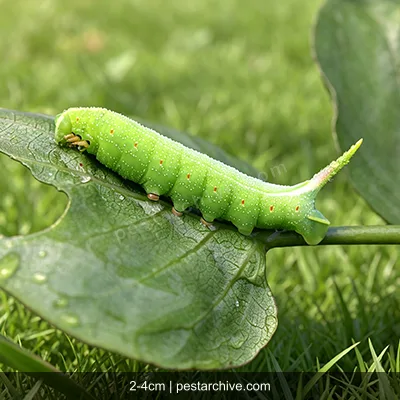
Cabbage Worms
(Cabbage white caterpillar, Imported cabbage worm)*Pieris rapae*
Identification & Appearance
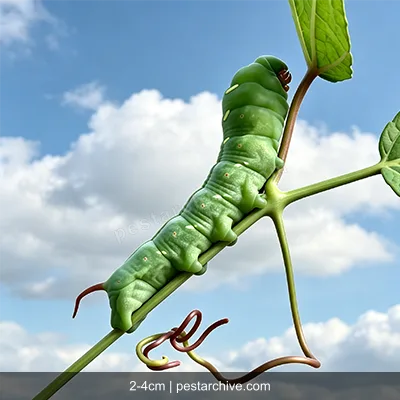
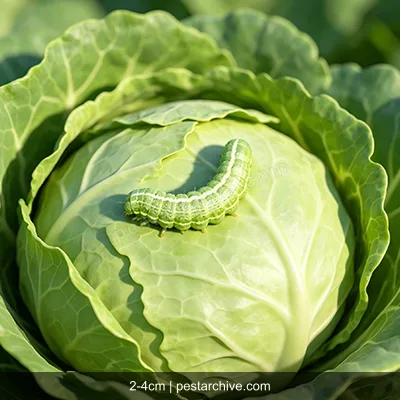
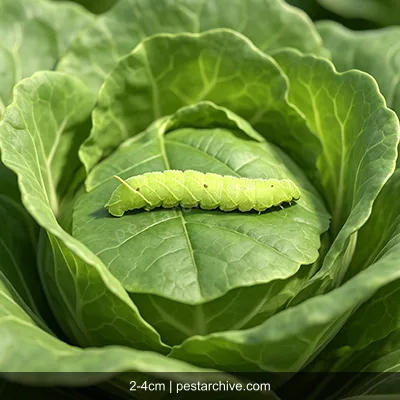
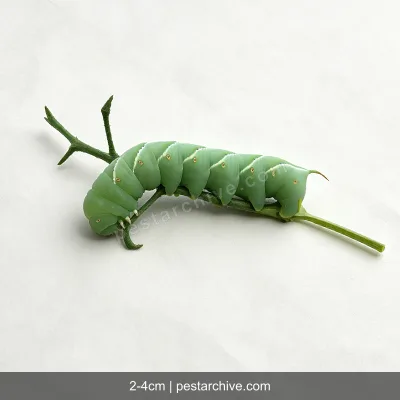
Cabbage worms is a catch-all term for various butterfly and moth larvae found on plants. The most common on houseplants are larvae of the cabbage white butterfly (Pieris rapae), noctuid moths, and tussock moths. Larvae measure 2-4cm when mature, cylindrical, green to blue-green with excellent camouflage. They have chewing mouthparts, 4-5 pairs of prolegs, and produce dark green or black granular frass. They undergo complete metamorphosis: egg (laid on leaf undersides), larva, pupa, adult. At warm temperatures, the cycle takes 3-6 weeks. Butterfly adults are diurnal; moth adults are nocturnal.
Habits & Hiding Places
Cabbage worms feed on plant leaves, with host range depending on species: cabbage whites prefer crucifers (bok choy, cabbage, mustard greens); others feed on roses, camellias, gardenias, and other ornamentals. Indoors, larvae are found on leaf surfaces (feeding from edges inward), leaf undersides and whorls (where eggs and young larvae concentrate), and balcony plants and potted vegetables. They are most active in spring through autumn. In heated homes, they can occur year-round. Adult butterflies and moths fly in from outdoors to lay eggs on potted plants.
Health Risks & Damage
- Larvae chew holes and notches in leaves. Young larvae make small holes on leaf undersides; mature larvae can consume entire leaves, leaving only the main vein. Multiple larvae can defoliate a plant in days.;
- Frass pellets scatter on leaves and surfaces, affecting cleanliness.;
- Some larvae (tussock moths) have urticating hairs causing skin irritation. Wear gloves when hand-picking.;
- Hand-picking is the most effective household control method for these large, slow larvae. Regular inspection catches them early.
Season & Region
Cosmopolitan. Activity begins in March; two annual damage peaks: May–Jun and Sep–Oct. Damage reduced during hot-rainy Jul–Aug. Overwinters as pupa near vegetable fields. Adults diurnal; eggs laid singly on leaf undersides.
| Region | Active Period | Peak Season | Notes |
|---|---|---|---|
| N. Hemisphere Temperate | Apr–Oct | May–Jun、Sep–Oct | Two damage peaks; reduced during hot-rainy Jul–Aug |
| N. Hemisphere Subtropical to Tropical | Year-round | Apr–Jun、Oct–Dec | More generations in southern regions |