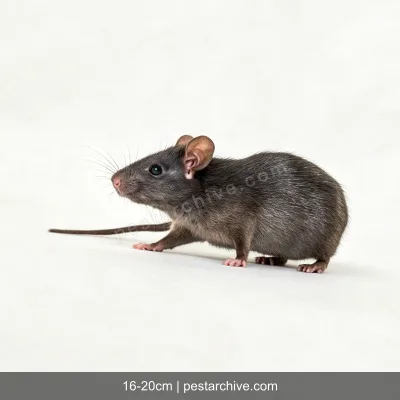
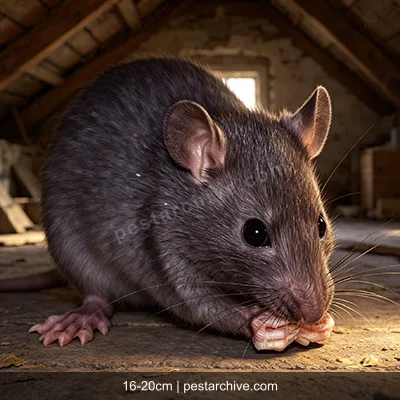
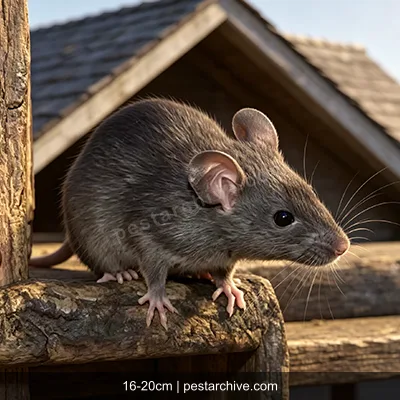
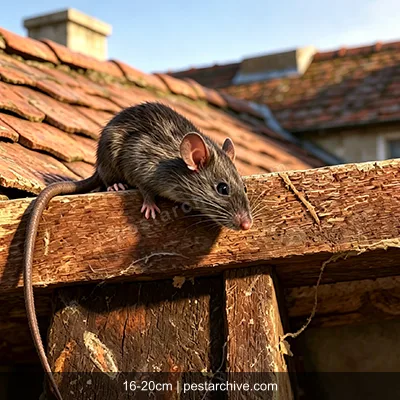
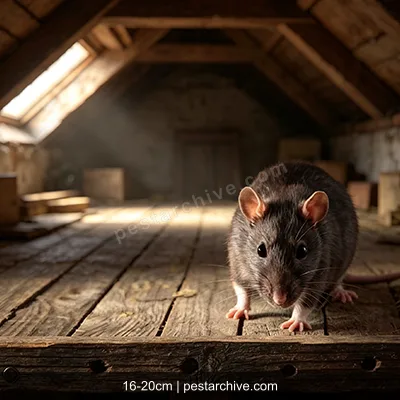


Roof Rats Control & Removal Guide
(Black rat, Ship rat, Citrus rat)*Rattus rattus*
How They Get In
- Tree canopy bridging: they jump from branches and vines touching the building to the roof, entering the attic. Trim all branches at least 1 meter from the building.
- Exterior climbing: they scale drain pipes, rough wall surfaces, brick crevices, and vines to reach roof level.
- Roof openings: they enter through roof vents, chimneys, skylights, and damaged eaves into the attic.
- They travel along power and telephone lines from poles to buildings.
How to Get Rid of Them
- Seal Elevated Entries: Inspect attics, roof voids, and eaves for all gaps and holes (roof rats enter 12mm openings). Seal with metal mesh and sealant. Cover roof vents and chimneys with fine stainless steel mesh. Trim ALL tree branches and vines within 1 meter of the building.;
- Remove Elevated Food Sources: Never store food or pet food in the attic. Harvest ripe fruit promptly. Use lidded outdoor trash cans.;
- Elevated Trapping: Place snap traps and glue boards in high locations (attics, crawl spaces above ceilings, cabinet tops). Use dried fruit, nuts, raisins, and peanut butter as bait. Supplement with ground-level trapping — roof rats also forage at floor level.;
- Chemical Control: Deploy bait stations with anticoagulant rodenticides at both high and ground levels. Label and map all station locations; check and replenish regularly.;
- Professional Control: Roof rat nests in elevated, hard-to-access spaces are difficult to locate and treat. Professional PCOs use infrared detection and borescope cameras to pinpoint nests for precise treatment. Comprehensive sealing of all potential entry routes is essential.
Prevention & Follow-Up
Trim all tree branches and vines that come within 1 meter of your house. Cover roof vents and chimney openings with fine mesh screen. Place snap traps and bait stations both in the attic ceiling area and on the attic floor. Check your attic regularly for droppings, gnaw marks, and other signs of rat activity.