


Roof Rats
(Black rat, Ship rat, Citrus rat)*Rattus rattus*
Identification & Appearance
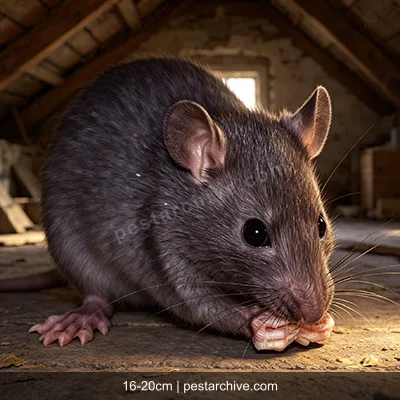
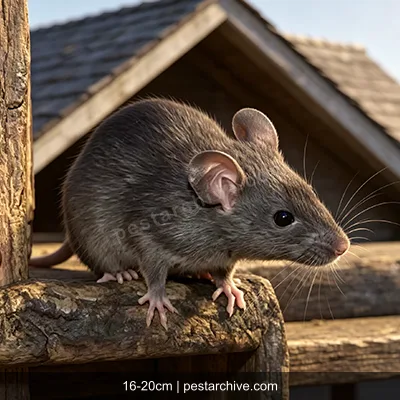
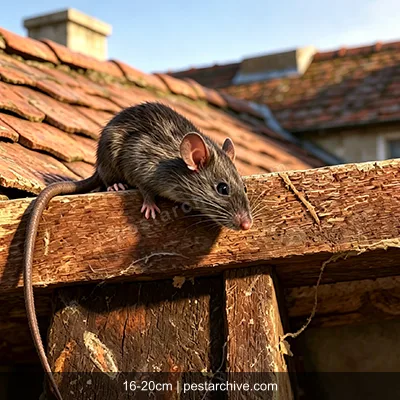
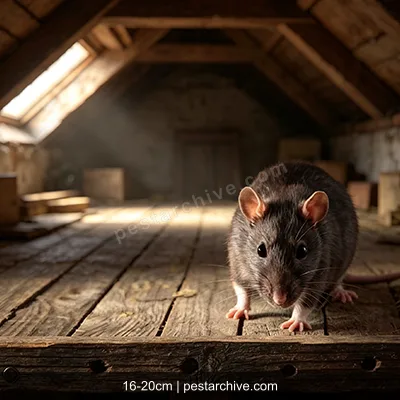
Roof rats (Rattus rattus), also called black rats or ship rats, are known for their exceptional climbing ability. Body length 16-20cm, tail 20-25cm (longer than body). Back is black to dark gray-brown; belly is gray-white to gray. They have a slender body, pointed muzzle, large prominent ears, and a long, slender, nearly hairless tail. They are superb climbers, scaling trees and traveling along power lines. They prefer elevated spaces. Daily food consumption is 15-30 grams, favoring fruits, grains, seeds, and nuts.
Habits & Hiding Places
Roof rats are nocturnal, most active after dusk. They prefer nesting and activity in elevated spaces: attics, roof voids, above ceilings, on top of cabinets, and on high shelves. Outdoors, they nest in trees and palms, using branches and vines as bridges to building roofs. They breed year-round with peaks in spring and autumn, producing 5-8 pups per litter and 4-6 litters per year. They are agile climbers but also forage at ground level.
Health Risks & Damage
- They gnaw attic and roof electrical wiring, causing electrical fires.;
- They damage attic insulation, ductwork, and roofing structures.;
- They transmit diseases including plague (Yersinia pestis), rat-bite fever, salmonellosis, and leptospirosis.;
- Feces and urine contaminate attic spaces, producing foul odors and breeding bacteria.;
- They damage fruit orchards and palm plantations.
Season & Region
Global distribution, especially in warm and tropical regions. Two reproductive peaks per year: spring and autumn. Prefers elevated environments; commonly found in attics and roof spaces.
| Region | Active Period | Peak Season | Notes |
|---|---|---|---|
| N. Hemisphere Temperate | Year-round | Spring(Mar–May)、Autumn(Sep–Nov) | Bimodal reproductive peaks |
| N. Hemisphere Subtropical to Tropical | Year-round | No distinct seasonal peak | Year-round breeding |