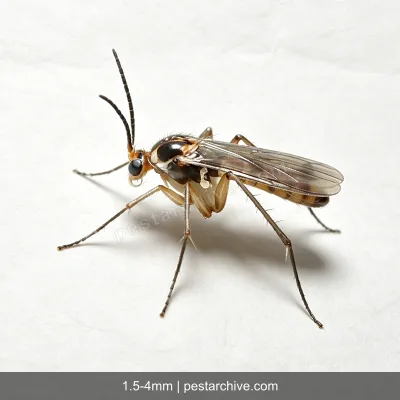
Fungus Gnats
(Sciarid flies, Soil gnats)*Bradysia* spp.
Identification & Appearance
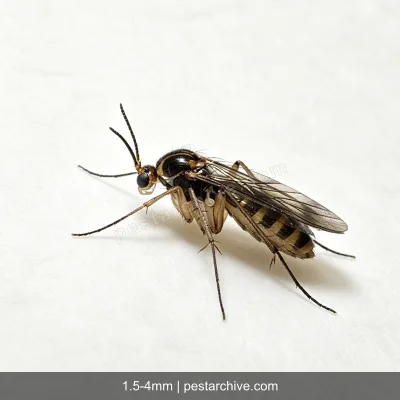
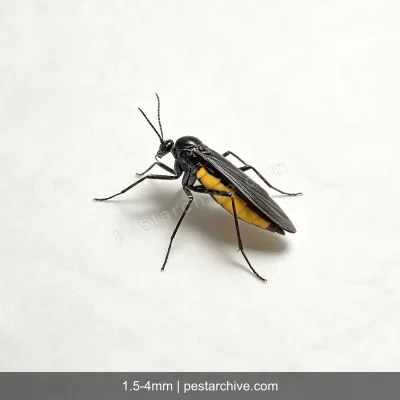
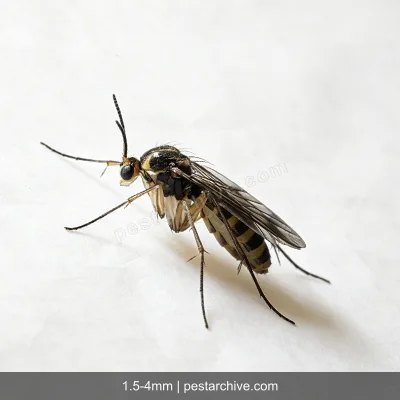
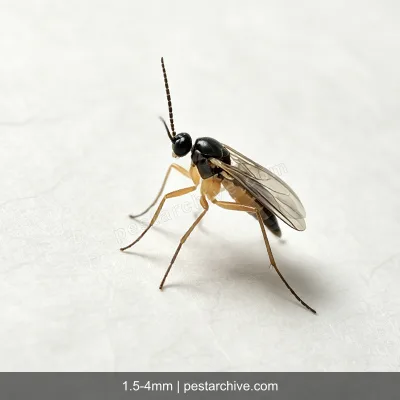
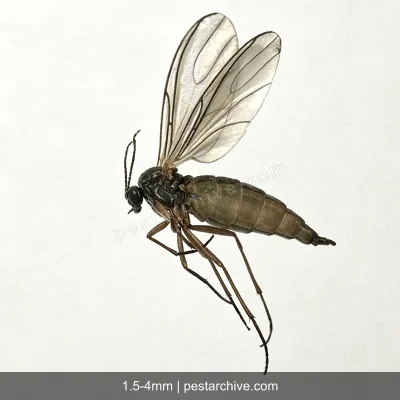
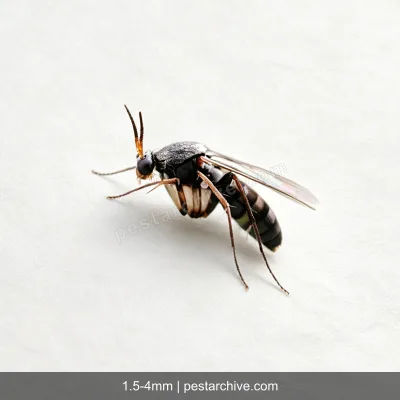
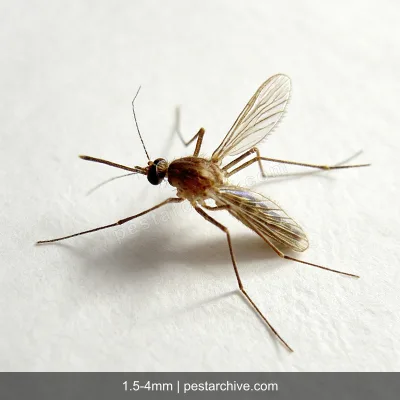
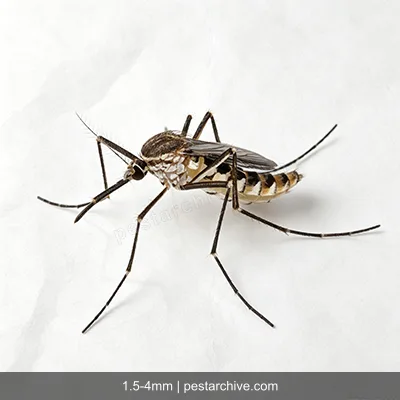
Fungus gnats (family Sciaridae) are among the most common tiny flying pests of houseplants. Common household species belong to the genus Bradysia. Adults measure just 1.5-4mm, with dark gray to black bodies, small heads with long, threadlike antennae, slender fragile legs, and clear wings with simple venation — resembling miniature mosquitoes. Adults are weak fliers, typically hovering low to the ground near plants. Fungus gnats undergo complete metamorphosis: egg, larva, pupa, adult. Larvae measure 3-6mm, white and semi-transparent with a distinctive black head capsule, living in moist soil. Under favorable conditions (20-25°C, soil moisture above 70%), the egg-to-adult cycle takes about 3-4 weeks, with multiple generations per year. Larvae feed on decaying plant roots and soil fungi and mold; adults feed on nectar and plant juices. Fungus gnats do not bite humans, suck blood, or transmit diseases. Indoor fungus gnat outbreaks are almost always linked to overwatered houseplants or chronically damp potting soil.
Habits & Hiding Places
Fungus gnat larvae live in moist soil, feeding on decaying plant roots, fungal hyphae, and organic debris. Indoors, they concentrate around: flower pots and houseplants (the core breeding site — adults lay eggs on moist soil surfaces; larvae feed on roots and fungi in the soil. Outbreaks are almost always tied to overwatering: constantly moist soil surfaces provide ideal larval conditions. Living rooms and balconies with clustered houseplants have the highest gnat density); bathrooms and kitchens (organic grime and mold around floor drains can sustain larvae, but gnat density in these areas is far lower than around plants). Adult fungus gnats are attracted to light and commonly hover near windows, lights, and light-colored walls. Adults live only 5-7 days and do not feed on solid food — they survive on moisture alone. A single female can lay 100-300 eggs, depositing them on moist soil surfaces or in cracks. Adult flight is limited — they rarely travel more than a few meters from their breeding site. Fungus gnat distribution is thus highly concentrated around flower pots; areas far from plants rarely have gnats. They can breed year-round, and indoor heating during winter can sustain outbreaks.
Health Risks & Damage
- Adult fungus gnats hover and fly low indoors. When populations are large (dozens to hundreds), they disrupt daily life, especially in living room and balcony areas. Gnats flying into food and drinks create hygiene concerns.;
- Larvae feed on potted plant root hairs and fine roots, impairing water and nutrient uptake. Light infestations suppress growth and cause leaf yellowing; heavy infestations with extensive root feeding cause wilting and even plant death. Seedlings and cuttings with fragile root systems suffer the most severe damage.;
- Larval feeding wounds in roots create entry pathways for soil pathogens (Pythium, Fusarium), compounding the risk of root rot. Fungus gnats can also spread fungal spores between pots through their feeding activity.;
- Fungus gnat body fragments and fecal dust can be allergens, triggering rhinitis, conjunctivitis, and skin itching in sensitive people.;
- Large fungus gnat populations are a clear warning sign of excessively moist potting soil — indicating overwatering or poor drainage. Adjusting watering habits is the fundamental control method.
Season & Region
Cosmopolitan. Favors dark, humid environments rich in organic matter. Two annual population peaks: Mar–Jun and Sep–Nov; declines during hot-dry Jul–Aug period. Year-round occurrence possible in greenhouses under suitable conditions.
| Region | Active Period | Peak Season | Notes |
|---|---|---|---|
| N. Hemisphere Temperate | Apr–Oct | Jun–Aug | Highest density after summer rains |
| N. Hemisphere Subtropical | Mar–Nov | Mar–Jun、Sep–Nov | Bimodal peaks; reduced during hot Jul–Aug |
| Tropical | Year-round | Rainy season | Year-round reproduction |