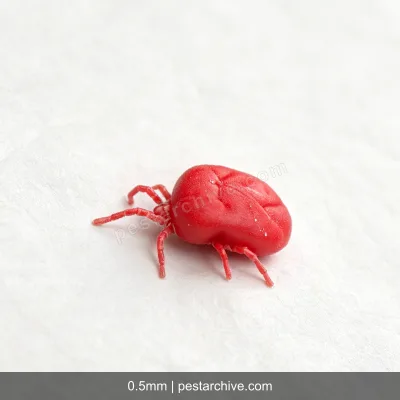
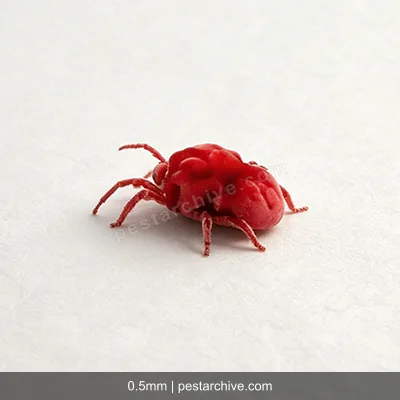
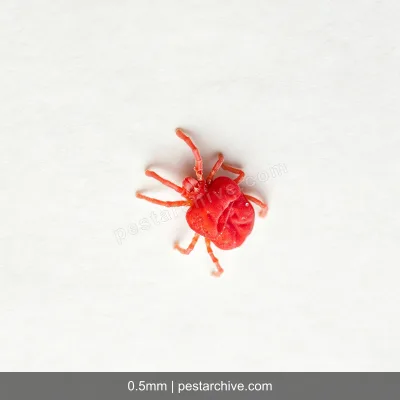
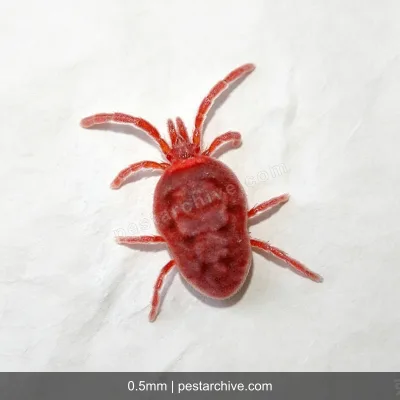
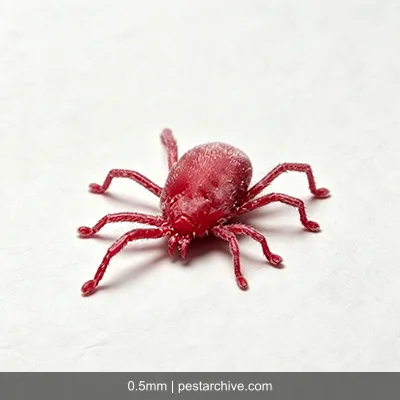
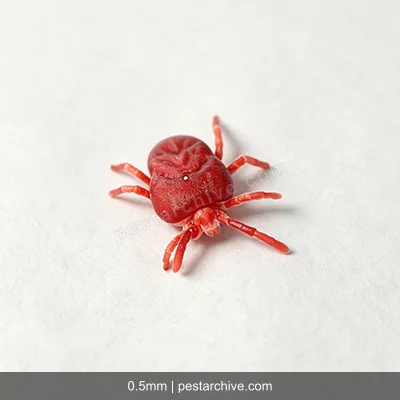
Chiggers Control & Removal Guide
(Harvest mites, Red bugs, Berry bugs, Scrub itch mites)*Leptotrombidium deliense* / Trombiculidae
How They Get In
- Pet Carriage: Chigger larvae are abundant in grass, shrubs, rice field edges, and streamside vegetation. When pets go outdoors, larvae attach to their fur and are carried home. At 0.2-0.5mm, they're nearly impossible to spot on pets. Once indoors, larvae crawl off the pet and disperse into the home environment.;
- Human Outdoor Activity: When people sit on park grass, hike through brush, garden, or work outdoors, chigger larvae climb from grass tips onto clothing, pant legs, shoes, and socks, then enter the home with the person. Unlike ticks, chigger larvae don't travel far — they wait on vegetation for passing hosts.;
- Perimeter Intrusion: As long as suitable rodent hosts (rats, mice) are present in the surrounding lawn, flower beds, and yard weeds, chiggers can breed. Larvae can be carried indoors by air currents, human activity, or pets. Ground-floor units and homes near parks or green spaces are at higher risk.;
- Outdoor Items: Picked wildflowers and greens, outdoor picnic mats and tents, and laundry dried outdoors can all carry chigger larvae inside.
How to Get Rid of Them
- Outdoor Environmental Management: Chiggers are brought in from outdoors — perimeter environmental management is the first line of defense. Regularly mow lawns and yard weeds; clear leaf litter to reduce larval habitat around the house. Control rodent populations in the yard — rats and mice are the primary chigger hosts; rodent control dramatically reduces chigger sources. During chigger season (summer-autumn), avoid sitting or lying on lawn and garden vegetation. Shower and change clothes promptly after outdoor activities.;
- Pre-Treatment Preparation: Clear indoor and outdoor clutter, especially pet beds, carpets, and sofa areas. Remove pets, children, food, and dishes. Check pet fur for chigger larvae (wipe with a damp cloth — orange-red specks on a light-colored cloth indicate chiggers). Shake the spray bottle well.;
- Key Treatment Zones: Door and window frame gaps and screens — block larvae entry with air currents and human traffic. Pet bed and 1-meter radius — the dispersal starting point after pet carriage. Balcony floor and wall edges — first indoor station after outdoor entry. Entryway and door mat area — where larvae fall off when returning from outdoors. Carpet and sofa crevices — indoor hiding spots where larvae wait for hosts. Baseboards and wardrobe bottoms — larval crawling paths and hiding spots. Outdoor balcony lawn edges and flower pot soil surfaces — potential outdoor chigger locations.;
- Application Method: Hold sprayer 20-30cm from surfaces and spray evenly. Apply thoroughly along door/window frame gaps. Cover balcony floors and wall edges evenly until lightly moist. Focus on pet beds and surroundings; spray carpets thoroughly to ensure fiber penetration. Apply a protective band at outdoor balcony and entryway areas. Spray the lower 30cm of walls along baseboards continuously. Flat surfaces only need a light pass.;
- Post-Treatment and Outdoor Protection: Keep the area closed for 2 hours, then ventilate for 1+ hour before re-entry. Avoid spraying on dishes, food, and pet bodies. During chigger season, shower with hot water and change clothes promptly after outdoor activities (water above 60°C kills chigger larvae). Groom pets after they return from outdoors to reduce the risk of bringing chiggers inside.
Prevention & Follow-Up
Take a shower right after outdoor activities — especially in grassy areas, near riverbanks, or around farmland — and wash your clothes in hot water above 60°C (140°F). Keep indoor spaces dry and clean; vacuum regularly to reduce the environments where dust mites and chiggers can hide. Mow your lawn and clear weeds around your yard to reduce chigger habitat near the house. Control rodents in and around your home to reduce the number of natural hosts that chiggers depend on.