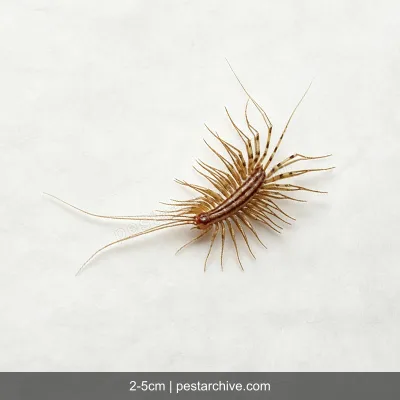
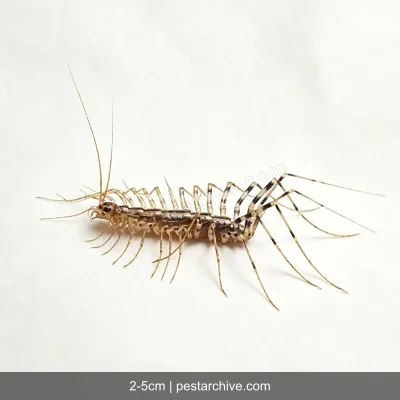
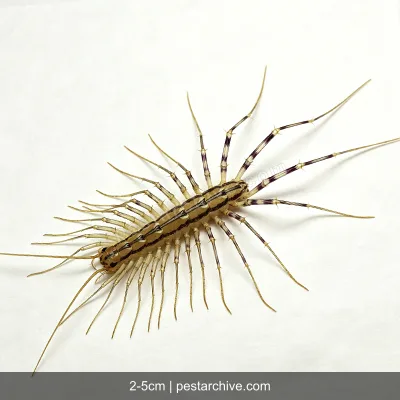
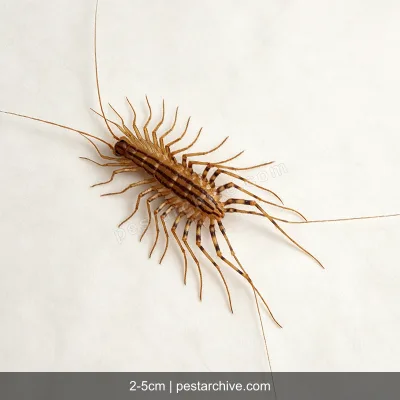
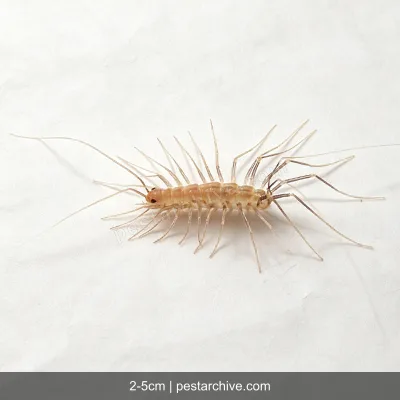
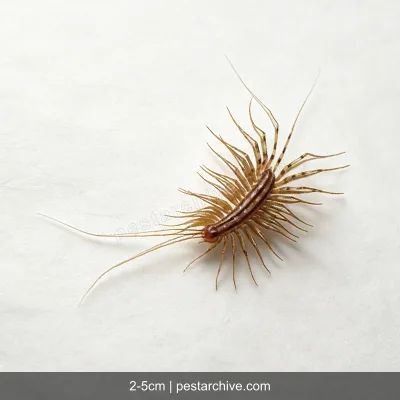
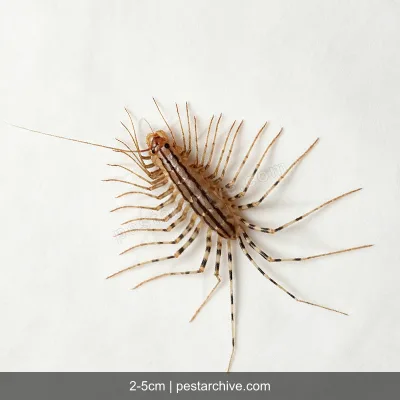
House Centipedes Control & Removal Guide
(Scutigera, Silverfish centipede, Leggy bug)*Scutigera coleoptrata*
How They Get In
- Building Gap Entry: House centipedes have flat bodies and long, slender legs, enabling entry through door/window gaps, wall cracks, pipe entries, and floor expansion joints from outdoors. In nature, they live in stone crevices and leaf litter; the primary driver for indoor migration is seeking warm overwintering sites as autumn temperatures drop.;
- Moisture Attraction: Their respiratory system is humidity-sensitive, and they easily desiccate in dry environments. Bathrooms, kitchens, and basements — chronically damp areas — are strongly attractive to house centipedes. Homes with leaks or poor ventilation see more house centipede settlement.;
- Potted Plant and Outdoor Item Carriage: Outdoor soil and leaf litter may contain house centipede eggs or juveniles, which enter during repotting. Clutter and tools brought in from balconies can also carry house centipedes.;
- Prey Pursuit: As carnivores, house centipedes hunt cockroach nymphs, ants, spiders, silverfish, and booklice. Indoor house centipede presence often indicates other small pest species are available as prey — resolving those pest problems will naturally reduce house centipedes.
How to Get Rid of Them
- Environmental Management — Reduce Humidity and Clutter: House centipede control centers on environmental management, with chemical spraying as a supplement. Keep bathrooms and kitchens ventilated and dry — run exhaust fans for 30+ minutes after showering; use dehumidifiers or AC to reduce indoor humidity. Clear clutter and cardboard boxes from under beds, behind cabinets, and in corners to reduce house centipede hiding spaces. Address other small insect problems in the home — when house centipedes lose their food source, they will move on or die out.;
- Pre-Treatment Preparation: After clearing indoor clutter, vacuum baseboards, under furniture, and bathroom corners to remove dust and debris. Seal door/window gaps and wall cracks. Close doors and windows. Remove pets, children, food, and dishes. Shake the spray bottle well.;
- Key Treatment Zones: Bathroom corners, under sinks, and around floor drains — the most common damp house centipede zones. Baseboards and floor cracks — primary crawling and dispersal routes. Under and behind furniture — dark, cool hiding spots. Door/window frame gaps — block outdoor entry. Balcony floors and wall edges — the buffer zone after outdoor entry.;
- Application Method: Hold sprayer 20-30cm from surfaces and spray evenly. Spray bathroom corners and baseboards along crevice lines until lightly moist. Directly spray under furniture. Spray door/window frames along edges to form a protective band. Avoid heavy spraying in the middle of floor areas — house centipedes primarily travel along crevices and corners.;
- Post-Treatment and Ecological Considerations: Keep the area closed for 1-2 hours, ventilate for 30+ minutes before re-entry. Maintain sustained indoor dryness — house centipedes naturally decline from desiccation. Remember, house centipedes are beneficial indoor predators — finding an occasional one doesn't warrant alarm; let it die naturally or sweep it outdoors. Only when house centipedes appear frequently should indoor environmental treatment be considered.
Prevention & Follow-Up
Keep your indoor spaces well-ventilated and dry—use a dehumidifier or exhaust fan to lower humidity. Seal gaps around doors, windows, wall joints, and pipe penetrations to block their entry and hiding spots. If you notice other small bugs in your home, deal with them promptly. Without a food source, house centipedes will naturally dwindle. After using the bathroom or kitchen, run the exhaust fan to remove moisture and avoid standing water on floors.