What is the difference between latrine flies and house flies?
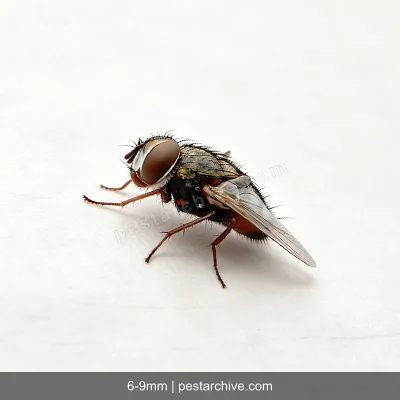
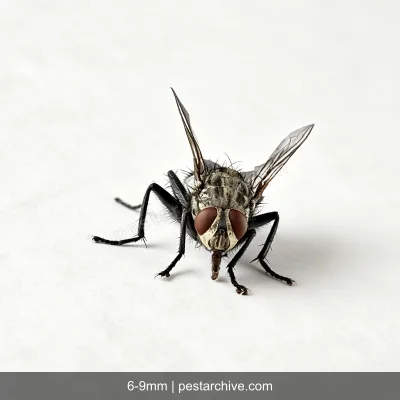
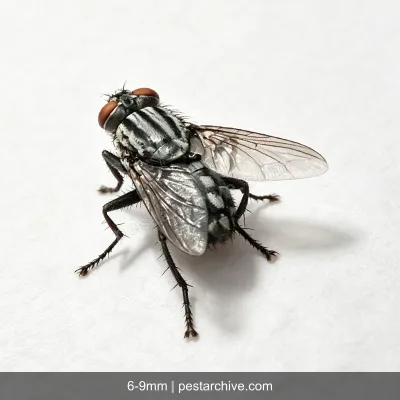
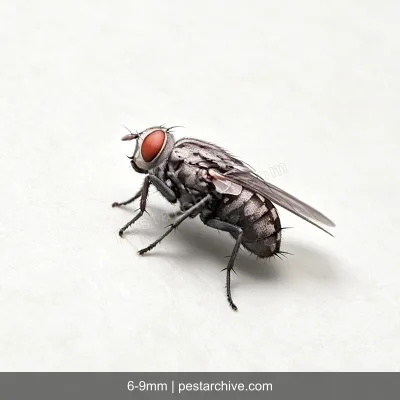
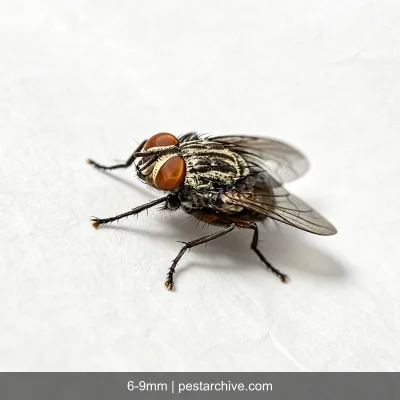
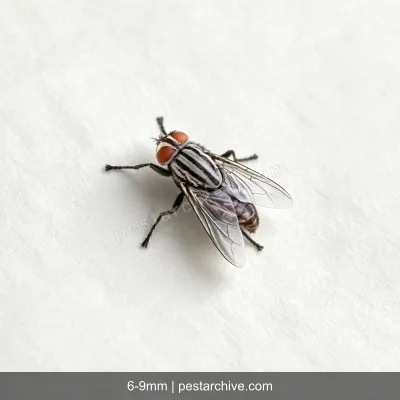
What is the difference between latrine flies and house flies?
Latrine flies and house flies differ in appearance and habits. Understanding these differences helps identify the source and take targeted control measures.
Appearance differences
- Latrine flies: larger and more robust than house flies. Grayish-black in color, with alternating black and white longitudinal stripes on the thorax. When at rest, wings lie flat over the back, covering a broad area.
- House flies: slightly smaller (6-9 mm), grayish-brown, with four black longitudinal stripes on the thorax. When at rest, wings are held apart to the sides.
Habit differences
- Latrine flies: prefer decaying animal matter — dead rats, rotting meat, animal carcasses, etc. They are much more sensitive to the odor of rotting meat than house flies, so they are the first to appear when there is a dead animal nearby.
- House flies: omnivorous, feeding on any organic waste — food scraps, feces, kitchen waste, etc. They are more adaptable and more common in human living environments.
Activity range
- Latrine flies: more active outdoors, especially on farms, livestock operations, and waste disposal sites. They enter buildings when there are animal carcasses or large amounts of decaying matter nearby.
- House flies: highly associated with human environments — most common in restaurants, kitchens, and garbage rooms.
Does the distinction matter for control?
For the average person, there is no need to worry too much about which species, as control methods are the same:
- Source management — remove garbage and decaying organic matter.
- Physical protection — screens, door curtains.
- Chemical control — residual spraying of dinotefuran-containing household insecticide on garbage bins and walls.
The only difference is: if there are unusually large numbers of latrine flies, it may indicate a dead animal nearby that needs to be removed.