What pest turns grain into hollow shells?
What pest turns grain into hollow shells?
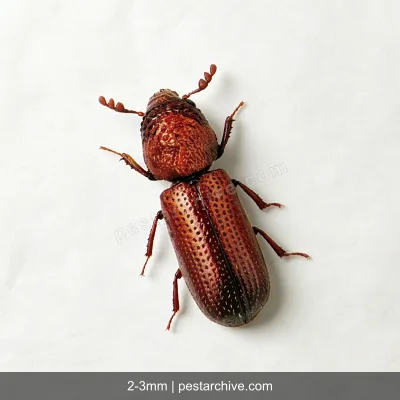
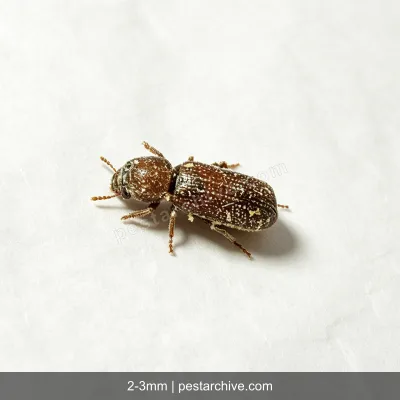
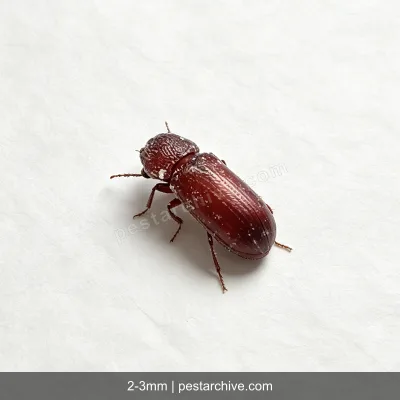
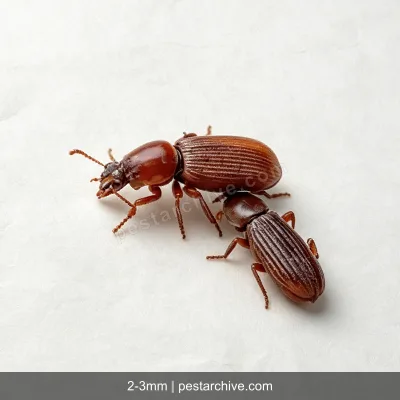
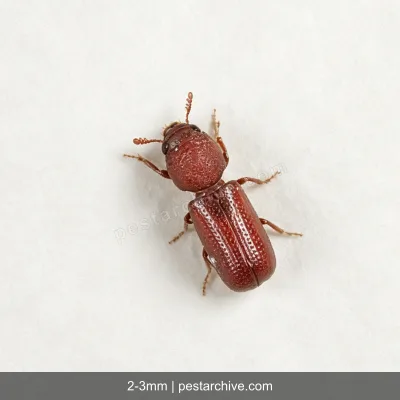
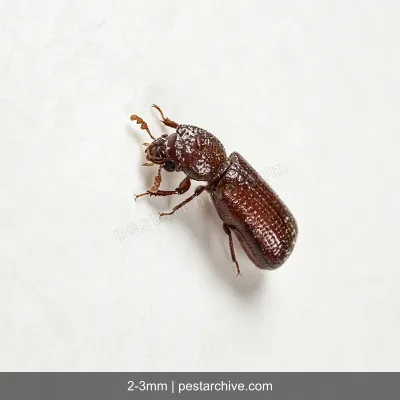
The pest that turns grain into empty shells is likely the lesser grain borer (Rhyzopertha dominica). It is one of the most destructive stored-grain pests. Its larvae bore into the kernel and consume the endosperm, leaving only a hollow shell—causing more severe damage than rice weevils.
What does the lesser grain borer look like?
- Adult: a small, cylindrical beetle, about 2-3 mm long.
- Color: dark brown to reddish-brown.
- Head is tucked under the pronotum, barely visible from above.
- Antennae have a distinct club at the tip.
- Larva: milky white, curved body, with small legs.
How it damages grain
Larvae bore into the grain kernel and feed from the inside out:
- Larva enters through the kernel surface.
- It consumes the endosperm inside.
- After feeding, only an empty shell remains.
- As it feeds, it produces fine powder that mixes with the grain.
- A pile of grain can be almost entirely reduced to powder.
Why the lesser grain borer is more damaging than rice weevils
- Rice weevils mainly lay eggs inside rice grains, causing relatively mild damage.
- Lesser grain borer larvae actively move from one kernel to another, causing continuous destruction.
- They produce large amounts of powdery frass, contaminating a wider area.
- Infested grain develops an unpleasant odor.
What grains does it attack?
- Paddy rice, milled rice.
- Wheat, flour.
- Corn.
- Sorghum.
- Various other grains.
What to do if found
Lesser grain borers are more difficult to control than rice weevils because they are more destructive, reproduce faster, and can hide in crevices for long periods. Immediate action is required:
- Discard infested grains immediately in sealed bags—keeping them will only cause reinfestation.
- Freeze uninfested grains at -18°C for 48 hours, or store in completely airtight containers.
- Completely empty cabinets; vacuum all dust and debris.
- Apply food-grade diatomaceous earth to cabinet crevices for protection; once dry, it forms a protective layer.
- Thereafter, store all grains in airtight containers—they can squeeze through very narrow gaps.
- Inspect stored grains monthly; act immediately if any abnormality is found.