How to Identify and Control Lesser Grain Borers?
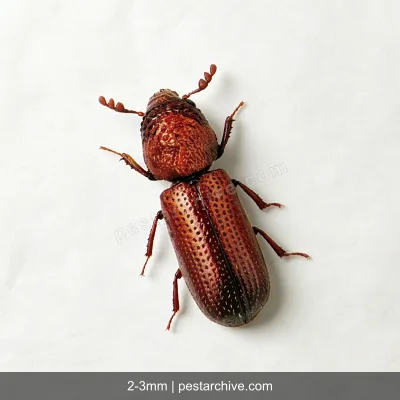
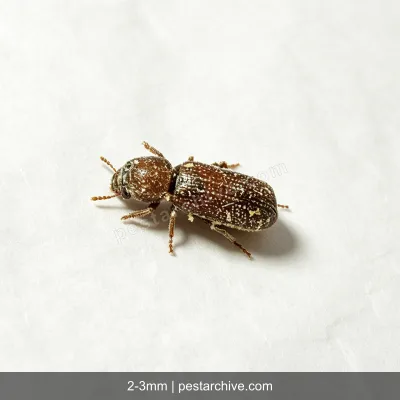
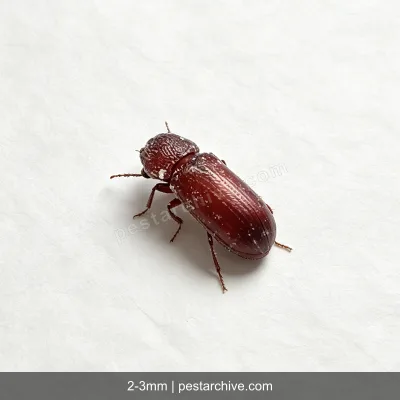
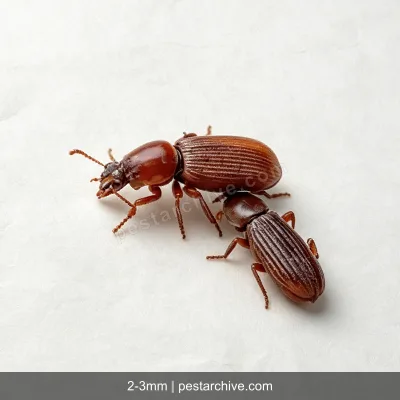
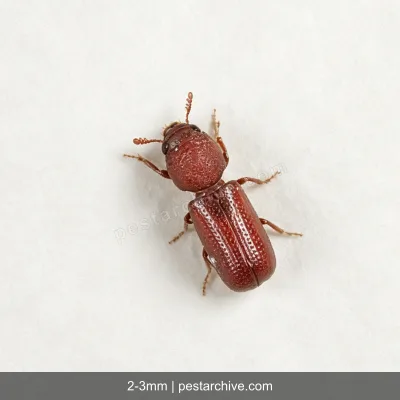
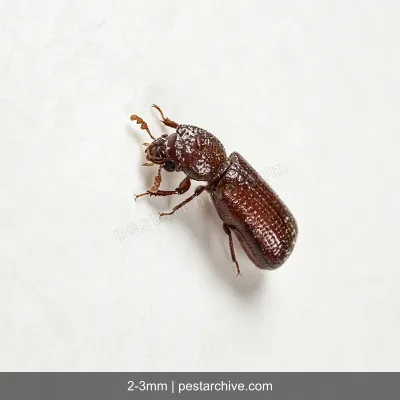
What Are Lesser Grain Borers?
Lesser grain borers (Rhyzopertha dominica) are extremely destructive stored-product pests — harder to deal with than rice weevils.
What Do They Look Like?
- Adult: small and stout, like a tiny cylinder, about 2–3 mm long
- Color: dark brown to reddish-brown, shiny
- Head: tucked under the pronotum — you can't see it from above
- Antennae: the last three segments are enlarged and flattened, like a small club
- Can fly; they bore into grain piles to lay eggs
Life Habits
Lesser grain borers spend their entire life cycle inside stored grain:
- Adults bore tunnels into the grain pile and lay eggs
- Eggs are laid on the grain surface or in crevices
- Once hatched, larvae immediately bore into the kernel to feed
- Larvae develop inside the kernel, eating it hollow
- When fully grown, they chew their way out through the hull, leaving an empty shell behind
Why Are They Worse Than Rice Weevils?
- Both adults and larvae cause damage — unlike rice weevils where only the larvae eat the grain, lesser grain borer adults also feed on it
- They can fly — adults can fly to new food sources, so they spread fast
- Active movement between kernels — after eating one kernel, the larva can crawl to the next and keep eating, unlike rice weevil larvae which stay fixed inside a single grain
- Heat generation — large populations cause localized heating in the grain pile (up to 40°C / 104°F or more), speeding up mold growth
- Bore into wood — they chew into wood when pupating and can hide and breed inside wooden rice bins and shelving
- Heat-tolerant — lesser grain borers breed fastest at 30–35°C (86–95°F), making them better adapted to hot environments than rice weevils
The Damage Lesser Grain Borers Cause to Grain
Beyond eating the grain directly, they cause secondary damage:
- Produce large amounts of powder and droppings that contaminate more widely than rice weevils
- Collective body heat raises local grain temperature, causing mold and clumping
- Produce an unpleasant odor (musty with a chemical-like edge) that seriously affects edibility
- In severe cases, grain turns black and clumps together, losing all food value
Detailed Comparison: Lesser Grain Borer vs. Rice Weevil
| Feature | Lesser Grain Borer | Rice Weevil |
|------|------|------|
| Body shape | Cylindrical, 2–3 mm | Oval, 2–3 mm (with long snout) |
| Head | Tucked under thorax, not visible from above | Extended into a snout-like rostrum |
| Flight ability | Strong flier, spreads fast | Weak flier |
| Bores into wood | Yes, damages wooden items | No |
| Heat tolerance | Breeds fastest at 30–35°C | Prefers 25–30°C |
| Damage range | All grains + wood | Mainly rice |