Grain Borers
(Lesser grain borer, Australian wheat weevil)*Rhyzopertha dominica*
Identification & Appearance
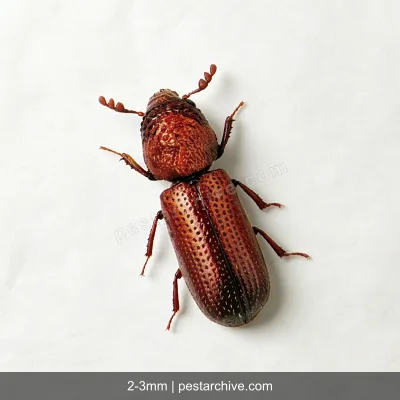
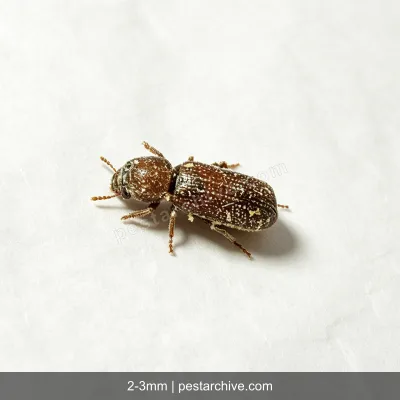
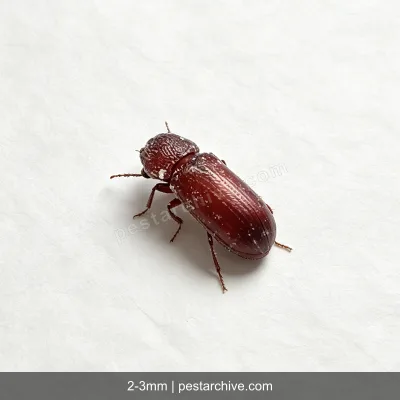
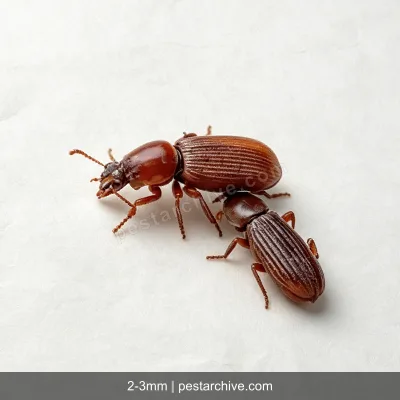
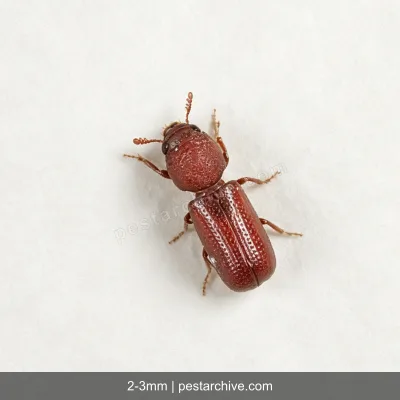
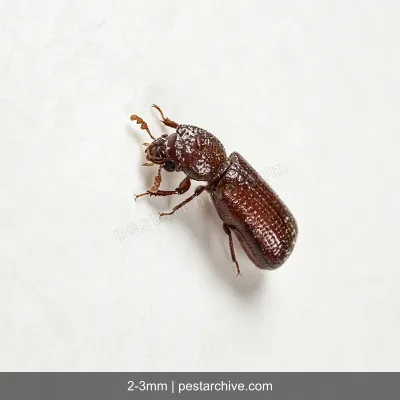
Grain borers (Rhyzopertha dominica) are among the most destructive stored-grain pests. They bore into intact grain kernels AND wood. Adults measure 2-3mm, cylindrical, reddish-brown. They survive up to 45 C. At 30-34 C, the cycle takes 4-5 weeks. Powerful mouthparts penetrate packaging, wood containers, and softwood.
Habits & Hiding Places
Grain borers bore directly into intact grain and also into wood containers for shelter. Indoors, they concentrate in rice bins, grain cabinets, and wood storage. Strong fliers reaching hundreds of meters. Year-round breeding in heated homes.
Health Risks & Damage
- A larva consumes 5x its body weight. Weight loss can reach 15-30%.;
- Debris causes grain to heat and cake, accelerating spoilage.;
- Adults bore into wood containers, causing cumulative damage.;
- Extremely cryptic with larvae developing entirely inside kernels.;
- Heat-tolerant; difficult to control environmentally.
Season & Region
Cosmopolitan in warm regions (primarily south of the Huai River in China). Major stored-grain pest with polyphagous feeding habits. Optimal temperature 28–30 °C; multiple generations per year. Larvae bore within grain kernels; also tunnel into wooden warehouse boards to pupate, causing structural damage. Year-round reproduction with overlapping generations in southern regions.
| Region | Active Period | Peak Season | Notes |
|---|---|---|---|
| N. Hemisphere Subtropical | Year-round | May–Sep | Year-round in southern storage facilities; highest density in hot season |
| N. Hemisphere Temperate (heated storage) | Apr–Oct | Jul–Sep | Reduced winter activity under natural northern conditions |