Are Jewel Beetles Harmful to Humans?
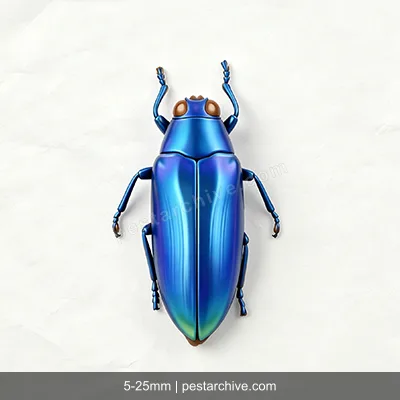
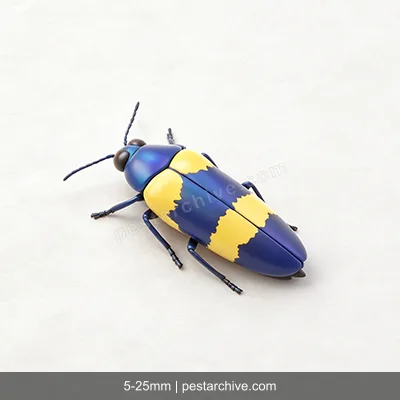
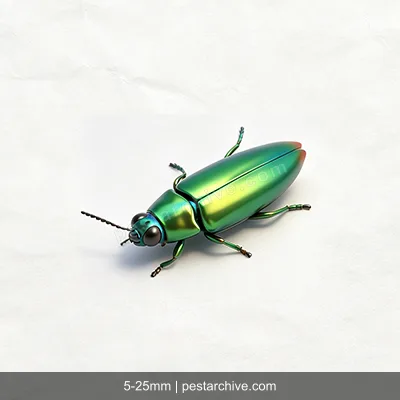
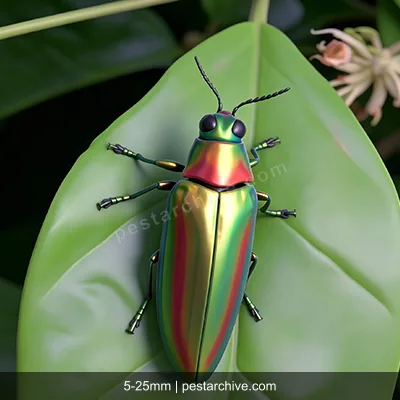
Are Flatheaded Borers Harmful to Humans?
Flatheaded borers pose no direct harm to people. You don’t need to worry about them biting, stinging, or spreading diseases.
Direct harm (none)
- They don’t bite — Flatheaded borers have chewing mouthparts designed for gnawing bark and leaves. They are completely harmless to humans.
- They don’t sting — No venomous stingers or spines. Unlike bees or wasps, they won’t attack people.
- They don’t spread disease — They are not disease vectors and don’t carry human pathogens.
- They’re non-toxic and non-irritating — Their body fluids contain no harmful substances. Contact with skin won’t cause dermatitis.
Indirect harm (worth noting)
Flatheaded borers affect people mainly through the damage they do to trees:
- Reduced fruit yield — Apple, pear, peach, and other fruit trees produce less and lower-quality fruit when infested.
- Ornamental tree death — Landscape trees (maples, poplars, etc.) can be killed by flatheaded borers, ruining your yard’s appearance.
- Falling dead branches — Branches killed by borers can become brittle and snap off, posing a falling hazard in windy weather.
- Tree toppling — In severe cases the entire tree dies and may fall during a storm or typhoon.
Flatheaded borers have a bright side
Interestingly, adult flatheaded borers are not just harmless—they even have some positive traits:
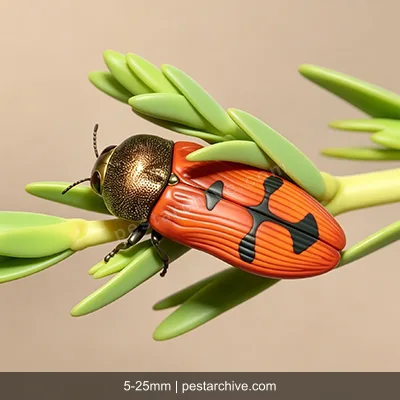
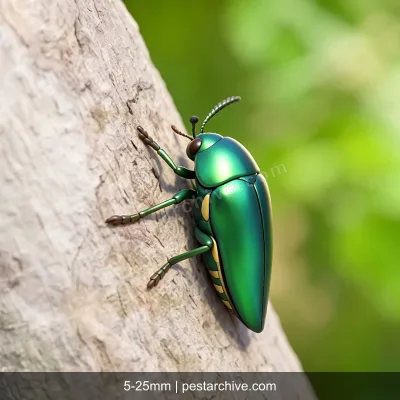
- Many species have brilliantly colored, metallic elytra (wing covers) in green, blue, copper-red, etc., that shine beautifully in sunlight
- Some people collect flatheaded borer specimens as decorative items
- In some cultures, the elytra are used to make jewelry and crafts
What to do if you find one
If you come across a flatheaded borer:
- Outdoors, leave it alone and let it go about its business
- If one flies indoors, trap it under a cup and release it outside, or catch it with a tissue and toss it out the window
- Focus on your trees’ health — if you see signs of borer activity in the bark, treat promptly before the larvae cause serious damage
- If you have multiple fruit or ornamental trees in your yard, inspect the trunks regularly for signs of larval tunneling