What Harm Do Jewel Beetle Larvae Cause?
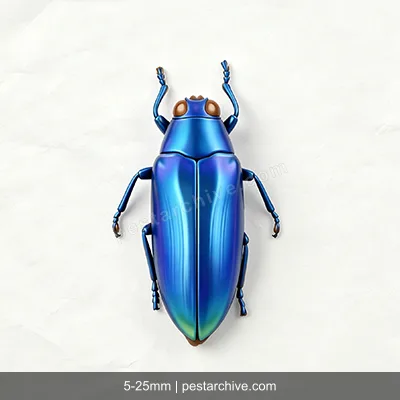
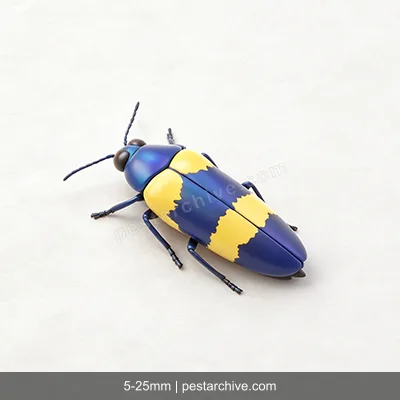
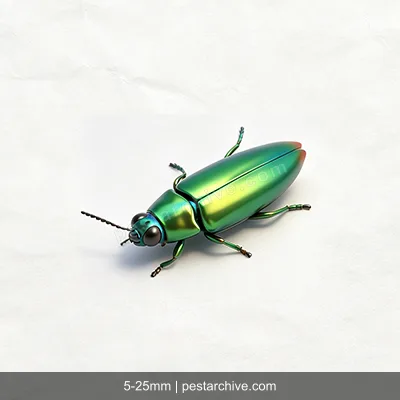
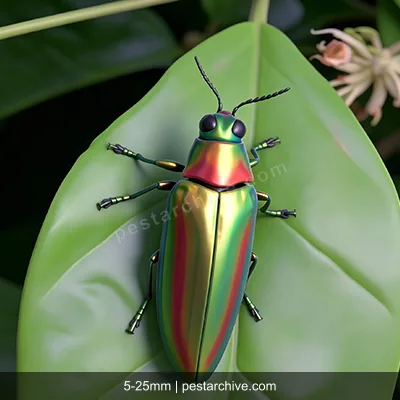
What Kind of Damage Do Flatheaded Borer Larvae Cause?
Flatheaded borer larvae are among the most destructive pests of landscape and fruit trees—far more damaging than the adults. The larvae can reach 20–40 mm in length and tunnel through the cambium layer between the bark and sapwood. Their galleries are 3–5 mm wide, flat, winding, and cause a cascade of serious problems:
Direct damage
- Cut off nutrient flow — The larvae feed in the cambium layer, destroying the phloem and xylem tissues. This severs the tree’s “highway” for transporting water and nutrients. Infested trees suffer localized or widespread malnutrition.
- Bark death and gummosis — The bark above the feeding area gradually dies, becomes sunken and discolored. Fruit trees often ooze gummy sap (gummosis)—a stress response to the injury.
- Branch dieback — Leaves on the affected side turn yellow first, then dry up and drop. Branches die back from the tip inward.
- Girdling kills the tree — If the larvae tunnel all the way around the trunk or a branch (girdling), they completely sever all transport channels. Everything above the girdled area dies. Young trees may die outright.
Secondary damage
- Entry point for disease — The larval tunnels breach the bark’s protective barrier. Fungi and bacteria can invade through these wounds, causing cankers, rot, and other secondary infections.
- Attracts other borers — Trees weakened by flatheaded borers become more vulnerable to longhorn beetles, bark beetles, and other wood-boring pests—a compounding effect.
Which trees are most at risk?
Flatheaded borer larvae mainly attack fruit trees (apple, pear, peach, apricot, citrus) and ornamental trees (maple, poplar, willow, sycamore). Stressed and aging trees are more susceptible because their sap flows slower and their wounds heal poorly. Keeping trees vigorous through proper watering and fertilizing is a key prevention measure.