What are the small beetles emerging from tobacco and dried goods?
What are the small beetles emerging from tobacco and dried goods?
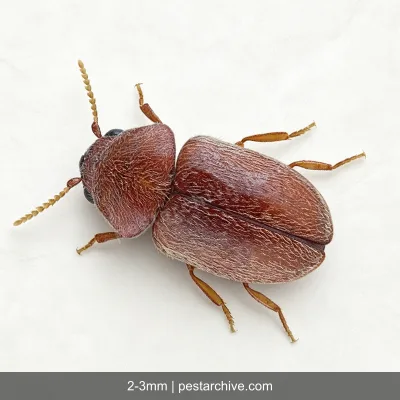
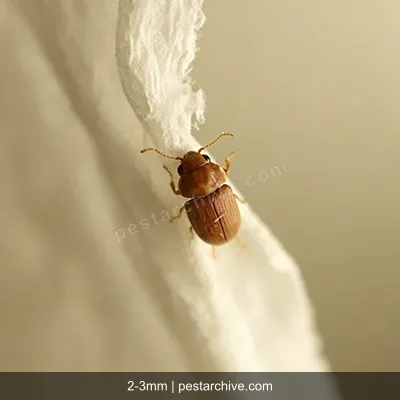
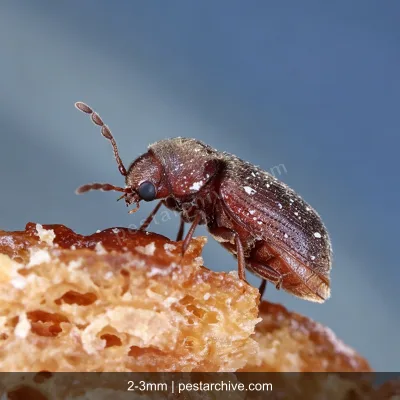
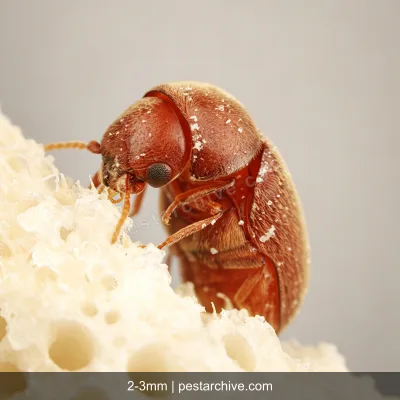
The small beetles emerging from tobacco and dry goods are cigarette beetles (*Lasioderma serricorne*), a common stored-product pest. Despite the name "cigarette," they attack far more than tobacco — they are actually one of the top pests of Chinese herbal medicines and dried goods.
What do cigarette beetles look like?
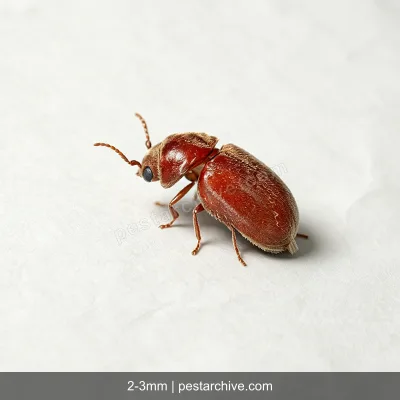
- Size: 2-3 mm, slightly smaller than rice weevils, slightly larger than a sesame seed.
- Shape: oval, plump, resembling a small ladybug.
- Color: reddish-brown or yellowish-brown, covered with fine dense hairs.
- Head: bent under the thorax, not visible from above (this is a key difference from rice weevils, which have a long snout).
- Antennae: serrated, 11 segments.
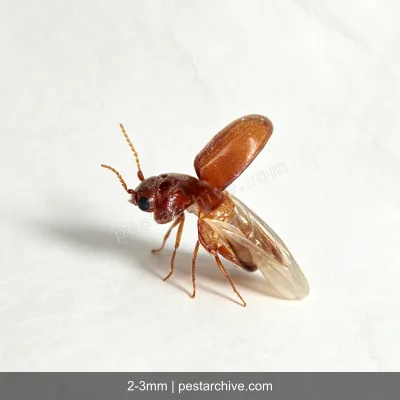
- They can fly and are attracted to light.
Cigarette beetles are not just pests of tobacco
Their name comes from their initial discovery on tobacco, but their diet is very broad:
- Tobacco, cured leaves, cigarettes, cigars.
- Chinese herbs (red dates, goji berries, Codonopsis, Angelica, chrysanthemum, etc.).
- Dried fruits (walnuts, almonds, peanuts, sunflower seeds).
- Tea (black tea, green tea, pu'er tea cakes).
- Spices (dried chili peppers, Sichuan peppercorns, star anise, etc.).
- Crackers, breadcrumbs, cereals.
- Grains and flour.
- Dried flowers and plant specimens.
Life habits
- Adults are active at dusk and night, attracted to light, and may fly toward lamps at night.
- Females lay 50-100 eggs on food surfaces or in packaging crevices.
- After hatching, larvae bore directly into the food and feed inside, developing there.
- Mature larvae pupate inside the food or in packaging folds.
- Emerging adults bore out and continue reproducing.
- Most active at 25-30°C and 60-70% humidity; life cycle takes about 30-40 days.
- Can produce 3-6 generations per year.
What to do if found
Seal and discard infested food — do not try to salvage. After cleaning cabinets, apply food-grade diatomaceous earth for environmental treatment. Thereafter, store all dried goods in airtight containers. Newly purchased herbs and dried goods can be frozen at -18°C for 48 hours to kill any hidden eggs.