Cigarette Beetles
(Tobacco beetle, Warehouse beetle, Herbarium beetle)*Lasioderma serricorne*
Identification & Appearance
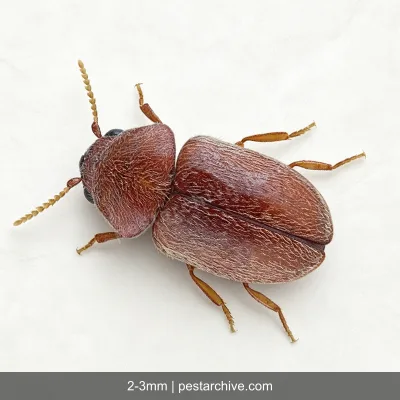
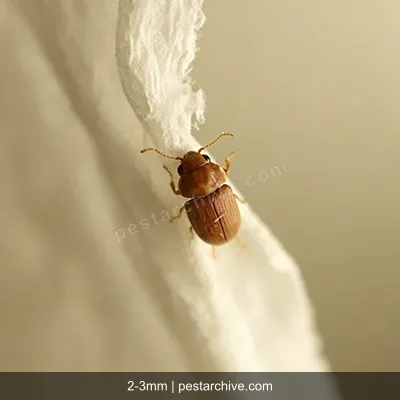
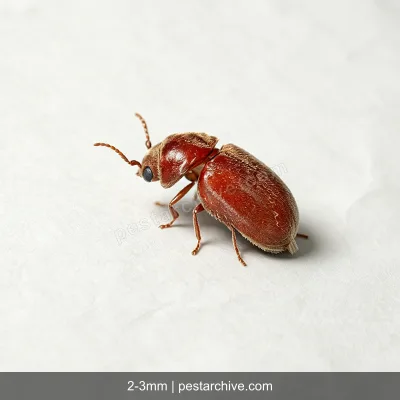
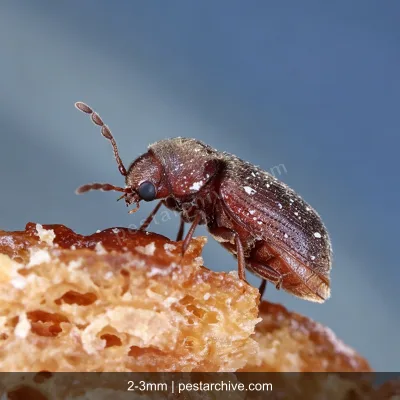
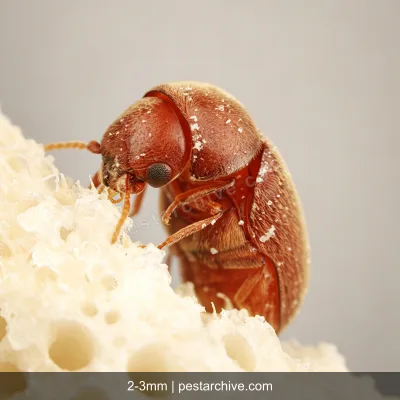
Cigarette beetles (Lasioderma serricorne) are worldwide stored-product pests. Adults measure 2-3mm, broadly oval (nearly spherical), reddish-brown to yellowish-brown, covered in fine golden hairs. The head is hidden under the pronotum; antennae have the terminal 3 segments distinctly enlarged and serrated. At 28-32 C, the cycle takes 5-8 weeks with 3-4 generations per year. Their diet is among the broadest of stored-product pests, encompassing dozens of dry plant products, with a particular preference for tobacco and aromatic plant materials.
Habits & Hiding Places
Cigarette beetles infest an extremely wide range: tobacco products, tea, Chinese herbs, dried fruits, spices, dried flowers, bookbinding materials, and taxidermy. Indoors, they concentrate in tea and herb storage, snack cabinets, and book collections. Larvae develop inside host materials, emerging as adults through round exit holes. Adults are weak fliers with limited phototaxis. Year-round breeding in heated homes.
Health Risks & Damage
- Larvae bore into tea, herbs, and dried fruits, leaving holes, frass, and shed skins.;
- Premium tea and valuable Chinese herbs lose all value when infested.;
- Body fragments and frass create food safety hazards.;
- Small size and cryptic lifestyle mean damage is well-advanced when discovered.;
- Broad host range allows spread from kitchen to study to collections.
Season & Region
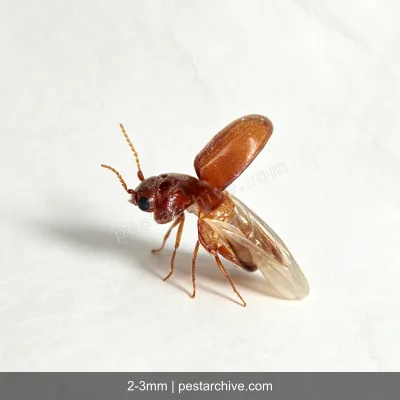
Cosmopolitan. Optimal temperature 30–32.5 °C, RH 70–75 %. Summer (Jun–Aug) is the peak annual activity and reproduction period. 2–6 generations per year; overwinters as larva. Adults exhibit thanatosis (death-feigning); strong fliers; active at dusk and on overcast days.
| Region | Active Period | Peak Season | Notes |
|---|---|---|---|
| N. Hemisphere Temperate | Apr–Oct | Jun–Aug | Summer heat drives peak reproduction |