Rove Beetle Burn: What to Do If You Get Paederus Dermatitis?
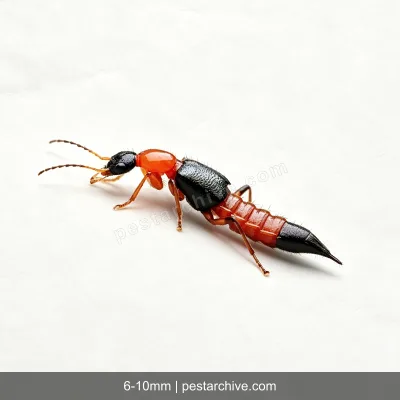
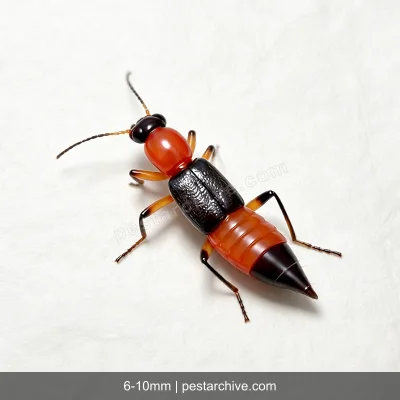
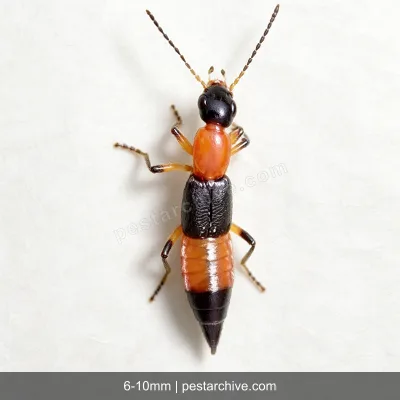
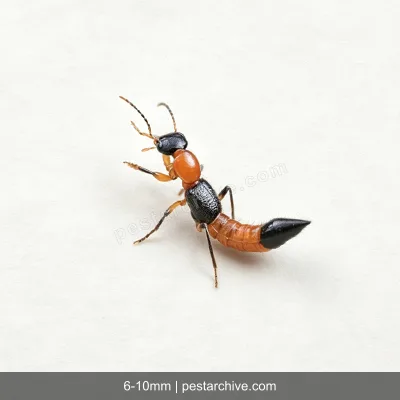
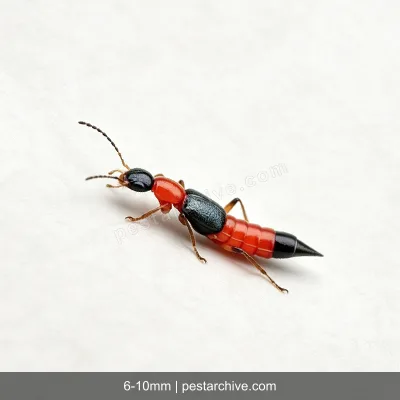
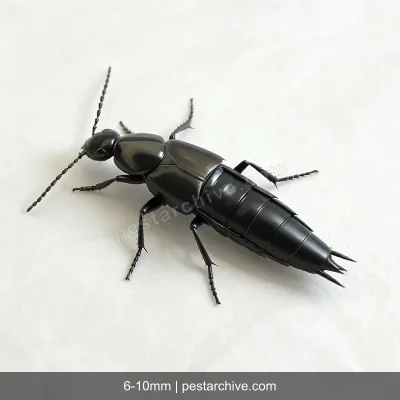
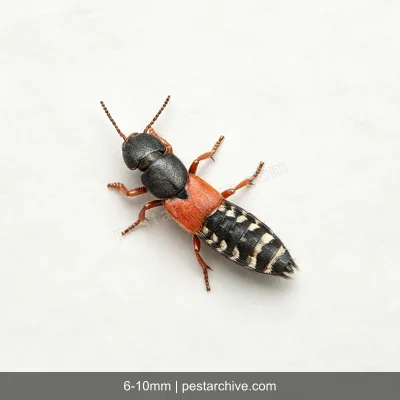
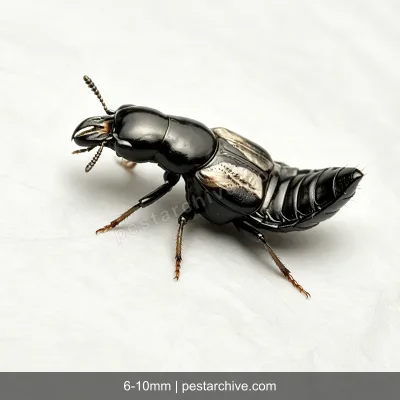
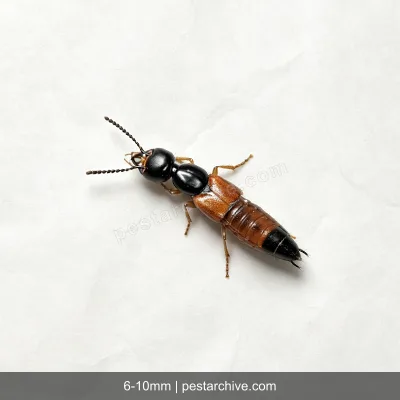
What Is a "Sulfuric Acid Bug"?
"Sulfuric acid bug" is a common nickname for the rove beetle, because its body fluids cause a burn-like skin reaction similar to a sulfuric acid burn when crushed against the skin.
The Real Identity of the "Sulfuric Acid Bug"
The insect's scientific name is the rove beetle, belonging to the family Staphylinidae in the order Coleoptera. There are over 60,000 species worldwide. The most common species causing skin reactions in homes belong to the genus *Paederus*. They measure 6-10 mm, look somewhat like ants but are larger, and have wings. Their most distinctive feature is a slender body with extremely short wing covers (elytra) that only cover the front part of the abdomen — leaving the rear half of the abdomen exposed.
Why the "Sulfuric Acid" Nickname?
Rove beetle body fluids contain a potent acidic compound called pederin, which is extremely toxic. Skin contact causes a severe reaction:
- A single tiny droplet of pederin is enough to cause a burn-like injury on skin
- The toxin is more potent than cobra venom — but fortunately, rove beetles don't bite or inject it
- Harm only occurs when the beetle is crushed or pressed, releasing its body fluids onto skin
- A whole, living rove beetle landing on you is safe — as long as you don't swat or crush it
Rove Beetle Behavior
- During the day, they hide in grass, leaf litter, and under stones. They come out to hunt at night
- They're strongly attracted to light and will fly toward indoor lights at night
- They're most common in summer and fall (June-October), especially active after rain
- They feed on small soft-bodied insects and are considered beneficial in agriculture
Distribution Myth
Many people think rove beetles only exist in southern regions, but they're actually found in the north as well. The warmer, more humid climate of the south is simply more suitable for breeding, so southern populations are denser and cause more problems for people.
The Core Safety Rule
If a rove beetle lands on your skin, blow it away or gently flick it off — never swat or crush it. Remember: a living rove beetle is not dangerous; a crushed one is.