Inchworms
(Loopers, Measuring worms, Spanworms)Geometridae larvae
Identification & Appearance
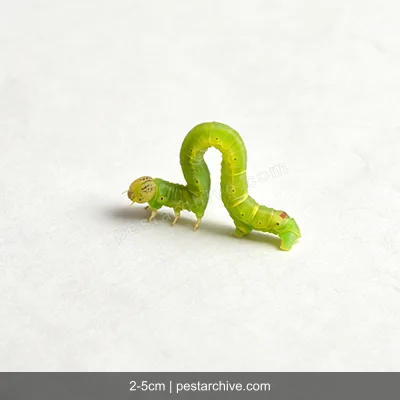
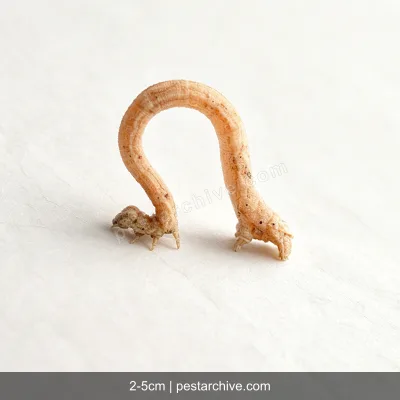
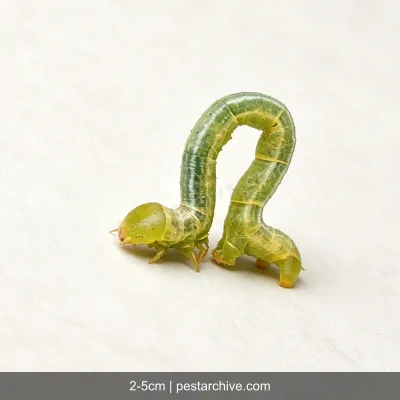
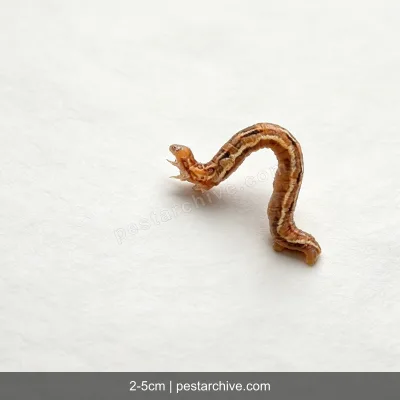
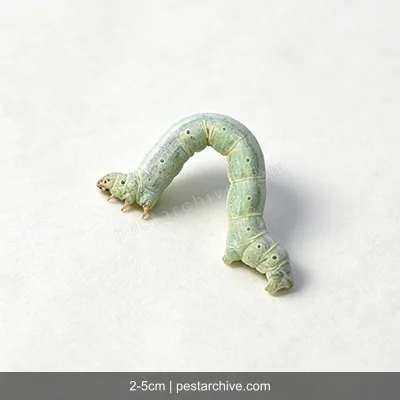
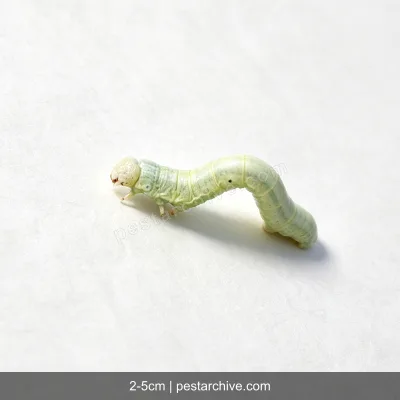
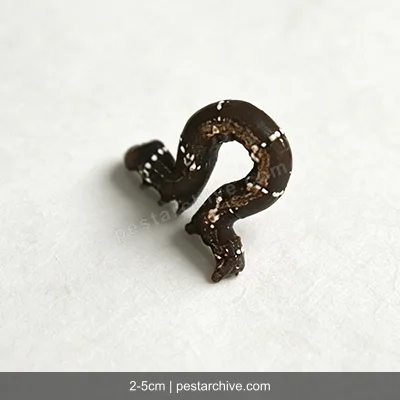
Inchworms (loopers, measuring worms) are the larvae of geometer moths (family Geometridae), one of the largest moth families with over 20,000 species. Larvae measure 2-5cm, slender and cylindrical, green, brown, or gray, with excellent camouflage. The key feature: only one pair of prolegs at the rear abdomen plus three pairs of true legs at the thorax, producing the characteristic looping gait. They undergo complete metamorphosis. Under warm conditions, the cycle takes 4-8 weeks with 2-4 generations per year. Larvae feed on plant leaves; adults (geometer moths) have broad, thin wings and are nocturnal and attracted to light.
Habits & Hiding Places
Inchworm larvae feed on leaves of a wide range of plants: roses, osmanthus, camellias, gardenias, pothos, and many ornamentals. Indoors, they are found on potted plant leaves (both surfaces), pot soil surfaces, and around plant containers. They feed from leaf edges inward, creating characteristic notches. At rest, they extend their bodies rigidly at an angle, mimicking twigs. When disturbed, they drop on a silk thread. They generally remain on one plant for their entire larval development.
Health Risks & Damage
- A single larva can consume several to a dozen-plus leaves during its development. Multiple larvae can defoliate an entire plant in days, leaving only stems and veins.;
- Leaf damage ruins the ornamental value of foliage plants. Recovery takes months.;
- Frass pellets scatter on leaves and surfaces, affecting cleanliness.;
- Hand-picking is the most effective control method for the home. Larvae are large, slow, and easily spotted by checking leaf edges for feeding damage.
Season & Region
Cosmopolitan. 1–4 generations per year depending on species and region. Spring species (*Apocheima cinerarius*, etc.): adult emergence late Mar to early Apr; peak larval feeding mid-Apr to early May. Autumn species appear Jul–Sep. Pupate in soil for summer diapause and overwintering. Larvae resemble twigs (crypsis); drop on silk threads when disturbed.
| Region | Active Period | Peak Season | Notes |
|---|---|---|---|
| N. Hemisphere Temperate | Mar–late-Sep | Apr–mid-May–early | Spring species peak damage; autumn species Jul–Sep |