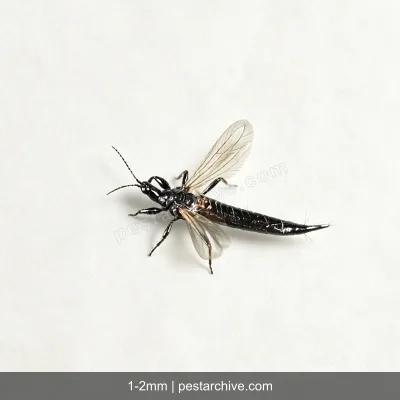
Thrips
(Thunderflies, Western flower thrips, Harvest bugs)*Frankliniella occidentalis* / Thysanoptera
Identification & Appearance
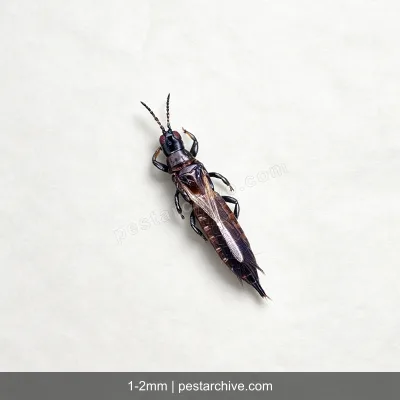
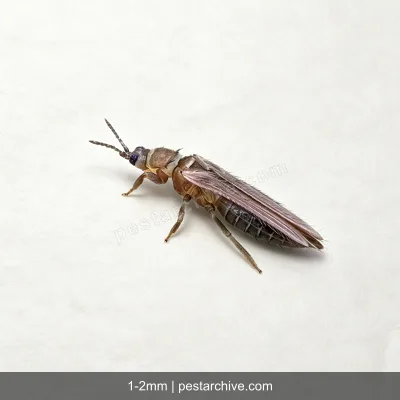
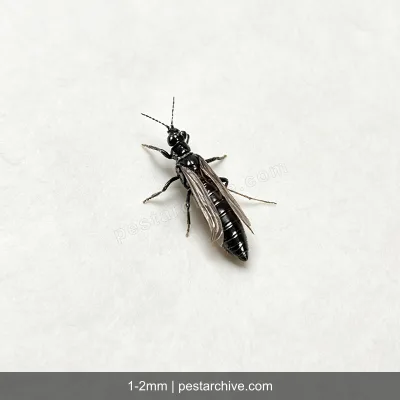
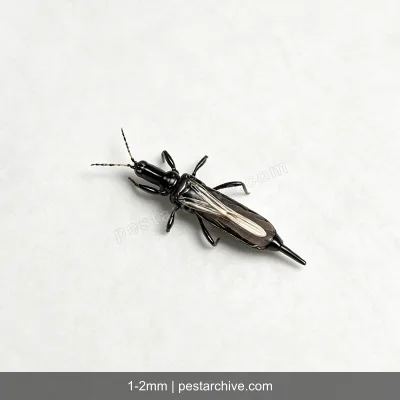
Thrips (order Thysanoptera) are among the tiniest plant pests. Common household species include flower thrips (Frankliniella intonsa) and melon thrips (Thrips palmi). Adults measure just 1-2mm, slender, black-brown to yellow. Their fringed wings (hence the order name) and rasping-sucking mouthparts are diagnostic. They undergo an intermediate metamorphosis with egg, larva, prepupa, pupa, and adult stages. At 25-30 C, the cycle takes just 2-3 weeks with 10-15 generations per year. Some species also probe human skin, causing itching. They are important vectors of plant viruses including tomato spotted wilt virus (TSWV).
Habits & Hiding Places
Thrips feed on plant sap, preferring the most tender tissues: new shoots, flower buds, young leaves, and leaf undersides. Indoors, they concentrate on potted plants (especially roses, jasmine, orchids, and other flowers), leaf undersides and whorls, pot soil surfaces (where pupae develop), and balcony railings and window gaps (entry points). They are most active at 25-30 C in hot, dry conditions — populations surge after consecutive sunny days. Adults can fly short distances and drift on wind currents. They are strongly attracted to tender growth and flowers.
Health Risks & Damage
- Feeding causes silvery-white speckling and streaks on leaves from destroyed cell contents filled with air. Leaves curl and distort; buds become deformed and fail to open.;
- Thrips vector TSWV and INSV — once a plant is infected, there is no cure, and the plant must be destroyed.;
- Thrips probe human skin, causing red spots and itching — they don't bite or draw blood but are a nuisance for plant owners in summer.;
- Extremely small size means early infestations go unnoticed. By the time silvery patches appear, populations are substantial.;
- Control is challenging due to rapid life cycle (2-3 weeks), hidden habits (leaf undersides, buds), and insecticide resistance. Blue or yellow sticky cards help monitor and reduce adults.
Season & Region
Cosmopolitan. Occur in all four seasons; spring, summer, and autumn predominantly outdoors; winter in greenhouses. Warm, dry conditions (23–28 °C, RH 50–70 %) maximize reproductive rate. Two annual damage peaks: Mar–Jun and Aug–Oct. Minute size (1–2 mm); rasping-sucking mouthparts extract plant cell contents.
| Region | Active Period | Peak Season | Notes |
|---|---|---|---|
| N. Hemisphere Temperate | Apr–Oct(Open ground) | May–Jun、Aug–Sep | Year-round in greenhouses; two outdoor peaks |
| N. Hemisphere Subtropical to Tropical | Year-round | May–Jun、Sep | Up to 17+ generations per year |