Spider Beetles
(Hump beetle, Shiny spider beetle)*Gibbium psylloides* / Ptininae
Identification & Appearance
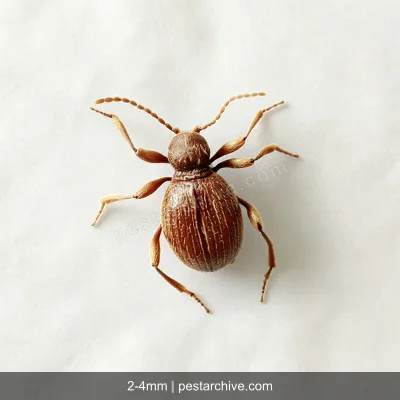
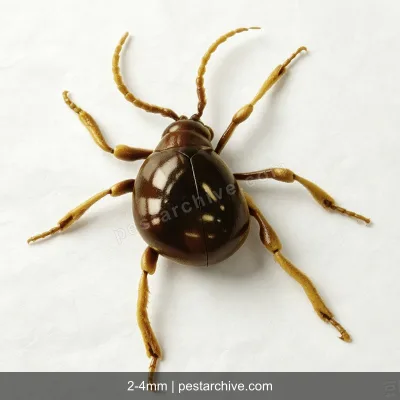
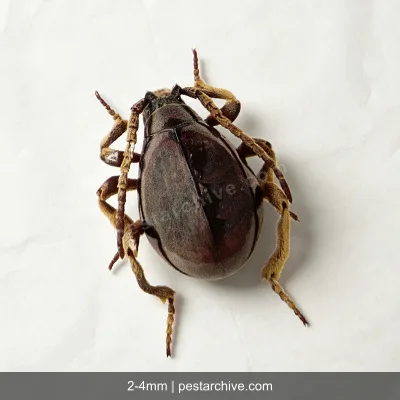
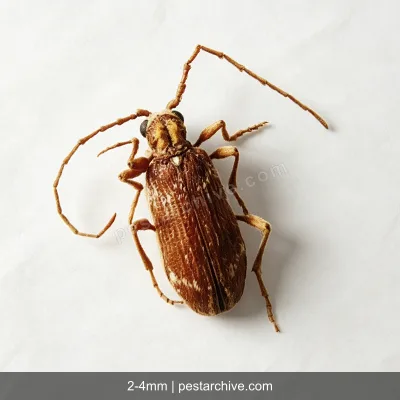
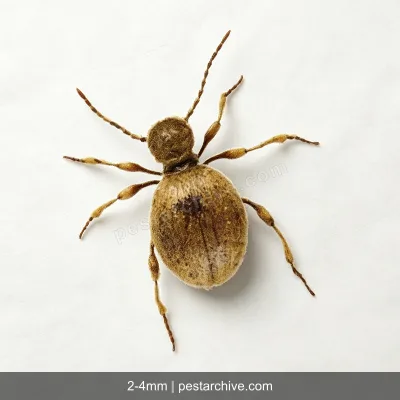
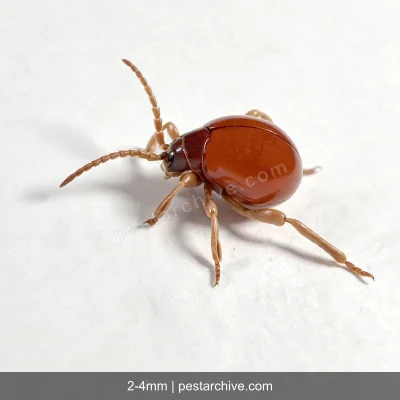
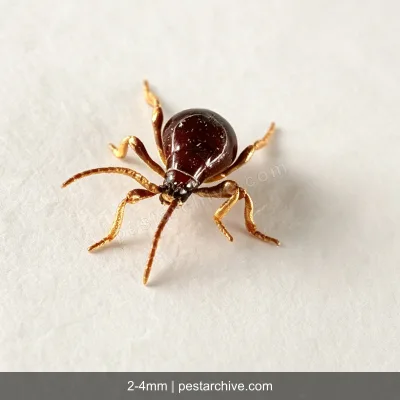
Spider beetles (family Ptinidae) are tiny beetles that resemble small spiders. The common species Gibbium psylloides measures 2-4mm, with a globular, glossy reddish-brown to deep brown body, long slender legs and antennae, giving a spider-like appearance. Larvae are C-shaped, white to pale yellow. At 22-28 C, the cycle takes 8-12 weeks with 2-3 generations per year. Their diet is broad: grain debris, flour, dried fruits, herbs, taxidermy, wool products, and organic debris. Adults are slow-moving and play dead when disturbed; some species are flightless. Adult lifespan is long (6-12 months).
Habits & Hiding Places
Spider beetles feed on organic debris: grain residues, flour, dried fruit fragments, herb debris, animal lint, and insect carcasses. Indoors, they concentrate in grain cabinet and storage cabinet corners, bookcases, wardrobes, baseboards, and floor cracks. Adults and larvae are photophobic, hiding in crevices by day and active at night. They move slowly and disperse primarily by crawling. They have extraordinary starvation tolerance, surviving weeks to months without food.
Health Risks & Damage
- They contaminate grain and dry goods with bodies and frass, degrading quality.;
- Spider-like appearance causes unnecessary alarm.;
- Excrement leaves specks on cabinet shelves.;
- Body fragments and frass are allergens.;
- Prevention: keep storage areas clean, seal grain, regularly clean cabinet corners.
Season & Region
Cosmopolitan. Optimal developmental temperature 33 °C; completes one life cycle in approximately 45 days under favorable conditions. Adult lifespan up to 12 months. Year-round occurrence in warm stored-product environments. Damages grains, dried fruits, herbal medicines, taxidermy specimens, etc.
| Region | Active Period | Peak Season | Notes |
|---|---|---|---|
| N. Hemisphere Temperate | Apr–Oct | Jun–Sep | High density in warm season |
| N. Hemisphere Subtropical to Tropical | Year-round | May–Sep | Year-round reproduction in southern regions |