Spiders
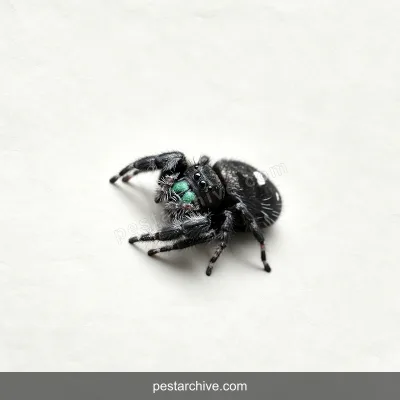
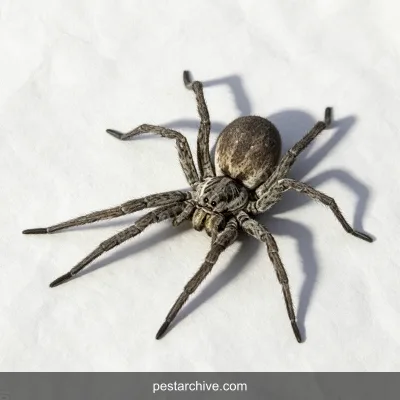
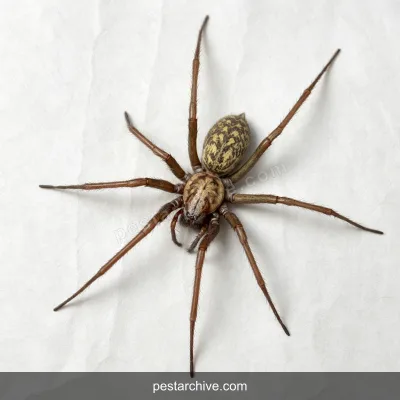
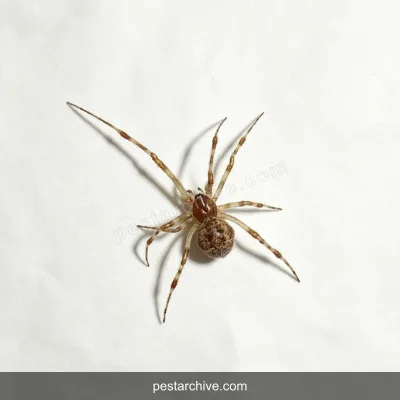
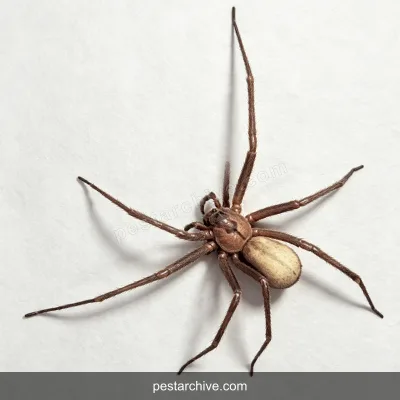
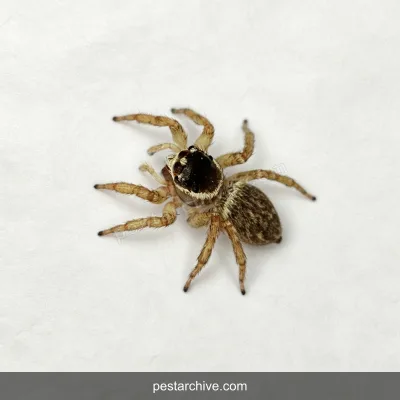
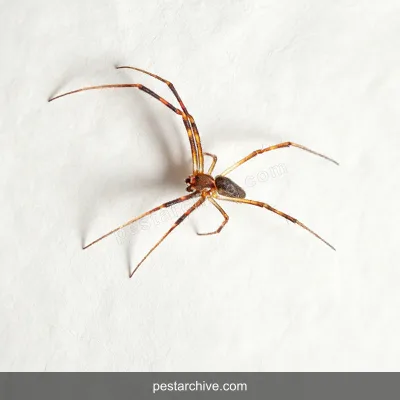
(Common house spider, Daddy long-legs, Giant house spider, Jumping spider)*Tegenaria domestica* / Araneae
Identification & Appearance
Spiders (order Araneae) are arachnids, not insects — they have 4 pairs of legs (not 3), and their body is divided into cephalothorax and abdomen (not head, thorax, abdomen). Common household species include cellar spiders (Pholcus spp., extremely long slender legs), orb weavers (Araneus spp., build circular webs), and jumping spiders (family Salticidae, active hunters that don't build webs). All spiders are predators, feeding on insects and other small arthropods. They use venom to subdue prey. The vast majority of household spiders are harmless to humans and provide beneficial pest control. Notable exceptions requiring awareness: black widows (Latrodectus spp., neurotoxic venom) and brown recluse spiders (Loxosceles reclusa, cytotoxic venom).
Habits & Hiding Places
Spiders prey on mosquitoes, flies, moths, and other flying insects. Indoors, web-building spiders favor high corners, ceiling edges, door/window frames, and curtain rods — locations where flying insects travel. Hunting spiders roam floors, walls, behind furniture, and under beds. Spider presence correlates directly with indoor insect populations — more insects mean more spiders. They are most active in spring, summer, and autumn. They enter from outdoors by crawling through gaps or hitchhiking on items, plants, and packages. Ground-floor units near landscaping have more spiders.
Health Risks & Damage
- Webs accumulate dust and become unsightly over time, requiring regular cleaning.;
- Spiders are actually beneficial indoor predators — each spider consumes hundreds of pest insects in its lifetime. Indiscriminate killing removes a natural pest control agent.;
- Common household species have minimal venom toxicity and almost never bite unless severely provoked. Even if bitten, only mild local redness results — no medical treatment needed. Medically significant spiders are extremely rare in Chinese homes.;
- The main human impact is psychological — arachnophobia affects 3-15% of the population. For most people, spiders are harmless and helpful.;
- A reasonable approach: occasional spiders can be vacuumed or swept outdoors. No chemical treatment is needed. Reducing indoor insects naturally reduces spiders.
Common Species
The vast majority of household spiders are harmless and beneficial (feeding on insects), but 2 species require special recognition and caution.
Black Widow Spider
Latrodectus mactansFemale body about 13mm, glossy black overall, abdomen with the iconic red hourglass marking. Males are much smaller and lighter in color. Neurotoxic venom; bites can cause severe muscle pain, cramps, nausea, and difficulty breathing — potentially fatal (higher risk for children and the elderly). Commonly found in wood piles, rock crevices, basements, garages, and other dark, sheltered locations.
Brown Recluse Spider
Loxosceles reclusaAdults about 6–20mm, uniformly brown overall, head dorsum with a violin-shaped dark marking. The most distinctive identification feature: only 6 eyes (most spiders have 8), arranged in 3 pairs. Cytotoxic venom; bites can cause necrotic wounds that ulcerate and heal slowly; severe cases can lead to hemolytic anemia. Prefers dry, dark, confined spaces; commonly found in closets, attics, cardboard boxes, and under beds.
Season & Region
Cosmopolitan. Late spring to early summer (Apr–Jun) is the peak web-building and emergence period; highest abundance in summer–autumn (Jul–Sep). Most active when food is abundant and temperature/humidity are favorable. Overwinters as egg sac or adult concealed in crevices. Year-round activity in indoor environments.
| Region | Active Period | Peak Season | Notes |
|---|---|---|---|
| N. Hemisphere Temperate | Mar–Nov | Jun–Sep | Highest summer–autumn abundance; low winter activity |
| N. Hemisphere Subtropical to Tropical | Year-round | May–Sep | Year-round activity; high density in warm-humid seasons |