Bethylid Wasps
(Parasitic wasp, Flat wasp)*Scleroderma guani* / Bethylidae
Identification & Appearance
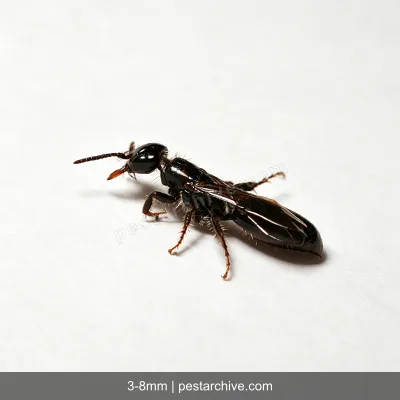
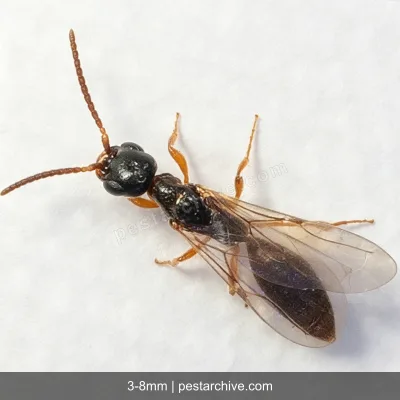
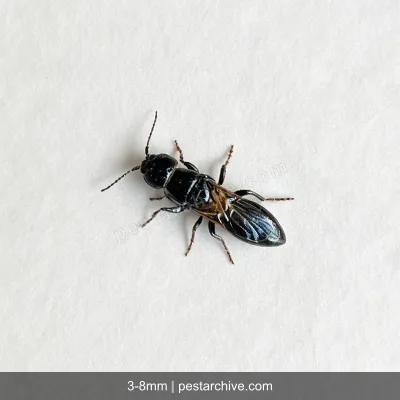
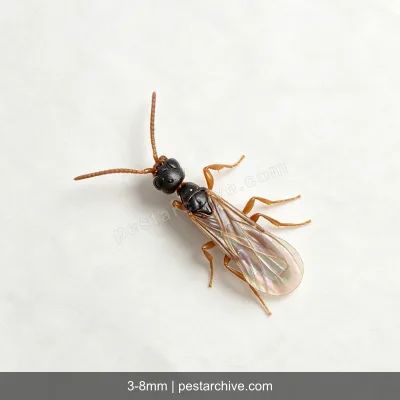
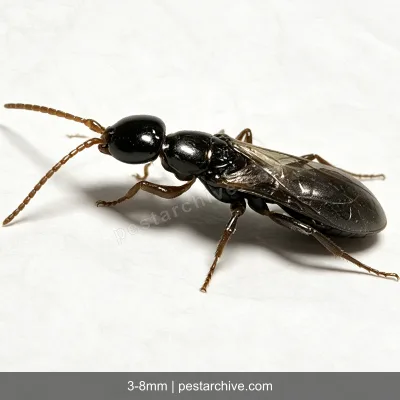
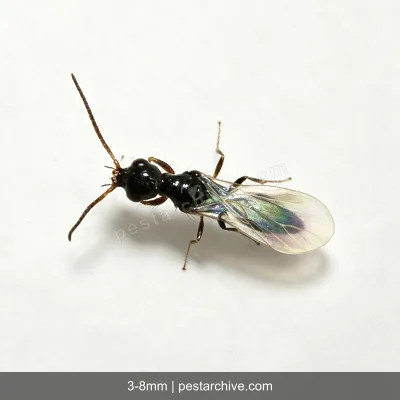
Bethylid wasps (family Bethylidae) are parasitoid wasps. The most common household species is Scleroderma harmandi. Adults measure 3-8mm, black-brown to black. Females are larger than males, with broad heads, short, thick elbowed antennae, robust thoraces, and noticeably swollen femora (hence the Chinese name 'swollen-leg wasp'). Females are winged; males are wingless. Bethylid wasps are parasitoids — females parasitize the larvae of wood-boring pests such as longhorn beetles and jewel beetles. They inject venom to paralyze the host, then lay eggs on the host body. The hatching larvae consume the host tissue as they develop, emerging as adult wasps by chewing through the host's exoskeleton. In nature, bethylid wasps are actually beneficial insects, helping to control populations of forest pests. Their presence indoors typically signals that wood structures harbor longhorn beetle, jewel beetle, or other wood-boring larvae. Bethylid wasps undergo complete metamorphosis: egg, larva, pupa, adult.
Habits & Hiding Places
Bethylid wasps are parasitoids whose presence indoors results from pursuing their hosts — the larvae of longhorn beetles, jewel beetles, and other wood-boring pests. Their activity zones thus closely match the damage zones of wood borers: wooden furniture and flooring are the most common sighting areas (female wasps search for hidden wood-boring larvae inside furniture and flooring, entering and exiting through emergence holes, joints, and wood member crevices. Observing a wasp repeatedly entering and exiting a hole is a signal it is searching for or handling a host); wood door frames, window frames, and baseboards (when damp, these wood members attract longhorn beetles and other borers to lay eggs, and bethylid wasps follow); and balcony wood ornaments and log decorations (potential bethylid wasp sites). Bethylid wasp adults are agile, good crawlers, and capable of short-distance flight. Females show remarkable persistence when host-searching — repeatedly traversing different emergence holes over multiple days to find suitable hosts. Wingless males typically crawl on wood surfaces. Bethylid wasp appearance is distinctly seasonal — most common in spring and summer when wood-boring pests are active. A single longhorn beetle larva parasitized by bethylid wasps can yield dozens of adult wasps upon emergence, which is why multiple wasps are sometimes seen simultaneously over a short period.
Health Risks & Damage
- Female bethylid wasps can deliver painful stings — the sting site shows localized redness, swelling, stinging, and papules. Symptoms are similar to but typically milder than a bee sting. Sensitive individuals may experience larger swelling and itching. Bethylid wasp stings generally require no special medical treatment; cold compresses and antihistamine creams can relieve symptoms.;
- Bethylid wasps themselves do not damage building structures or furniture — their larvae feed on wood-boring pests, and adults feed on nectar or dew. Their presence is actually an indicator signal that wood members harbor longhorn beetle, jewel beetle, or other wood-boring larvae. Indiscriminately killing the wasps treats only the symptom — the root problem is the wood borers in the wood.;
- Indoor wasp crawling and low flight disrupt daily life, especially when multiple wasps emerge simultaneously from holes, causing distress and concern. Wasps crawling on windowsills and walls also cause psychological discomfort.;
- Importantly: Bethylid wasps are natural enemies of wood-boring pests and are used as biological control agents in forestry and agriculture. If your wood structures genuinely have borer problems, retaining the wasps actually helps control the borer population. The correct approach to a bethylid wasp problem is to inspect and treat infested wood members, rather than targeting the wasps themselves with chemicals.
Season & Region
Cosmopolitan. Active from spring through autumn; peak May–Jul. Numbers markedly decline after Aug; rare by Sep; largely gone by around Oct. Females bore into wood to oviposit; can damage furniture and timber structures.
| Region | Active Period | Peak Season | Notes |
|---|---|---|---|
| N. Hemisphere Temperate | May–Sep | Jun–Jul | Significant population drop after Aug |