Pantry Moths: How to Get Rid of Indian Meal Moths?
What Are Those Tiny Moths Flying Around My Kitchen?
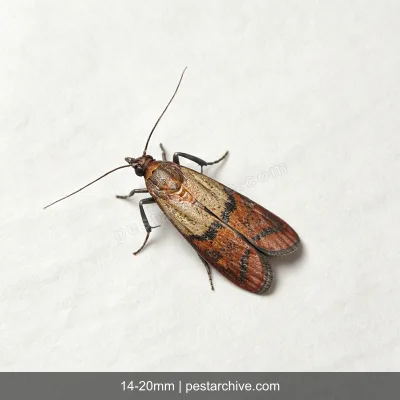
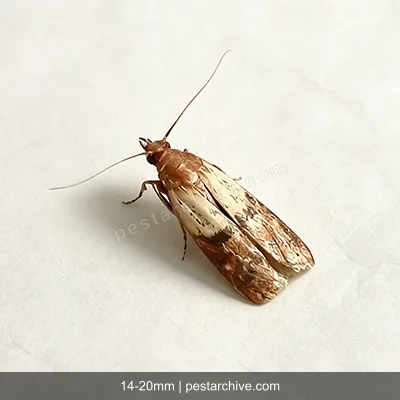
The little moths fluttering around your kitchen are most likely Indian meal moths (Plodia interpunctella), one of the most common stored-product pests found in home kitchens. If you're seeing adult moths flying around, it means larvae are already breeding somewhere in your kitchen.
What Do Adult Indian Meal Moths Look Like?
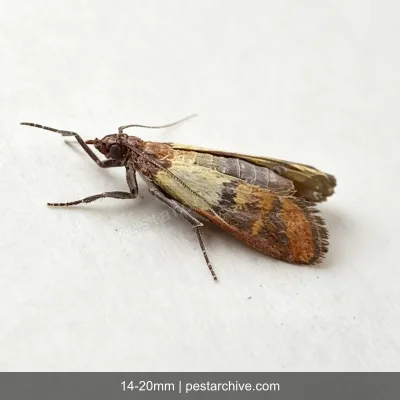
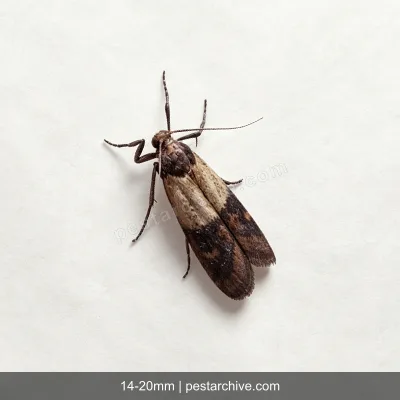
- Very small, with a wingspan of about 1.3–1.8 cm (slightly larger than a dime)
- The wings have a distinctive two-toned pattern: the inner half is pale gray or whitish, the outer half is coppery or reddish-brown with dark markings
- When at rest on a wall or cabinet door, they hold their wings folded roof-like over the body — very recognizable
- Most active in the evening and at night; during the day they mostly stay still
Life Habits
- The adults (the moths you see flying) don't directly damage food — their only job is to mate and lay eggs
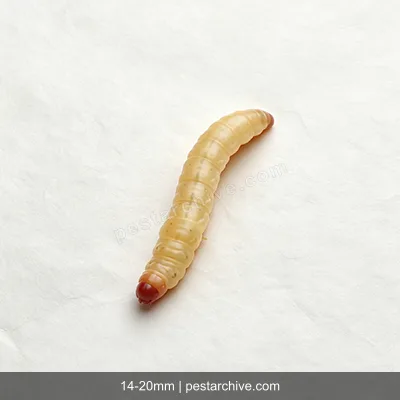
- The real troublemakers are the larvae — small whitish caterpillars with brown heads that spin silk webbing
- A female moth lays eggs on the surface of food or in the crevices of packaging, producing dozens to over a hundred eggs at a time
- After hatching, the larvae burrow into the food and begin feeding, spinning silk as they go, which glues grains together into clumps
Activity Patterns
- Adults are most active in the evening and at night; during the day they rest on walls, cabinet doors, and ceiling corners
- They fly fairly slowly and are easy to swat by hand
- Strongly attracted to light — they may fly toward lamps or screens when lights are on at night
Indian Meal Moths vs. Clothes Moths
People often confuse these two small moths, but telling them apart is easy:
- Indian meal moth: found in kitchens and pantries, feeds on grain and dry goods, wings have a coppery sheen
- Clothes moth: found in closets and storage rooms, feeds on wool clothing, body is pale yellowish, noticeably smaller than the Indian meal moth
What to Do If You See Moths Flying
Seeing adult moths means larvae are already breeding somewhere in your kitchen. Killing the adults alone won't solve the problem — you must find the larval source:
- Check all rice, flour, mixed grains, dried noodles, milk powder, pet food, birdseed, and other bulk or packaged dry foods
- If you find silk webbing or grain clumped together, throw the entire bag away immediately
- Uninfested but opened packages — transfer the contents to airtight glass jars or tightly-sealed plastic containers
- Vacuum cabinet interiors — especially crevices — then wipe clean with a damp cloth
- You can place Indian meal moth pheromone traps (sticky traps) in cabinet corners to continuously lure and kill male moths and break the breeding cycle
Prevention Tips
- Transfer grain into airtight containers immediately after purchase — don't leave it in the original packaging
- Small quantities of dry goods (dried chili peppers, dried mushrooms, dried longan, etc.) should also be stored in sealed containers
- Don't stockpile too much grain — buy only what you'll use soon
- Place newly purchased mixed grains and dry goods in the freezer at -18°C (0°F) for 48 hours to kill any eggs they may be carrying