What Do Indian Meal Moth Larvae Look Like?
What Do Indian Meal Moth Larvae Look Like?
Indian meal moth larvae (the little worms you find in flour and rice) have very distinctive features. Learning to recognize them helps catch an infestation early.
Physical Characteristics of Indian Meal Moth Larvae
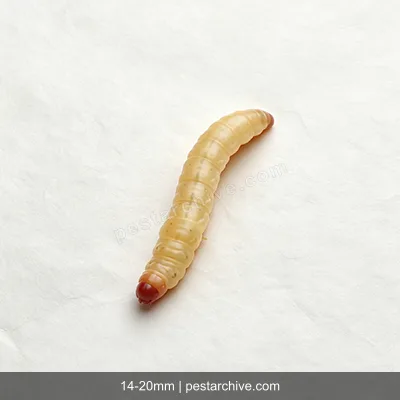
- Length: 1–1.5 cm — much larger than rice weevil larvae
- Body shape: elongated, cylindrical
- Color: creamy white to pinkish, occasionally with a greenish tinge
- Head: brown or reddish-brown, noticeably darker than the body
- Mouthparts: chewing type, capable of biting into all kinds of dry goods
- Prolegs: has prolegs (similar to caterpillars) that allow it to crawl and hang
How They Differ from Other Stored-Product Pest Larvae
| Feature | Indian Meal Moth Larva | Rice Weevil Larva | Lesser Grain Borer Larva |
|------|---------|---------|---------|
| Size | 1–1.5 cm | 2–3 mm | 3–4 mm |
| Color | Creamy white to pinkish | Creamy white | Creamy white |
| Body type | Elongated, with prolegs | C-shaped, curved | C-shaped, curved |
| Spins silk | Yes, produces webbing | No | No |
| Activity zone | Food surface and interior | Inside grain kernel | Inside grain kernel and in powder |
The Most Distinctive Habit of Indian Meal Moth Larvae: Silk Spinning
The single biggest trait of Indian meal moth larvae is that they spin silk — this is the fundamental difference between them and beetle-type stored-product pests:
- Larvae continuously spin silk as they feed, creating a silken mat over the food surface
- The silk webbing glues rice grains and flour into clumps
- Larvae hide and feed under the silk cover
- The webbing is mixed with droppings, making it look like a mess
- Fully grown larvae spin a silk cocoon and pupate inside it
Larval Movement Behavior
- Larvae move across the food surface and inside it, eating, defecating, and spinning silk all at once
- When fully mature (ready to pupate), they stop feeding
- Then they crawl up walls and cabinets
- They climb to wall corners, cabinet-top crevices, or packaging folds
- There they spin a silk cocoon and pupate
- This is why you sometimes see a silken thread hanging from the ceiling with a tiny larva clinging to it
What to Do If You Find Larvae
Any food with larvae and silk webbing should be thrown away immediately — don't try to pick through it. Then check all other dry goods and clean the cabinets.