Flour Mites
(Storage mites, Mould mites, Cheese mites)*Acarus siro* / *Tyrophagus putrescentiae*
Identification & Appearance
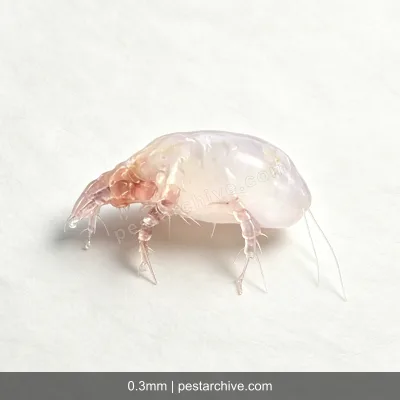
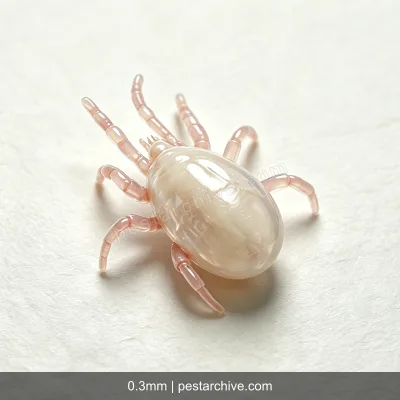
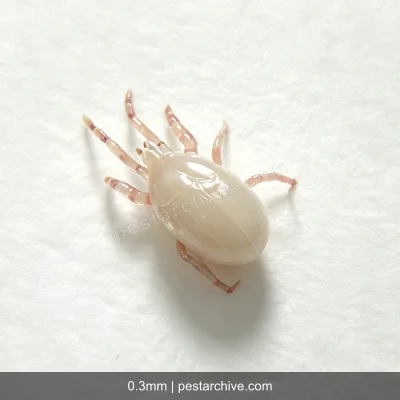
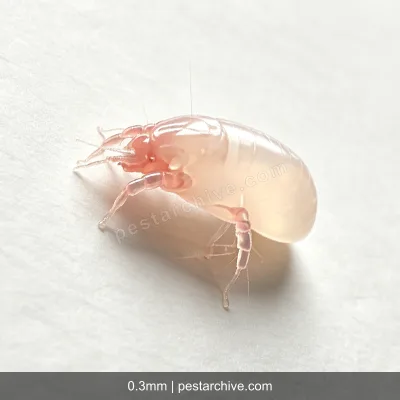
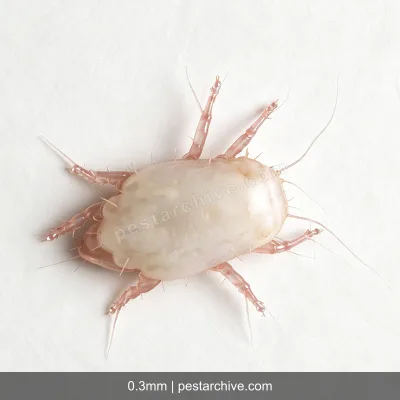
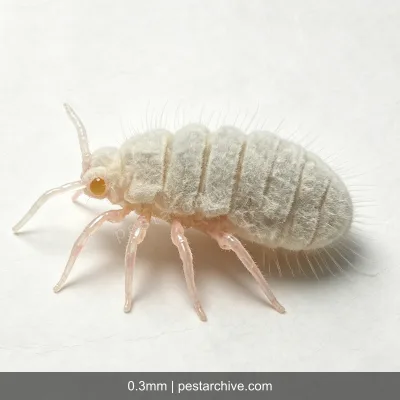
Flour mites are a group of tiny mite species. Common household types include the mold mite (Tyrophagus putrescentiae) and the tropical storage mite (Blomia tropicalis). Adults measure just 0.1-0.3mm — barely visible — with white to pale yellow semi-transparent elongated oval bodies bearing fine bristles, four pairs of legs, and slow movement. Flour mites undergo a multi-stage life cycle: egg, larva, first nymph, second nymph, and adult. Under favorable conditions (24-30°C, humidity above 75%), the egg-to-adult cycle takes just 2-3 weeks. A single female can lay 200-500 eggs in her lifetime — reproduction is extremely rapid. Flour mites differ from dust mites in habitat: flour mites primarily breed in grains and organic debris, feeding on cereals, dry goods, and mold, while dust mites feed on human skin flakes and inhabit mattresses and sofas. The key distinction: mites found in grain storage areas are typically flour mites; mites found in bedding areas are typically dust mites.
Habits & Hiding Places
Flour mites are classic stored-product mites that feed on grain, dry goods, plant/animal debris, and mold. Indoors, they most commonly inhabit and breed in: grain storage and dry goods cabinets (the highest-concentration area — rice, flour, beans, nuts, dried mushrooms, and Chinese herbs stored for extended periods are most vulnerable; a sweet or musty odor is often noticeable when opening containers); clothing storage areas (dust and dander on long-stored seasonal clothes, blankets, and bedding can sustain flour mites); and under mattresses and sofas (organic debris in accumulated dust can support mites in humid conditions). Flour mites are extremely humidity-dependent — below 60% RH they cannot complete their life cycle, and below 50% they rapidly desiccate and die. Breeding is thus seasonal, peaking during rainy seasons and humid summers. Flour mites can spread explosively in stored grain — a tiny contamination source can spread to all storage within 2-3 weeks. Their mobility is limited; they primarily disperse passively when grain is handled or through airborne dust. Finding flour mites in grain storage often means they have already spread to clothing and furniture areas through air currents.
Health Risks & Damage
- Flour mite metabolic products (allergen proteins in fecal pellets, body fragments, shed skins) are significant indoor inhalant allergens, triggering allergic rhinitis (sneezing, nasal congestion, runny nose), bronchial asthma, and contact dermatitis (skin redness, papules, intense itching). Sensitized individuals exposed to heavy flour mite dust may experience severe symptoms — clinical reports exist of anaphylactic shock from consuming heavily mite-contaminated grain.;
- Heavily infested grain spoils, discolors, and develops off-odors (musty or sweet smell); severely infested product is completely inedible. Flour contaminated by mites often turns pinkish; mites infesting oils and fats cause rancidity.;
- Flour mites disperse efficiently — handling infested grain releases mites into the air as dust, spreading them throughout the home. They also attract other stored-product pests (booklice, sawtoothed grain beetles), creating compound infestations that complicate control.;
- Flour mite contamination is especially problematic in dormitories, granaries, and food processing facilities, causing large-scale grain losses. Worldwide, flour mites are second only to booklice among stored-grain mites, with the most serious damage in tropical and subtropical regions.
Season & Region
Cosmopolitan in stored-product environments. Year-round reproduction under warm, humid conditions (20–30 °C, RH >70 %). Population begins rapid growth in Apr–May, plateaus at maximum density in Jul–Aug. Low population levels persist through winter (Jan–Mar).
| Region | Active Period | Peak Season | Notes |
|---|---|---|---|
| N. Hemisphere Temperate | Apr–Oct | Jul–Aug | Highest density during hot-humid season; overwinters at low level |